
New report reveals surge in primate pet sales across social media
Facebook, TikTok, Instagram, and YouTube users in the US are buying primates easily and often, despite the links to illegal trade, threats to human health, and dire environmental and economic consequences.
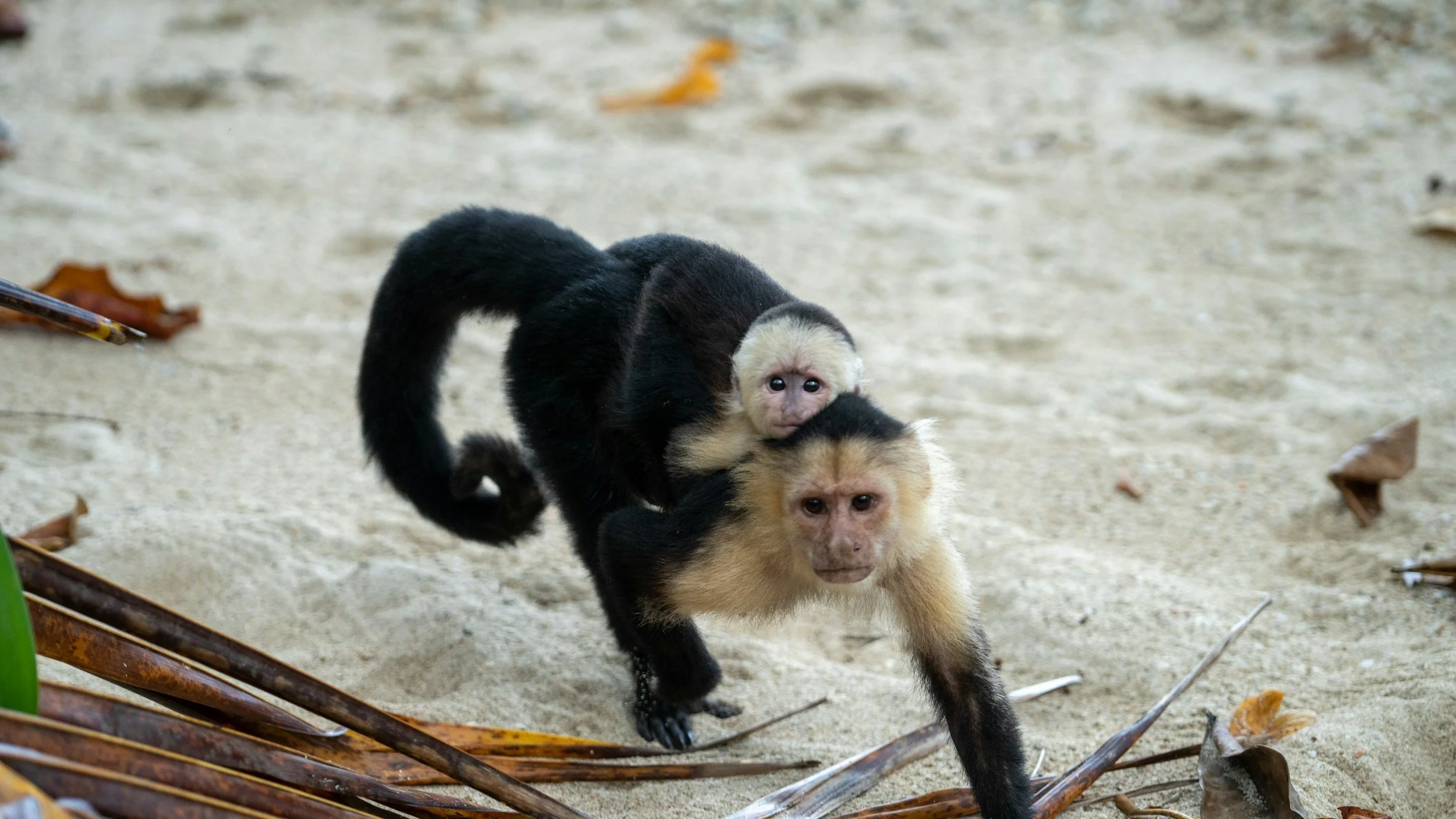
Alarming new research has found “rampant” trade in live primates on social media platforms across the US.
The report was published recently by the Association of Zoos and Aquariums (AZA), the International Fund for Animal Welfare (IFAW), and the World Wildlife Fund (WWF).
Conducted between June 15 and August 1 last year, an independent researcher recorded 122 users on Facebook, TikTok, Instagram, and YouTube posting a total of 1,131 pieces of content offering live primates for sale. In all, 1,614 individual primates were available to buy, including macaques, capuchins, and spider monkeys.
Despite almost three-quarters of primates being classified as Vulnerable, Endangered, or Critically Endangered on the IUCN Red List, and that the social media companies prohibit the sale of live and/or endangered animals, the researcher said it was easy to buy and sell primates across all four platforms.
Posts with explicit search terms such as ‘monkey for sale’ were occasionally removed by all four platforms, but users simply made new accounts and reworded their listings. The words ‘available’, ‘adoption’, and ‘rehoming’ did not get flagged up, according to the report.
Furthermore, online sales were conducted directly between individuals without any form of certification or regulation required by the platforms. This lack of oversight means sellers don’t need proof of the legal or sustainable origins of the primates, and buyers aren’t vetted.
“The ease with which primates are being bought and sold online should be a wake-up call,” said Sara Walker, senior adviser on wildlife trafficking at AZA. “These animals are complex, long-lived wild animals – not pets – and this growing digital marketplace is fueling demand, causing animals to suffer.”
According to the report, online primate sales are surging partly due to the proliferation of short-form video content promoting primates as ‘human-like’ babies, wherein they are dressed in diapers or pyjamas, and portrayed as docile and loving.
As such, there is a strong preference among buyers for infant primates. A 2020 study found that of 551 online primate sales in the US, nearly 80 percent of the animals were under the age of one. Many are taken from the wild, which often entails poachers killing the mother in order to obtain the infant. The trauma of this violent separation leads to the infant developing long-term psychological and physical problems.
Primates are difficult enough to look after, and their highly complex social, behavioral, and emotional needs are not conducive to life as a domestic pet. Owners typically get rid of their primate once they grow beyond infancy, as not only do they become larger and less cute, but they start displaying unpredictable behaviors from the age of two, while becoming more aggressive upon reaching sexual maturity.
Owners often release their primate into the wild, unleashing an “ecological invasion” that threatens surrounding ecosystems, public health, and local economies. In warm, sub-tropical states, invasive species can easily establish themselves, and in Florida, for example, there are at least seven non-native primates, two of which now have determined populations (rhesus macaque and vervet monkey).
Primates from the pet trade cannot be released into the wild – due to uncertainty over their origins, and the risk of spreading disease and viruses, such as HIV, Ebola, and rabies – and so require lifelong, specialist care from local sanctuaries and organizations. This comes at huge expense – on average, looking after an infant spider monkey over a 30-year lifespan will cost more than $1 million.
Despite the fact that many of the primates offered for sale have been poached illegally, and are part of a wider criminal network, often involving the drug trade, there appears to be little legislative appetite in the US to end it.
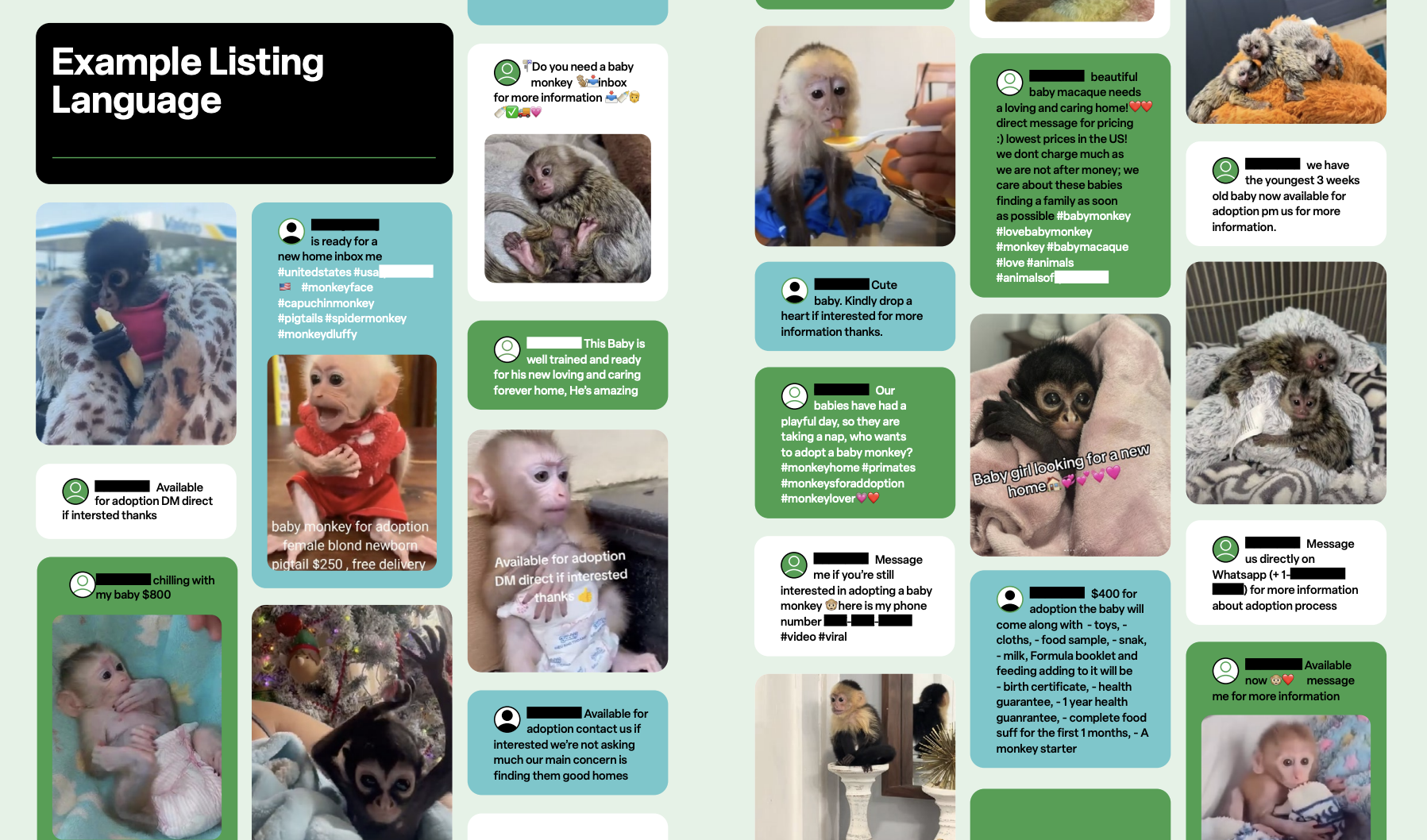
Credit: Primates for Purchase report
While federal laws prohibit the import of primates for the pet trade, primates can still be sold within the US, and there are no federal laws governing the sale or keeping of primates as pets. As for state laws, 27 states prohibit owning primates as pets, but it is legal in 15 states, including Texas, Minnesota, and Nevada. Only five of these 15 states require a permit. Partial bans exist in the remaining eight states.
According to the report, sellers based in Florida – which has a partial ban – and Texas had the highest number of sales. Macaques – which can transmit the herpes B virus to humans – were the most frequently advertised, with at least 839 individuals listed for sale, selling for between $250 to $6,500.
The report made several recommendations for lawmakers, enforcement agencies, and digital platforms, while calling on the public not to buy primates as pets. It supports the Captive Primate Safety Act, which would outlaw the breeding, sale, and possession of primates as pets. First introduced in 2005, the Act has yet to be signed into law. Rep Mike Quigley (D–IL), introduced it again last year, but it will need to pass the House and then the Senate before reaching the president.
It is estimated there are around 15,000 primates as pets in the US. Without stronger federal laws and tighter checks from social media platforms, this number will only rise.
More stories:


We Have A Favor To Ask…
Species Unite amplifies well-researched solutions to some of the most abusive animal industries operating today.
At this crucial moment, with worldwide momentum for change building, it’s vital we share these animal-free solutions with the world - and we need your help.
We’re a nonprofit, and so to keep sharing these solutions, we’re relying on you - with your support, we can continue our essential work in growing a powerful community of animal advocates this year.
A cleaner New York Harbor has drawn hundreds of humpback whales back to its waters for the first time in generations, but the same busy port that welcomes them is also killing them.