
Mountain lions in California added to Endangered Species Act
Campaigners celebrate “a major milestone” as six groups of mountain lions are granted protections amid multiple ongoing threats to their survival.
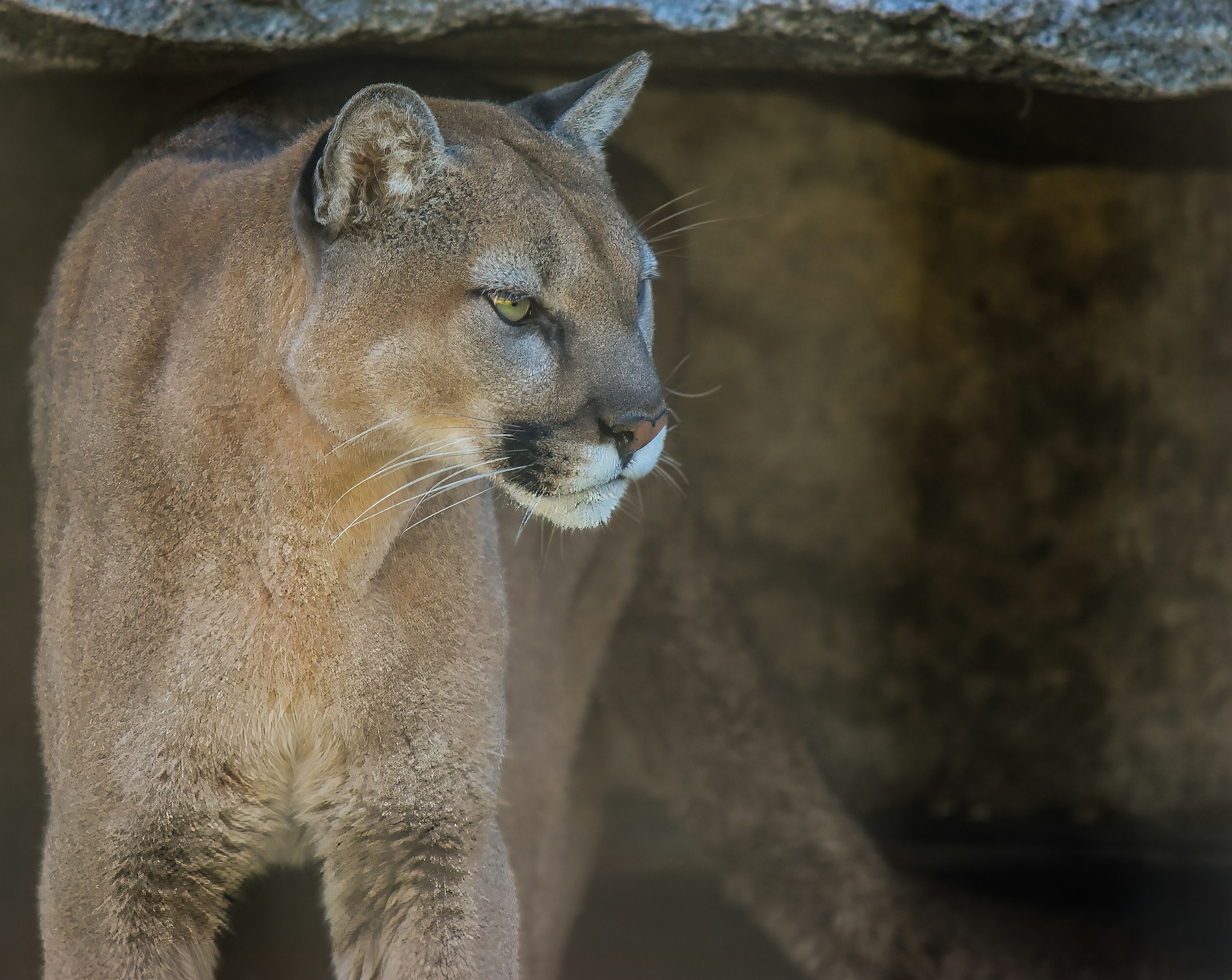
Six groups of Central Coast and Southern California mountain lions are now protected under the state Endangered Species Act.
The California Fish and Game Commission concluded that without intervention, the animals would likely become extinct. This means that some 1,400 pumas across the state are now protected.
“This is a major milestone for a California icon,” said Tiffany Yap, urban wildlands science director at the Center for Biological Diversity. “Mountain lions are a marvel but too many across the Golden State are struggling in the diminished and fractured wild places where they live. This state isn’t willing to stand back and watch our precious wildlife vanish forever. I’m celebrating this vote as a new chapter for pumas, and I hold so much hope for their future.”
Multiple manmade threats to their survival include habitat loss, often resulting from poorly planned developments.
Under the new legislation, then, when considering new roads, buildings, or other development projects, local planning agencies must identify and reduce any potential harms to mountain lion habitat.
Indeed, a further problem is the many roads that intersect the mountains, and the lack of suitable culverts and bridges for animals to cross safely. One study revealed that at least one mountain lion was killed every week on California roads and highways over a seven-year period.
In parts of Southern California, traffic collisions are the primary cause of death for a panther.
This is especially bad, says Winston Vickers, for small, isolated populations. “Busy freeways also cut off mountain lions from potential mates, severely decreasing their genetic diversity and threatening their existence”, explained Vickers, a veterinarian and mountain lion expert.
Safe crossings are crucial for the Central Coast population, which has a low effective genetic population size. Without free movement to other mountain ranges, the animals are forced towards inbreeding.
A UCLA-led study revealed severe inbreeding in the Santa Monica and Santa Ana ranges, with males suffering very high levels of abnormal sperm. The results recalled the panther population in Florida during the 1990s, who were similarly isolated and inbred, and only saved from extinction after the introduction of mountain lions from Texas.
“If we don’t do anything to introduce more genetic diversity to the Southern California mountain lions, we will have more males with reproductive problems, fewer kittens, and a lower rate of kitten survival,” said the study’s lead author, Audra Huffmeyer.
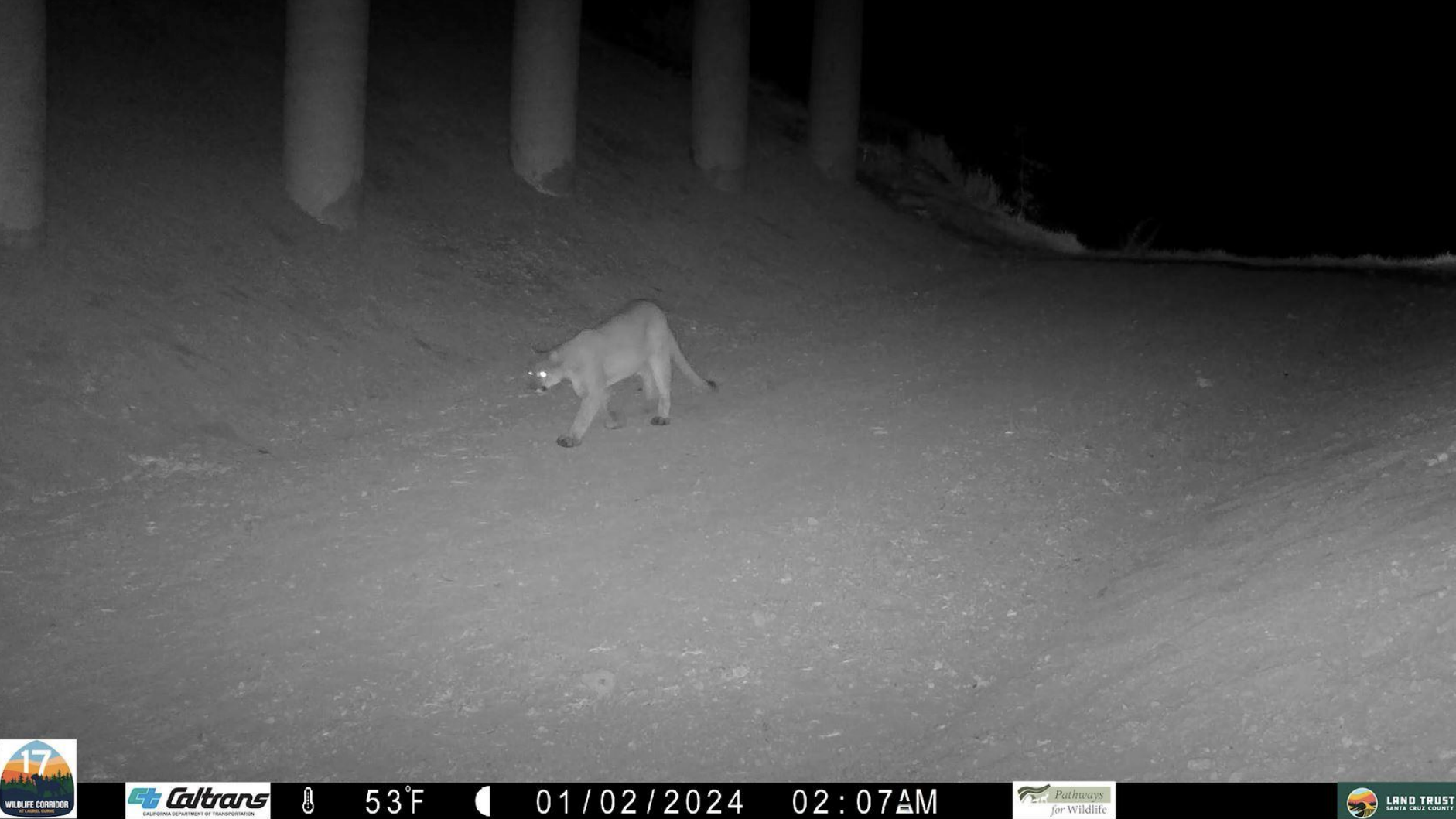
Credit: Pathways for Wildlife
California has responded by building multi-million-dollar wildlife crossings, including the undercrossing along Highway 17, a four-lane expressway connecting Santa Cruz County to the greater Bay Area, which has a high number of animal-vehicle collisions each year.
And later this year, the world’s largest wildlife bridge will open, providing a safe passageway between the Santa Monica Mountains and the Simi Hills.
Those objecting to the granting of special protections argued that such measures could lead to more attacks on humans and livestock. However, data suggests that attacks on humans are rare; highly reclusive, cougars are known to have killed six people in the last 136 years.
And while attacks on livestock have increased, ranchers can still apply for permits to deter pumas from their farm.
Ultimately, mountain lions are a ‘keystone species,’ who play an important role in restoring and maintaining a healthy ecosystem. By killing their prey – usually deer – the pumas create a ‘top down’ effect, which allows other scavengers and raptors to eat the remains, and help reduce herbivory, invasive species, and disease transmission, while increasing soil fertility and biodiversity.
We Have A Favor To Ask…
Species Unite amplifies well-researched solutions to some of the most abusive animal industries operating today.
At this crucial moment, with worldwide momentum for change building, it’s vital we share these animal-free solutions with the world - and we need your help.
We’re a nonprofit, and so to keep sharing these solutions, we’re relying on you - with your support, we can continue our essential work in growing a powerful community of animal advocates this year.
Fires are sweeping through rainforests home to 13 of the 20 largest surviving populations of Bornean orangutans, with rescuers already treating injured animals and conservationists warning of long-term habitat loss.