
Life-size elephant puppets sound the alarm over South Africa's proposed mass cull
A new short film featuring life-size elephant puppets makes the case against South Africa's plans to cull 1,600 elephants at Madikwe Nature Reserve, a decision campaigners say could still be prevented.
Credit: Matthew Schurch / Humane World for Animals
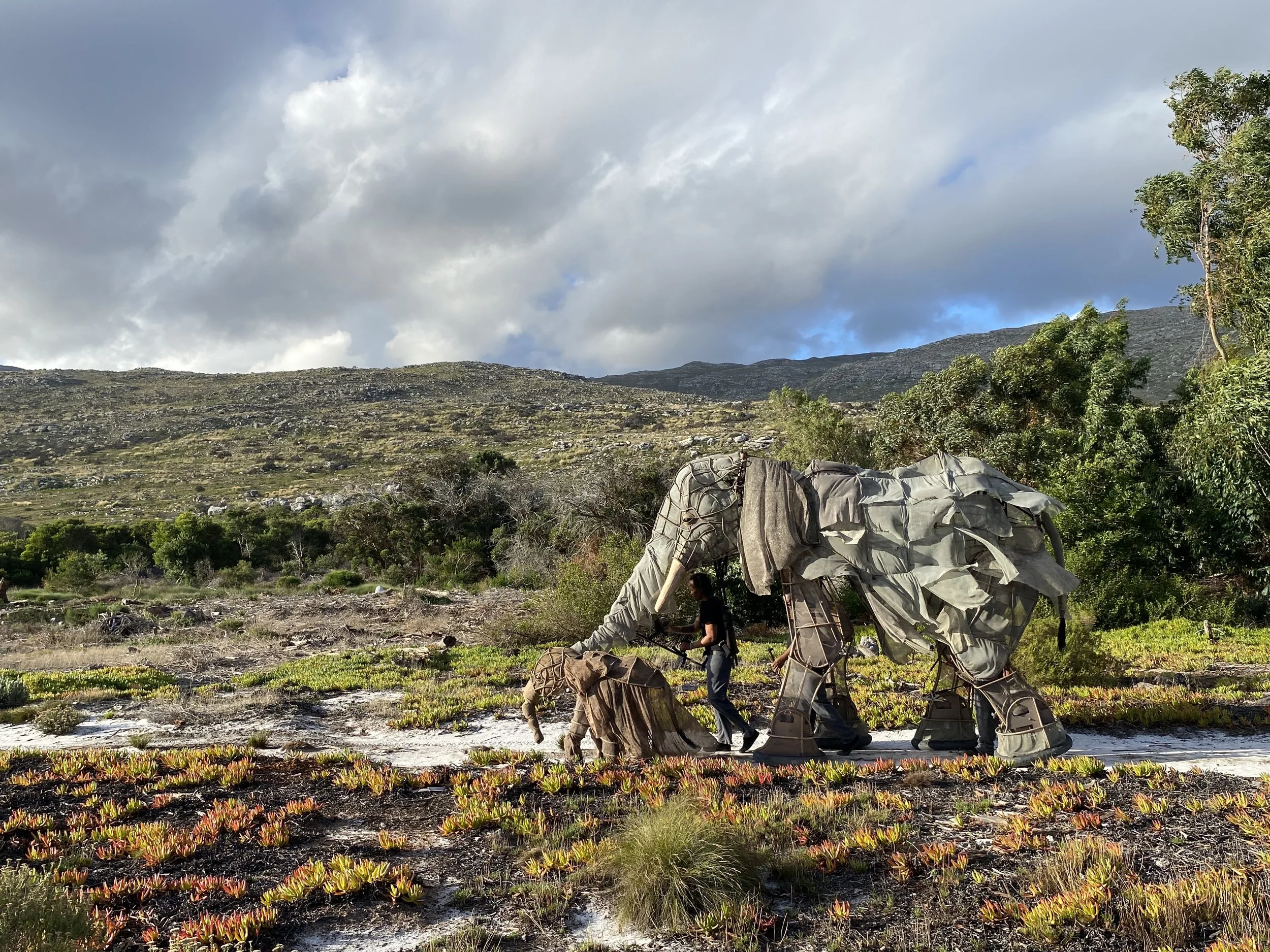
Campaigners are hoping that a new short film featuring life-size elephant puppets will inspire support for South Africa’s elephant population, amid the ongoing threat of mass slaughter.
The Humane World for Animals South Africa (HWASA) commissioned and funded The Seed Bearers’ Last Walk after becoming concerned about the possibility of elephant culling at North West’s Madikwe Nature Reserve.
“Watching the puppet elephants felt amazingly reminiscent of seeing elephants in the wild,” said Dr Matthew Schurch, senior wildlife specialist for HWASA. “Witnessing the puppeteers evocatively recreate the panic of elephants caught in the crosshairs was incredibly moving. When the puppets fell to the ground, the powerful stillness impacted us all. We must prevent a real-life tragedy from happening to our wild elephants.”
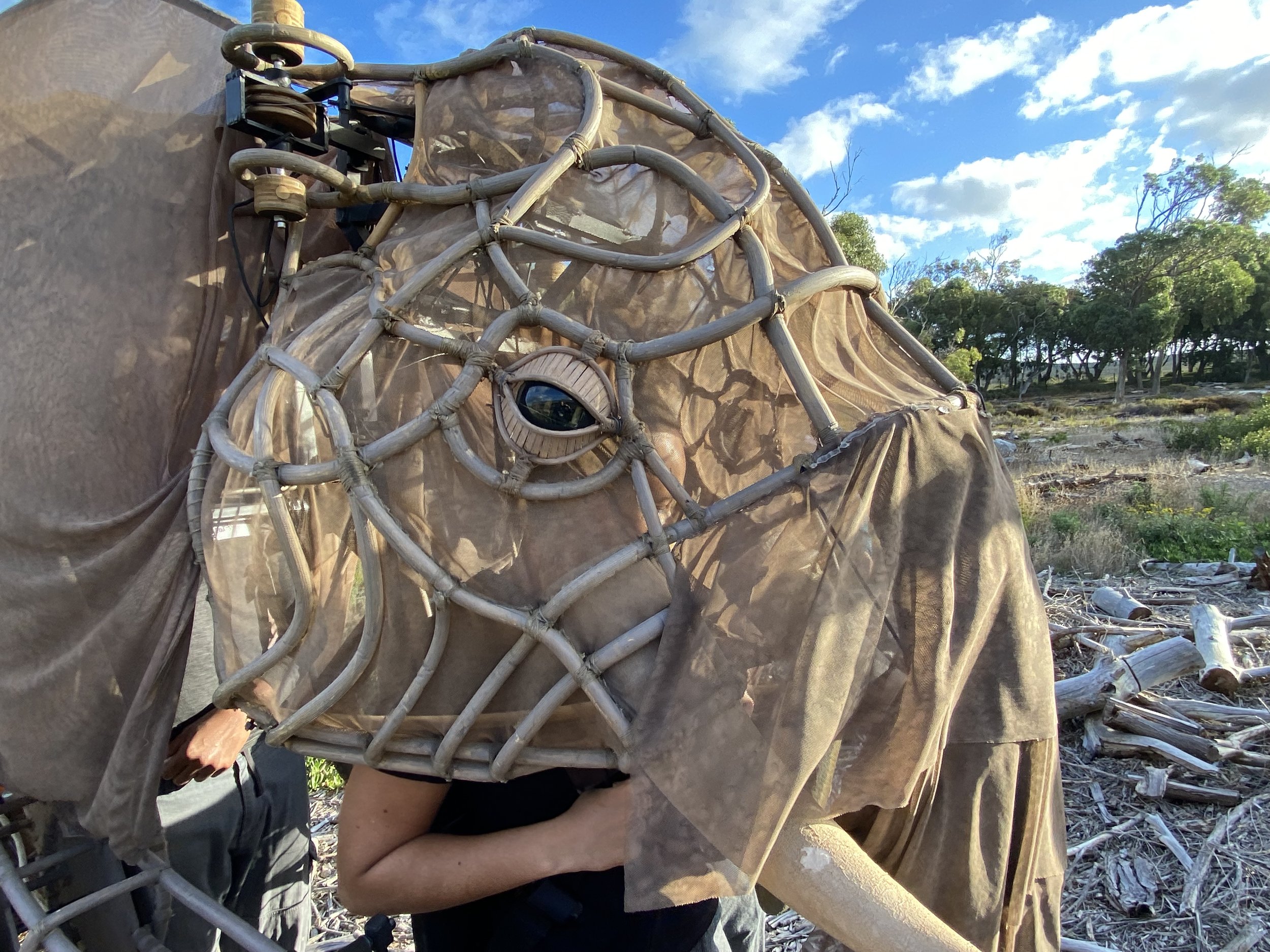
The giant puppets were designed by Adrian Kohler from Handspring Puppet Company and built by Ukwanda Puppets, the South African collective best known for War Horse and The Herds.
“Being part of raising awareness for the endangered elephants was incredibly meaningful for us,” said Mpofu. “The puppets have the unique power to make people stop, look, and connect emotionally. They are magical, spark conversations, inspire empathy and remind us why protecting these magnificent animal[s] matters.”
Credit: Matthew Schurch / Humane World for Animals
Both provincial and national governments are actively exploring the idea of elephant culls, in response to claims of overpopulation at Madikwe Nature Reserve.
While recognizing that elephant numbers at Madikwe are too high, HWASA promotes humane alternatives, such as opening wildlife corridors and expanding reserves.
Elephant immunocontraception is also highly effective, and HWASA has already helped vaccinate more than 1,800 elephants across 50 South African reserves.
“Non-lethal methods have existed for decades, but many provincial governments have stalled for years. It is these same governments now advocating for a cull as a quick, cruel fix to their own inertia and as revenue streams for failing budgets,” said the charity’s senior wildlife director, Dr Audrey Delsink.
Immunocontraception was offered by HWASA at no cost to Madikwe Nature Reserve as far back as 2020. Although Madikwe eventually signed a Memorandum of Understanding with HWASA in 2024, it was never implemented.
This has resulted in at least 400 avoidable elephant births at Madikwe, with a further 300 births expected. As such, the fenced reserve is now unable to cope with the 1,600 elephants living at Madikwe.
In parliamentary hearings in June last year, MPs blamed the overpopulation on “decades of inaction.”
According to Madikwe’s own official Elephant Management Plan, “culling is the last option where translocation, contraception, and even range manipulation have been considered and failed.”
Reporting on the case for the Daily Maverick, investigative journalist Don Pinnock wrote: “If contraception was not implemented and translocation was not sufficiently pursued, can culling legitimately be framed as a ‘last resort’? Or is it, as critics suggest, a first resort disguised as a last one?”
Delsink is adamant that “South Africa must not turn back the clock on decades of elephant protection by returning to an archaic, wholescale massacre of its elephants.”
It is more than 30 years since South Africa’s last cull of elephants, which saw the slaughter of some 14,500 elephants in Kruger National Park. The international backlash led to a moratorium, in 1995.
The Seed Bearers’ Last Walk is available to watch free here.
Species Unite News is a weekly round-up of the most important animal stories happening around the world. Join over 250,000 others who start their week with the latest animal stories delivered straight to their inbox.
We Have A Favor To Ask…
Species Unite amplifies well-researched solutions to some of the most abusive animal industries operating today.
At this crucial moment, with worldwide momentum for change building, it’s vital we share these animal-free solutions with the world - and we need your help.
We’re a nonprofit, and so to keep sharing these solutions, we’re relying on you - with your support, we can continue our essential work in growing a powerful community of animal advocates this year.
More stories:
Wildlife cameras, night-vision binoculars, GPS devices, fire sensors, and snowshoes are among the items that have been available to borrow free of charge at a new public nature library.