
Could this new EcoPark proposal replace San Francisco Zoo?
A bold new plan sets out to transform the struggling zoo into a space of sustainability and awareness.

Credit: Xavi Reñé
1,000 residents of San Francisco enthusiastically support a suggested transformation of the city's ailing zoo, a survey has polled.
76% of respondents wanted to see the zoo overhauled, and 57% oppose keeping animals in captivity overall. 59% disagree with the zoo's plan to bring in giant pandas from China.
The survey, by the national research firm Centiment, follows years of struggles faced by the zoo. Reports from the San Francisco Animal Welfare Commission and the Association of Zoos and Aquariums have revealed safety concerns, shortage of staff and unsafe facilities. A city audit also found issues with governance and finances.
As a result, the zoo's attendance numbers have dwindled by 40% since 2019, and it reported an operating deficit of $6.3million in the last fiscal year.
Both activists and the zoo's own employees have voiced concerns about the conditions in which the animals are held. Despite this, the zoo is planning to import giant pandas from China, with the arrival of the first animals slated for spring 2026.
But a bold new vision is aiming to transform the zoo entirely. EcoPark SF, a proposal shaped by locals and informed by a global team of veterinarians and conservationists, sets out to modernise the 100-acre space into a center of eco-education where environmental restoration initiatives meet family-friendly recreation.
Early drafts of the proposed designs show a mix of dunes, garden spaces and wetlands alongside a wildlife rescue hub, an ocean action lab (where ocean health is studied in real time), immersive virtual experiences, a working farm, and a "coastal climate buffer zone" which rewilds 20 acres of shoreline.
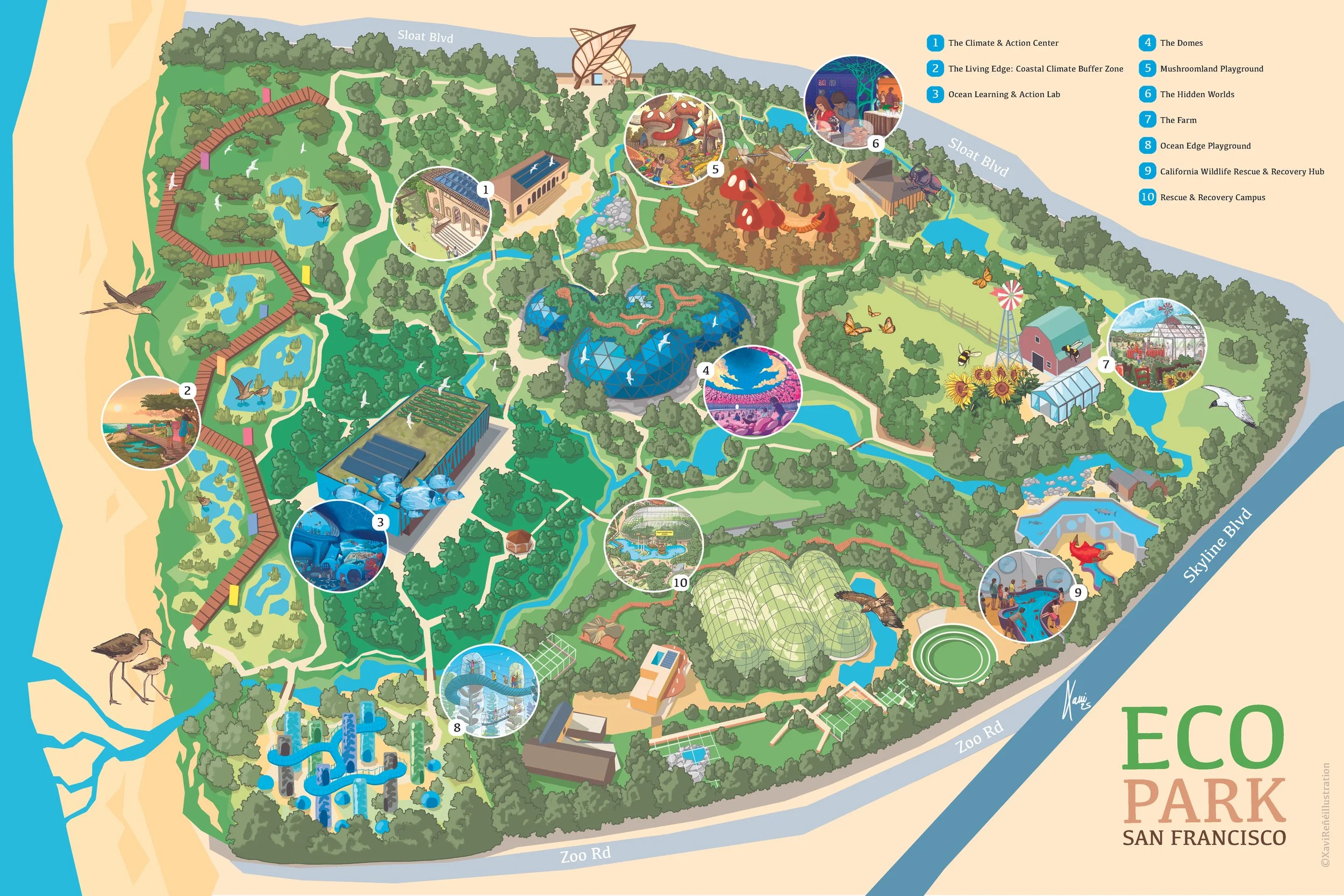
Credit: Xavi Reñé
Justin Barker, founder of SF Zoo Watch and lead architect at EcoPark SF, has described the project as “a place that focuses on conservation and education and really a modern place for families to come and enjoy, to learn without harming animals."
The science-driven, solution-focused project promises to boost tourism and foster new partnerships, estimating to generate $900million to $1.2billion in public value within a decade. It has garnered wide support from city officials and locals alike, inspiring hopes of obtaining funding – the project would cost approximately $350million.
The zoo isn't welcoming of the proposal, with CEO Cassandra Costello branding the plan “not realistic.”
But San Francisco Zoo wouldn't be the first facility to implement a similar overhaul: in 2024, Buenos Aires Zoo became Buenos Aires Eco-Park, reinventing itself as a space for conservation and rewilding. Attendance has since skyrocketed.
But before San Francisco Zoo can follow in its footsteps, the EcoPark SF team would convince City Hall to get on board, not to mention acquire generous donors. However, the Centiment poll shows that the potential overhaul would find strong public support.
"San Franciscans are telling us clearly: they don't want a zoo built on concrete cages and outdated ideas. They want something better — a place that restores nature, advances science education, and reflects this city's values," says Barker. "The public is ready. Now the city needs to catch up."
We Have A Favor To Ask…
Species Unite amplifies well-researched solutions to some of the most abusive animal industries operating today.
At this crucial moment, with worldwide momentum for change building, it’s vital we share these animal-free solutions with the world - and we need your help.
We’re a nonprofit, and so to keep sharing these solutions, we’re relying on you - with your support, we can continue our essential work in growing a powerful community of animal advocates this year.

Some developers suggest that adopting cultivated meat could also improve animal welfare by significantly reducing the number of farmed animals slaughtered.