
Controversial permit to shoot a wolf for being too tame has now expired
An exceptional license was granted to kill Grindi, a popular wolf who often posed for photos with hikers in Germany’s Black Forest
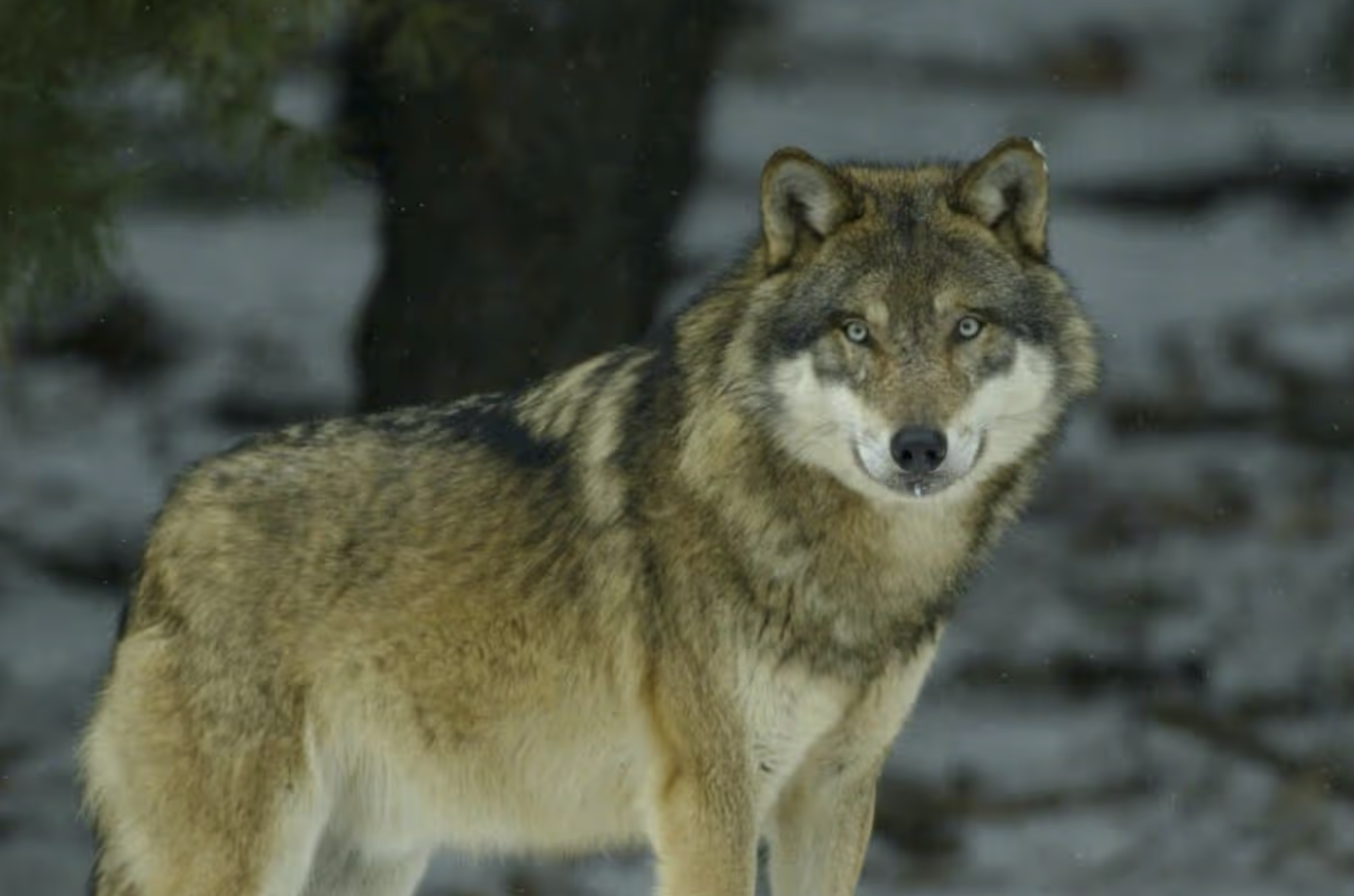
Wolf - GW2672m. Credit: Mirror UK
A controversial license allowing a wolf in southwestern Germany to be killed simply because he was too tame has now expired.
Three specially trained hunters spent several weeks scanning the Black Forest but were unable to locate the wolf, known by locals as Grindi. The permit, which ended on March 10, will not be renewed.
As wolves are a protected species, the environment minister Thekla Walker granted an exceptional license for Grindi to be shot. Indeed, this was the first time in 181 years that the authorities sanctioned the killing of a wolf.
The German conservation group, Nature Conservation Initiative, filed a lawsuit against Walker’s decision, on the grounds that it violated EU law. Furthermore, Grindi is one of just four wolves residing in the state of Baden-Württemberg, and so his death would slash the population by a quarter.
Ultimately, the Stuttgart Administrative Court ruled in favour of Walker. They agreed that Grindi posed a danger to the public, and that this was exacerbated by a rise in wolf tourism, with people deliberately enticing Grindi near so that they could take selfies.
While wolves typically avoid human contact, Grindi had been sighted on more than 180 occasions since the start of 2024. However, significantly, he didn’t show any aggressive or threatening behavior towards either the humans or their dogs.
Michaela Jung, from Baden-Baden, was out hiking with her husband and dog when Grindi suddenly appeared near Herrenwies. “I turned around and the wolf was looking at us: calm, curious, completely relaxed. It was a mystical moment. Absolutely magnificent,” she said. “When I heard on the radio that the wolf might be killed, I was horrified and desperate. I opened my laptop and launched a petition immediately.”
Fortunately, sightings fell sharply between February and March, when the hunters arrived in the Black Forest. Protesters had taken to marching noisily through the forest to try to disrupt the hunters and scare Grindi away. Authorities also said that the end of the breeding season may have influenced the animal’s behavior.
However, just days later, in an unrelated issue, the German Bundestag voted in favor of making wolf hunting legal again.

The right and far-right parties said that the legislation would protect farmers’ livelihoods. According to government statistics, around 4,300 livestock animals were killed or injured by wolves in Germany in 2024.
But Sybille Klenzendorf, program director for wildlife in Europe at the German branch of the World Wildlife Fund, argues that hunting is counterproductive as orphaned wolves will roam around more in search of easy prey.
Germany’s oldest and largest environmental association, the Nature called and Biodiversity Conservation Union, also opposes hunting. It has called instead for comprehensive herd protection via government subsidies for fences and herd dogs.
Indeed, other European countries like Austria and Switzerland manage their respective wolf populations by using such methods, while active shepherds are employed in the Alpine regions.
“Yes, it is more work, and it does cost money, but wolves save a lot of money in forest restoration,” said Klenzendorf. “There’s a lot less damage to young trees if there’s wolves around because deer and wild boar don’t stay in a certain patch if there are predators around.”
Declared extinct in Germany in the 19th century, the wolf has made a remarkable comeback since 2000. A study last year found 219 packs of wolves across the country, 36 couples and 14 individuals.
Their status was downgraded in 2025 from ‘strictly protected’ to ‘protected' following a review, which had been sparked by a wolf attack on a pony belonging to Ursula von der Leyen, president of the European Commission.
Having passed the Bundestag, the draft legislation now moves to parliament’s upper house, the Bundesrat, where a vote is scheduled for later this month.
In the United States, wolves are also under fire. The U.S. House of Representatives has passed H.R. 845, a bill that would strip Endangered Species Act protections from gray wolves across the entire lower 48 United States. Take action by contacting your Senator here - it takes 30 seconds.
We Have A Favor To Ask…
Species Unite amplifies well-researched solutions to some of the most abusive animal industries operating today.
At this crucial moment, with worldwide momentum for change building, it’s vital we share these animal-free solutions with the world - and we need your help.
We’re a nonprofit, and so to keep sharing these solutions, we’re relying on you - with your support, we can continue our essential work in growing a powerful community of animal advocates this year.


Fur farmers had previously pledged to stop breeding abnormally large foxes, but campaigners say the apparent lack of reform strengthens the case for the European Union to ban the fur industry.