
Outrage as wild horse and burro roundups get underway during peak foaling season
Campaigners are shocked that multiple federal roundups are taking place during foaling season, when the animals are at their most vulnerable.
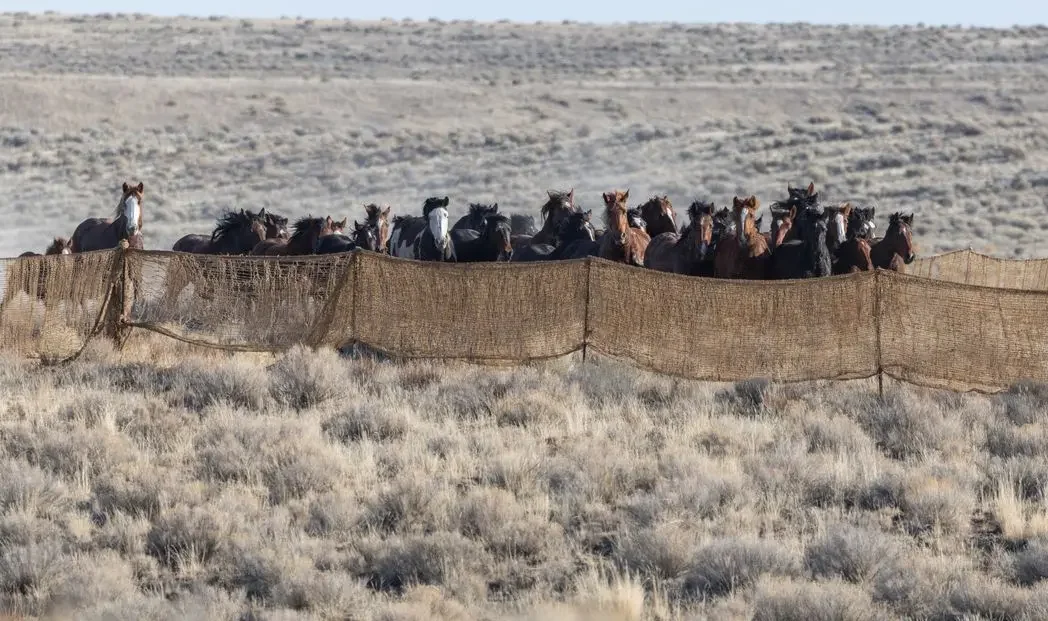
Multiple wild horse and burro roundups are underway as part of controversial plans to capture and remove nearly 15,000 animals from public land.
The Bureau of Land Management (BLM) has targeted seven sites across Arizona and Nevada during March and April, with more scheduled.
But while gather operations have always been a divisive issue, campaigners are especially opposed to the timing of these most recent roundups, given that it is now peak foaling season (from March through June).
This means that pregnant mares and jennies, as well as foals, will be trapped and taken from their home. More than 80 foals have already been captured.
The stress of the roundups can lead to complications during pregnancy, and capture myopathy, a potentially fatal stress-induced muscle condition, in foals.
“We are extremely concerned for their safety, not only during capture and removal, but also in the days and weeks that follow,” said American Wild Horse Conservation (AWHC) in a statement.
Campaigners are demanding that the BLM postpones all roundups until the foaling season is over. Roundups are planned across Nevada, as well as in Canyonlands, Utah, and in Lake Pleasant and Black Mountain, Arizona.
More than 1,000 horses and burros have been removed so far. A total of 513 animals were captured in the Bullfrog Herd Management Area, near Beatty, Nevada, including 233 jennies and 28 foals.
The BLM regularly removes excess horses and burros to maintain an ecological balance on public lands, and to reduce overpopulation. In addition, the BLM says that some of the recent gather operations are in response to concerns of public safety, following reports of the animals straying onto highways and into towns.
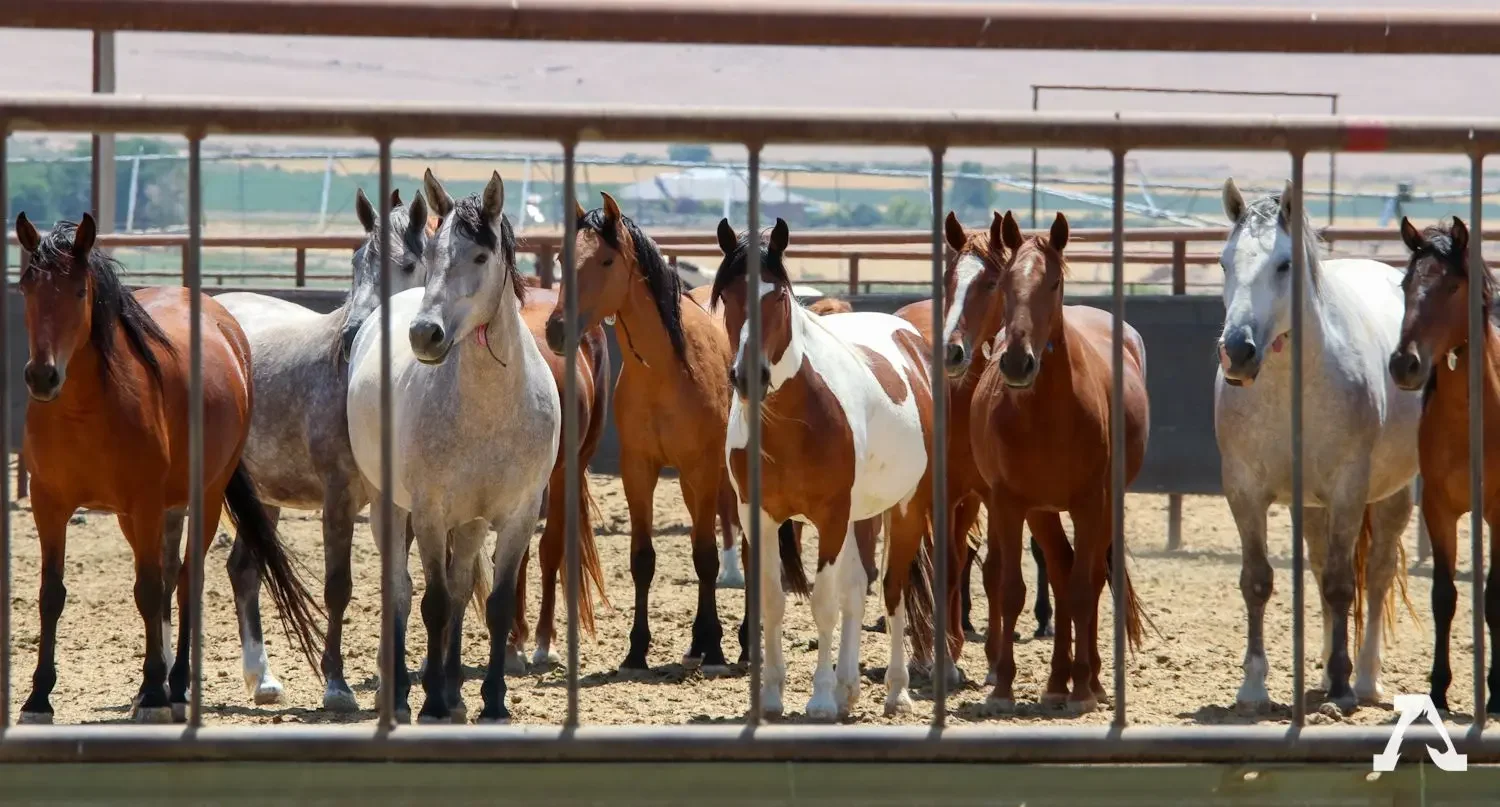
Once captured, the animals are shipped to holding facilities, where many of them will spend the rest of their lives. It costs the BLM more than $100 million each year to house, feed, and provide medical care for these horses. As of last year, there were 68,143 wild horses and burros languishing in BLM facilities.
“The current situation is not sustainable,” admitted Dean Bolstad, who retired in 2018 from his role as BLM’s division chief of the wild horse and burro program.
The roundups are also expensive and, in the view of many campaigners, inhumane. Roundups often use helicopters, whereby terrified horses and burros are forced to run, often for miles and in excessive heat, risking injury and death. In a particularly infamous roundup in Nevada’s Antelope Complex conducted in August 2023, 39 horses died, five of whom sustained broken necks.
That the most recent gather operations were conducted without helicopters, shows that more humane alternatives – such as the bait and water method – can be used.
Most campaigners recognize the need for managing wild horse and burro populations, and have long advocated for on-range birth control.
“The agency must shift to real solutions: humane large-scale fertility control to stop the influx of horses to holding facilities, and for captive horses, promoting responsible adoptions, utilizing cost-effective long-term pastures, and returning them to wild habitats”, said Suzanne Roy, executive director of AWHC.
She added that BLM’s wild horse and burro program “is a runaway fiscal disaster, wasting taxpayer dollars on mass roundups that don’t work.”
To find out more about the history of America’s wild horses Species Unite spoke with Erik Molvar, wildlife biologist and the executive director of the Western Watersheds Project, a nonprofit conservation group dedicated to protecting and restoring wildlife and watersheds across the American West. Listen to the podcast episode here.
Learn more about why America’s wild horses are in crisis and what can be done about it here.
Sign our urgent petition urging the Secretary of the Interior to stop the BLM.’s planned round-ups of thousands of wild horses here.
We Have A Favor To Ask…
Species Unite amplifies well-researched solutions to some of the most abusive animal industries operating today.
At this crucial moment, with worldwide momentum for change building, it’s vital we share these animal-free solutions with the world - and we need your help.
We’re a nonprofit, and so to keep sharing these solutions, we’re relying on you - with your support, we can continue our essential work in growing a powerful community of animal advocates this year.
A cattle truck crash in Kansas City, Missouri, is one of several recent ones, as Mercy for Animals urges the US Department of Agriculture to update its rules on animal transport.