
Campaigners call for release of 11 dolphins at newly Native Hawaiian-owned Sea Life Park
Following its first change of ownership in over 60 years, Sea Life Park Hawaii is being urged to end its dolphin program and release its 11 bottlenose dolphins, including one taken from the wild more than 50 years ago.
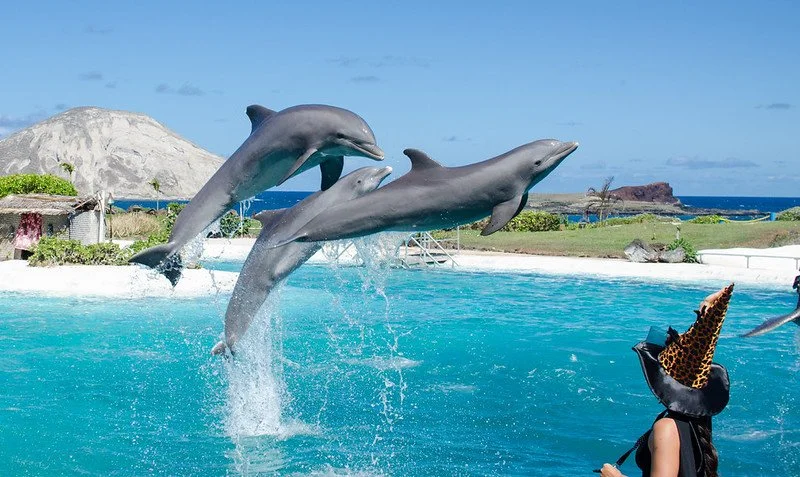
Bottlenose dolphins (Tursiops truncatus) perform during a show at Sea Life Park in Waimānalo, Hawaii. Credit: Justin Ornella/CC BY 2.0
Campaigners are calling for the release of 11 dolphins (Tursiops truncatus) held at Sea Life Park Hawaii, following the park's first change of ownership since it opened in 1964.
The acquisition by the Hawaiian Council, completed on August 11, means the park is now under Native Hawaiian ownership for the first time. While long-term plans for the oceanfront attraction in Waimānalo, on Oʻahu, Hawaii's third-largest island, remain under review, PETA has urged the new owners to close down its dolphin program, which currently includes performances and interactions.
“Dolphins belong in the ocean, not languishing in barren tanks for decades on end,” said PETA President Tracy Reiman. “PETA is calling on Hawaiian Council to lead with aloha by giving these long-suffering animals the chance to feel ocean currents and live out their lives with dignity in a seaside sanctuary.”
More than 100 dolphins have died at the park during the past 62 years, according to World Animal Protection. It currently holds 11 bottlenose dolphins. The oldest, Laka, was taken from the wild off the coast of Mississippi in the Gulf of Mexico, and has languished in Sea Life Park since 1979. She is now around 58 years old, and has given birth to four calves during her time there, three of whom still live in captivity alongside her.
In an open letter to Hawaiian Council President, Kumu Lewis, Reiman points out that almost all major travel companies, including Airbnb, Expedia, and Tripadvisor, now prohibit ticket sales to venues offering dolphin performances or interactions, amid growing recognition that the industry is cruel and unethical.
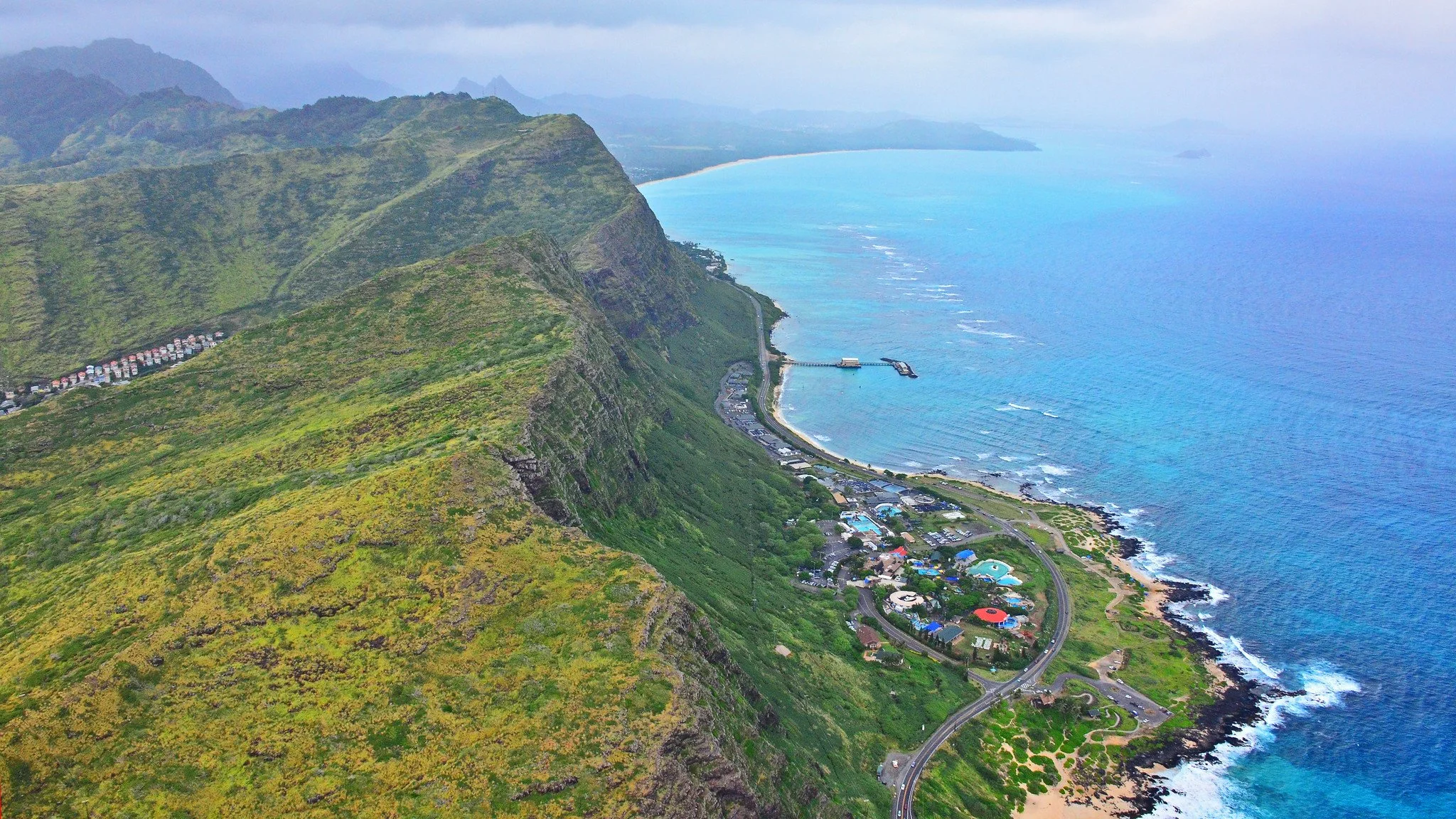
An aerial view of Sea Life Park Hawaii and Kamehame Ridge. Credit: Edmund Garman/CC BY 2.0
Last year, Mexico, one of the world’s most popular holiday destinations for watching dolphin performances, passed historic legislation prohibiting dolphins from being held, captured, or bred for entertainment. As a result of the unanimous 99-0 vote in the Senate, some 350 captive dolphins across the country are now expected to be relocated to sanctuaries. Similar legislation passed in Canada in 2019, and in France earlier this year.
While Sea Life Park continues to offer ‘nose to nose’ encounters with dolphins, a ban on dolphinariums is already in place elsewhere in Hawaii. Maui County outlawed dolphin and whale exhibits as far back as 2002. A proposed bill to stop a planned dolphinarium from being built raised more public support than any other matter in the county’s history, with the council receiving over 15,000 petition signatures and hundreds of letters.
Passed unanimously, the bill states that the “Council finds that cetaceans (dolphins and whales) are highly intelligent – and highly sensitive – marine mammals. The Council further finds the presence of cetaceans in the Pacific Ocean surrounding Maui County provides many cultural, spiritual, and economic benefits to the County's residents. The Council also finds that the exhibition of captive cetaceans leads to distress[ed] living conditions for these animals. Therefore, the purpose of this ordinance is to prohibit the exhibition of captive cetaceans (dolphins and whales)."
Wild spinner, bottlenose, spotted, and rough-toothed dolphins, along with pilot whales and false killer whales, live off Maui's shores year-round, while humpback whales can be seen there in winter.
Take the 30 Days of Action for Animals challenge: This August, we're challenging you to take one action for animals every single day. From signing petitions and contacting lawmakers to making different choices at the dinner table, every action adds up. Sign up now to get your first action from tomorrow.
With animal stories making up less than 2% of the news cycle, we're here to fill that gap. Sign up for Species Unite’s weekly news digest.
The animals need a newsroom in their corner
Every week we dig into the animal stories the mainstream news overlooks. Investigations, exposés, legal battles, and victories - none of it happens without your support. A monthly gift of as little as $5 keeps us covering the 98% of animal news the world isn't seeing.
More stories:

A former president and conservationists have criticized Botswana’s decision to kill 23 elephants for meat as part of its 60th independence celebrations.