
Brazil bans production and sale of foie gras nationwide
A landmark new law prohibits the production, sale, and import of the controversial French delicacy, in which ducks and geese are force-fed multiple times a day.
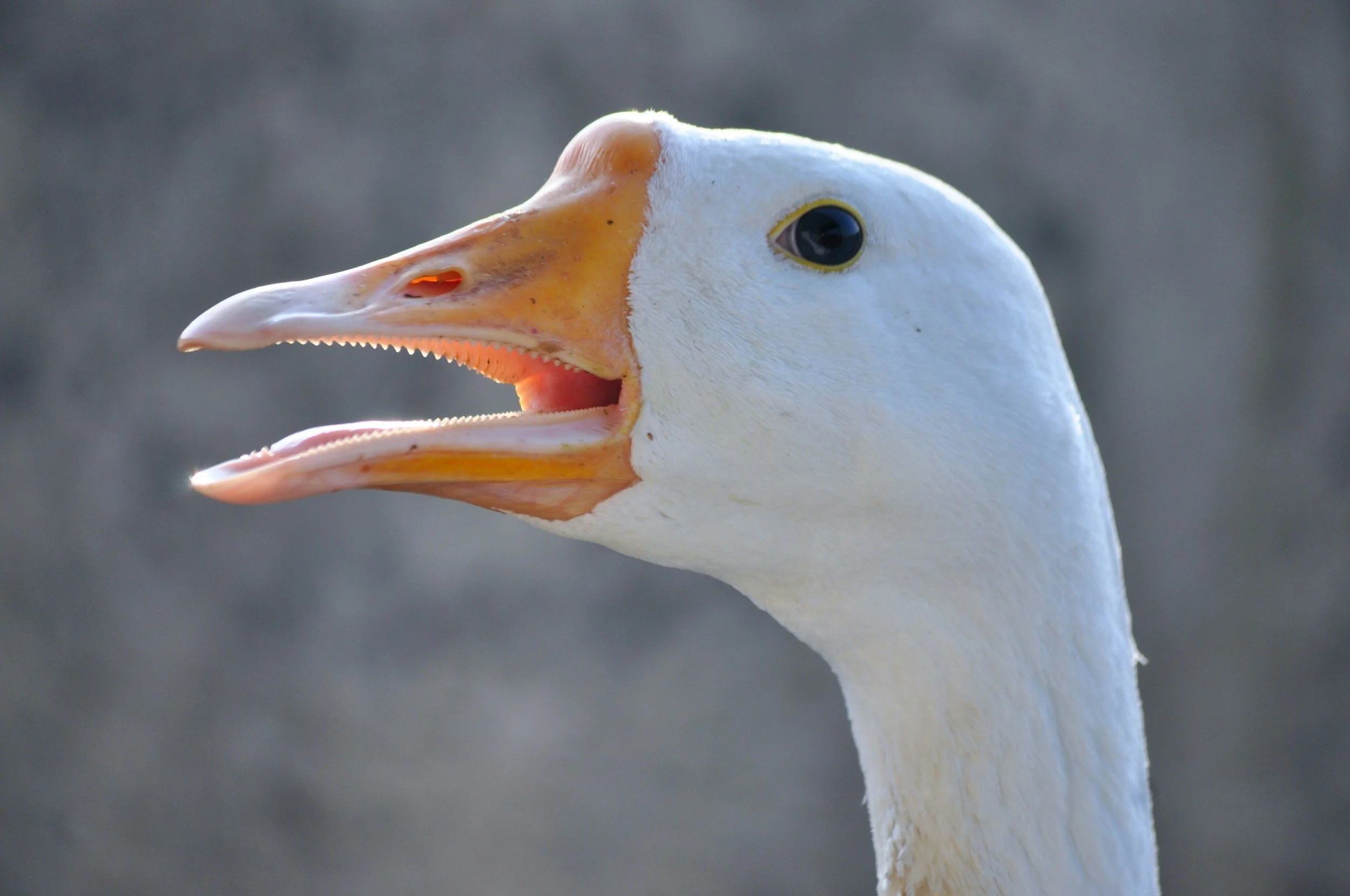
Brazil has become the first Latin American country to ban the production, sale, and import of foie gras, the controversial French delicacy.
President Luiz Inacio Lula da Silva signed the historic legislation last week, after Congress had voted unanimously on the grounds of animal cruelty.
“It’s amazing that this covers both sale and production because it shows Brazil is taking a very hard stance against animal cruelty,” said Natalie Fulton, media and content lead of U.S.-based advocacy group Pro-Animal Future.
Although more than 20 countries – including Argentina, Australia, Israel, and most European Union Member States – have banned the production of foie gras, sales and importation remain legal.
This means the industry is allowed to continue, as France, Hungary, Bulgaria, and Spain all permit the force-feeding of ducks and geese for the production of foie gras. Outside of Europe, foie gras is produced in parts of the U.S. and in China, now the second largest supplier behind France.
According to Reuters, President Lula had come under pressure to veto the bill from the French government, who argued that foie gras is part of its culinary and cultural heritage.
For Sharon Nunez, “foie gras represents one of the cruelest practices inflicted on animals exploited for human consumption.” As President of Animal Equality, Nunez has led a six-year campaign to outlaw foie gras in Brazil. “Brazil has shown that ethical standards are not negotiable – not even under pressure from national and international economic interests,” added Nunez.
To produce foie gras (French for ‘fatty liver’), ducks and geese are force-fed through a tube several times a day. Known as ‘gavage,’ this process induces hepatic steatosis (liver disease), causing the liver to swell to ten times its normal size. As a result, many of the birds develop numerous health problems – both physical and emotional – which often prove fatal.
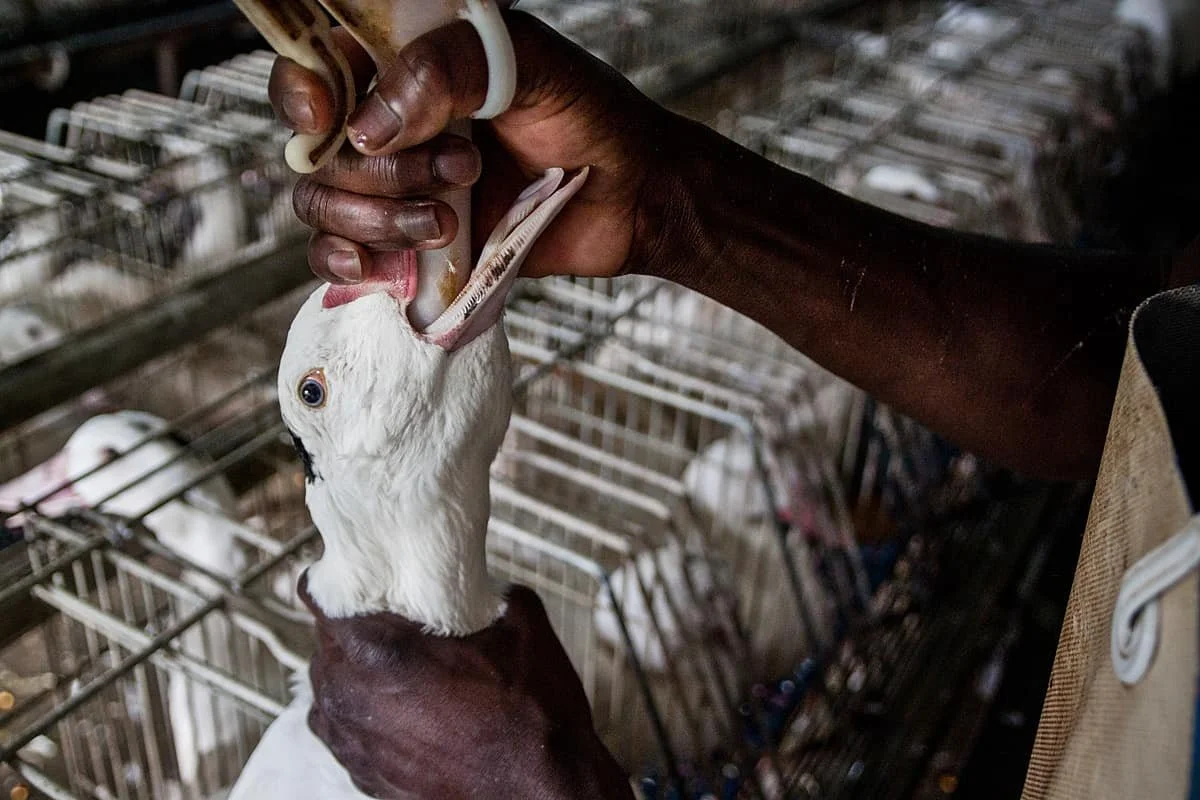
Photo: We Animals
For example, New York-based Hudson Valley Foie Gras estimates that over 15,000 of its ducks die each year through illness, before they can be slaughtered. An investigator working for PETA at that particular facility observed tumor-like lumps in the ducks’ throats, as a result of force-feeding. The birds are typically confined in tiny iron cages with no room to even turn around or spread their wings.
Despite much of Europe having introduced bans on foie gras, a European Union (EU) report published in 2022 found that foie gras production did not breach animal welfare rules. In addition, EU marketing standards require specific minimum liver weights for foie gras products, which effectively encourages force-feeding.
So far only Brazil and India have taken decisive action to end the trade entirely, with the latter having introduced such laws in 2014. Given Brazil is one of the world’s leading exporters of poultry and beef, these latest developments are significant, with campaigners hoping other countries will follow their decisive stance on foie gras.
Species Unite is now calling on the USDA to ban foie gras. Independent lab testing has repeatedly confirmed that foie gras comes from birds afflicted by liver disease, and so violating the Poultry Products Inspection Act, which requires diseased poultry to be condemned and kept out of the food supply.
In 2004, California took the unprecedented step of banning the sale and production of foie gras. This legislation has since faced numerous appeals by foie gras producers. Most recently, a court ruling in 2022 allowed Californians to buy foie gras from out-of-state producers, but only for private consumption – it cannot be sold on by restaurants or retailers.
Take the 30 Days of Action for Animals challenge: This August, we're challenging you to take one action for animals every single day. From signing petitions and contacting lawmakers to making different choices at the dinner table, every action adds up. Sign up now to get your first action from tomorrow.
Species Unite News is a weekly round-up of the most important animal stories happening around the world. Join over 250,000 others who start their week with the latest animal stories delivered straight to their inbox.
We Have A Favor To Ask…
Species Unite amplifies well-researched solutions to some of the most abusive animal industries operating today.
At this crucial moment, with worldwide momentum for change building, it’s vital we share these animal-free solutions with the world - and we need your help.
We’re a nonprofit, and so to keep sharing these solutions, we’re relying on you - with your support, we can continue our essential work in growing a powerful community of animal advocates this year.
More stories:


As opposition to octopus farming grows worldwide, Colombia is moving to ban the practice before a single farm is built.