
Wild horses promised "loving homes" are ending up at slaughter, NYT investigation finds
A new NYT investigation has found that wild horses removed from public lands under a government adoption program are being funneled to slaughter through a legal loophole.
Bottlenose dolphins (Tursiops truncatus) perform during a show at Sea Life Park in Waimānalo, Hawaii. Credit: Justin Ornella/CC BY 2.0
Hundreds of wild horses rounded up from public lands and promised a "loving new home" by the government are instead ending up on slaughter trucks, according to a new investigation by The New York Times.
Records show that one of the main buyers from the Bureau of Land Management (BLM) - the agency responsible for protecting wild horses - is a 35-year-old livestock trader named Brandon Jones.
According to the NY Times, Jones has no connection to the horse world and no history of working with mustangs. But when interviewed by the NY Times, Jones referred to several of the region’s slaughter traders by name, and knew the going price of horsemeat. He has recently purchased about 500 horses, all of which he admits to selling on, though he declined to provide any further information.
In March of this year, Jones bought 68 horses at $25 each. These were trucked 1,800 miles from a holding facility in Idaho, where they had been kept for years, to his home in Ohio. A day later, these same animals were recorded being loaded onto cattle trucks in the dead of night, never to be seen again. The NY Times notes that Jones hadn’t advertised online, or posted any ‘for sale’ signs at his corral.
The U.S. horse slaughter industry closed down in 2007, and so the animals are typically sent to Canada for slaughter. Jones lives within an hour of the main Canadian horse export crossing. Export records reveal that last summer, two trucks of horses were shipped to Canada by Fred Bauer, one of the major exporters of slaughter horses to Canada. This was just weeks after Jones had bought a load of 97 horses.
Poor-quality photos taken by border officers at the time show that some of the horses had distinctive government branding on their necks. When asked by the NY Times where Jones’s horses end up, Bauer replied: “We all know what Brandon Jones is. Where do you think they’re going?”
While buyers must sign a contract promising not to send the animals to slaughter, or ‘knowingly’ sell to anyone who intends to slaughter them, ultimately the buyer can avoid prosecution by selling them to a middleman. Given that a single horse can fetch as much as $750 at a slaughter plant, exploiting the BLM program offers a quick way of turning a profit. Worryingly, sales of wild horses have rocketed during Donald Trump’s presidency – the 3,700 horses sold in 2025 was more than double that of the previous year.
“The BLM is saying to the public that slaughter is off the table, but they’re doing it in plain sight using a third party,” Clare Staples, who runs a wild horse sanctuary in Oregon called Skydog Ranch, told the NY Times. “And the only ones getting punished for what is going on are the horses.”
Critics have long denounced the program as financially disastrous and wholly unethical. Large-scale fertility control, which is relatively inexpensive and can be administered humanely to both wild and captured populations, is often promoted by animal rights campaigners as a viable alternative.
The BLM regularly removes excess horses and burros, claiming it is to maintain an ecological balance on public lands, and to reduce overpopulation. But wild horse advocates argue that the real reason is to protect ranchers who graze cattle and sheep on public lands for a hugely reduced rate and don’t want any wildlife that can pose competition or harm their financial interests.
To round up wild horses and burros, the agency contracts private companies, including helicopter operators, to chase animals over long distances, often causing distress and injury.
Once captured, the animals are shipped to holding facilities, where they await adoption or sale. It costs the BLM more than $100 million each year to look after these horses. As of last year, there were 68,143 wild horses and burros stuck in BLM facilities.
Critics have long denounced the program as financially disastrous and wholly unethical. Large-scale fertility control – which is relatively inexpensive and can be administered humanely to both wild and captured populations – is often promoted by animal rights campaigners as a viable alternative.
However, according to Project 2025 – the policy paper that has shaped much of Trump’s second presidential term – Congress “must enact laws permitting the BLM to dispose humanely of these animals.”
To find out more about the history of America’s wild horses Species Unite chatted with Erik Molvar, wildlife biologist and the executive director of the Western Watersheds Project, a nonprofit conservation group dedicated to protecting and restoring wildlife and watersheds across the American West. Listen to the podcast episode here.
With animal stories making up less than 2% of the news cycle, we're here to fill that gap. Sign up for Species Unite’s weekly news digest.
The animals need a newsroom in their corner
Every week we dig into the animal stories the mainstream news overlooks. Investigations, exposés, legal battles, and victories - none of it happens without your support. A monthly gift of as little as $5 keeps us covering the 98% of animal news the world isn't seeing.
More stories:
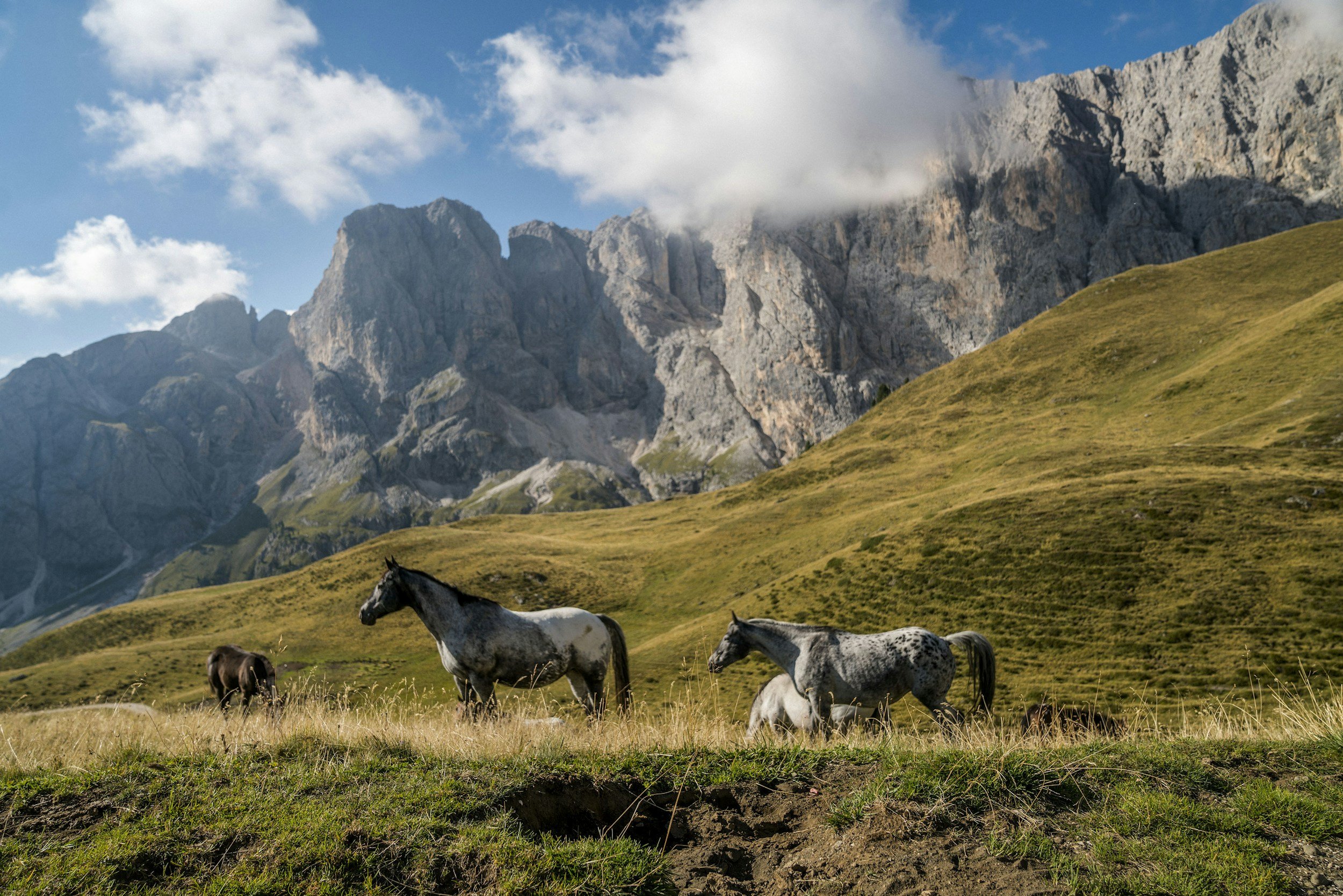
A new investigation has found that wild horses removed from public lands under a government adoption program are being funneled to slaughter through a legal loophole.