
Scientists create AI "mouse" to replace live animals in drug testing
Swiss scientists have developed a virtual "mouse" powered by artificial intelligence that can predict how nanoparticles behave in the body.
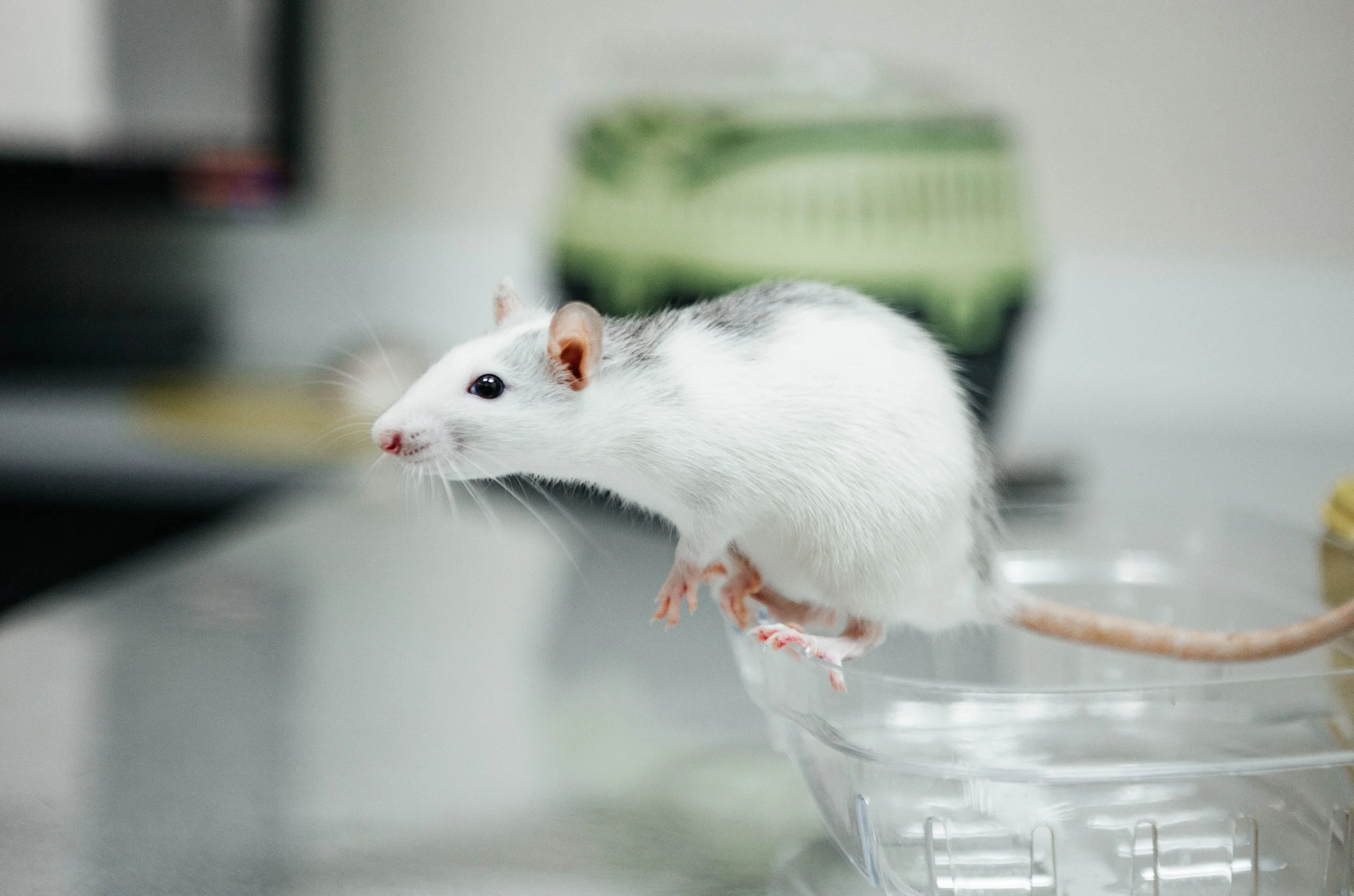
Swiss scientists have developed an AI “mouse” that can help replace animal testing in nanomedicine. By analyzing existing studies to model interventions, this in-silico model can help eliminate the use of live mice.
The innovative model is the creation of Jimeng Wu, a doctoral student in the Nanomaterials in Health and Technology and Society labs at Empa, Switzerland.
The model can be administered nanoparticles, proceeding to calculate their distribution in the “mouse's” body based on factors such as size, coating and surface charge.
“This AI-supported screening tool allows researchers to virtually test which type of nanoparticles are best suited for a specific task before they even manufacture these particles,” said Wu. In the future, she plans to focus on a strategy that will bridge the gap between the model of her “mouse” and human models.
The innovation calculates how nanoparticles with certain properties are distributed in an organism. This can be helpful for the development of drugs that treat brain tumors, as nanoparticles can cross the blood-brain barrier.
The Swiss Federal Laboratories for Materials Science and Technology (Empa) said the in-silico mouse could be used to aid with decision-making in the development of new drugs. Empa has strict rules in place to encourage researchers to use animals as little as possible.
Nanotechnology deals with materials and particles on a nanoscale (an extremely small scale). Nanomedicine, on the other hand, is the application of nanotechnology in the field of medicine to treat and prevent a variety of conditions, including different cancers. Historically, live mice have been used to analyze how nanoparticles are distributed in the body.
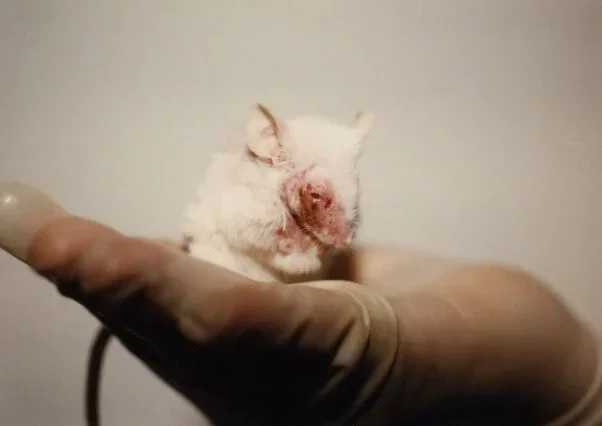
A mouse used in testing. Credit: PETA
More than100 million mice are used in experiments across the US every year, used in toxicology tests, burn experiments, and even psychological experimentation. These experiments can involve being poisoned, burned, and driven to terror and anxiety.
Mice in US research labs can also be electroshocked in pain studies, mutilated in experimental surgeries, and have drugs such as cocaine and methamphetamine injected into their bodies. They can also be made to grow tumors.
Animal rights organization People for the Ethical Treatment of Animals (PETA) has documented mice kept in abysmal conditions, put in freezers, and subjected to hunger and dehydration. At the end of a study, animals are usually killed, if they don’t die during the study’s duration.
Artificial intelligence technologies are emerging as an alternative to testing on animals, alongside existing alternatives such as organs-on-a-chip, computer models, and 3D bioprinted tissues.
Please reach out to your representatives and urge them to do the right thing by cosponsoring the FDA Modernization Act 3.0, which would end a federal mandate that experimental drugs must be tested on animals before they are used on humans in clinical trials - a requirement that had been in effect since 1938. Send your letter here - it takes 30 seconds.
We Have A Favor To Ask…
Species Unite amplifies well-researched solutions to some of the most abusive animal industries operating today.
At this crucial moment, with worldwide momentum for change building, it’s vital we share these animal-free solutions with the world - and we need your help.
We’re a nonprofit, and so to keep sharing these solutions, we’re relying on you - with your support, we can continue our essential work in growing a powerful community of animal advocates this year.

Some developers suggest that adopting cultivated meat could also improve animal welfare by significantly reducing the number of farmed animals slaughtered.