
Roadside zoo owner sentenced to more than seven years in prison for animal neglect
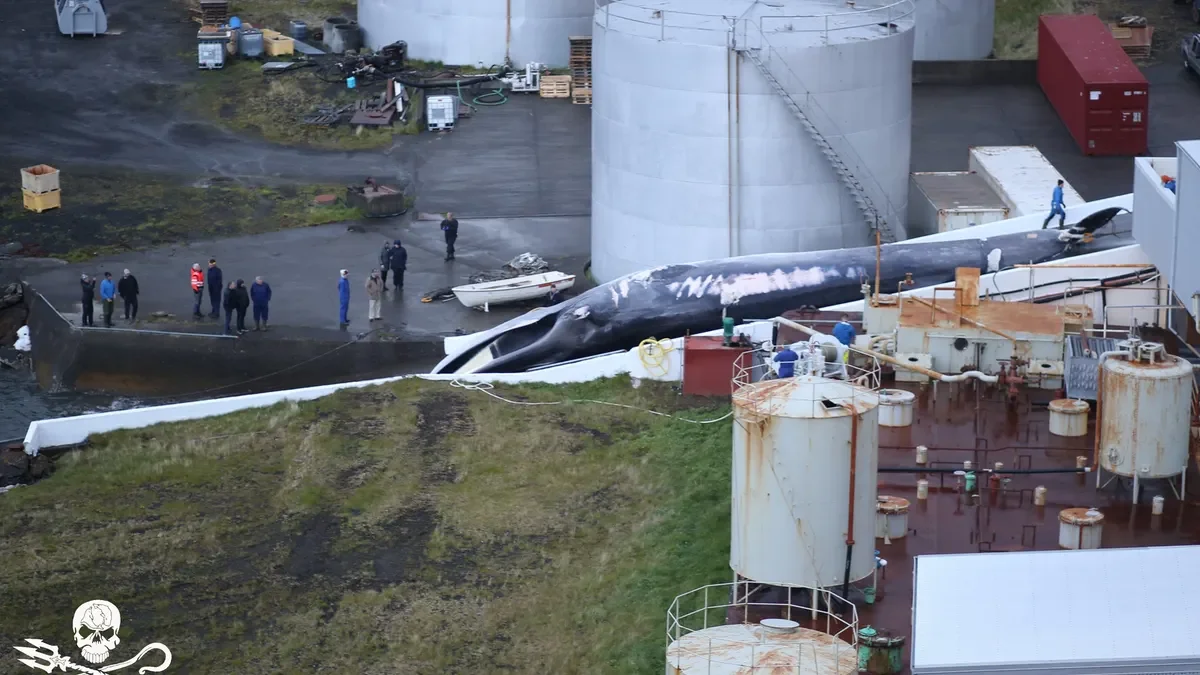
A new bill submitted in February 2027 could end commercial whaling in Iceland for good, leaving only Norway and Japan still hunting whales commercially.
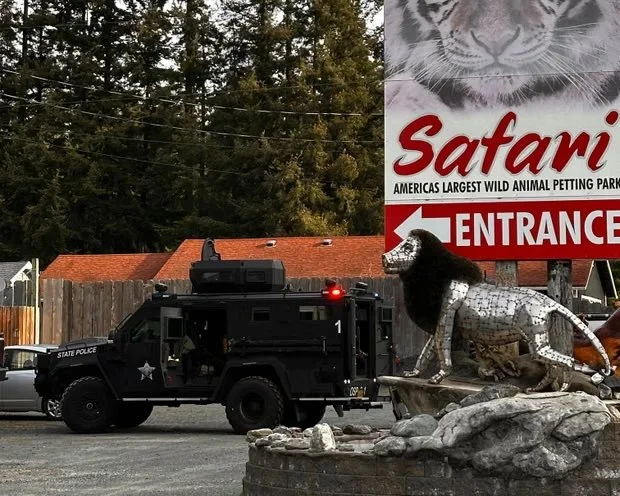
Police vehicles at the safari park on Thursday. Credit: Oregon state police
The owner of a roadside zoo on the Oregon coast in Bandon has been sentenced to more than seven years in prison, following a lengthy criminal investigation.
Brian Tenney, 53, pleaded guilty in April to more than 40 charges of neglecting animals at the now-shuttered West Coast Game Park Safari, a family business he had owned since taking over from his parents in 2009.
After Coos County Circuit Judge Andrew Combs sentenced Tenney to seven years and six months in prison, prosecutors said: “This is by far the most significant animal cruelty-based sentence that has been handed down in the state.” Tenney’s own lawyers described it as “one of the largest and most complex animal neglect prosecutions ever brought in Oregon.”
The roadside zoo had been the subject of ongoing animal welfare violations noted by inspectors from the U.S. Department of Agriculture (USDA). These included undocumented or missing animals, unsafe encounters between animals and the public, unsuitable enclosures, a lack of veterinary care, and insufficient staffing - one report, from December 2024, notes there was just one staff member to "feed, water, clean enclosures, care for and provide basic husbandry needs for over 300 animals." Malnourishment was also a recurring issue.
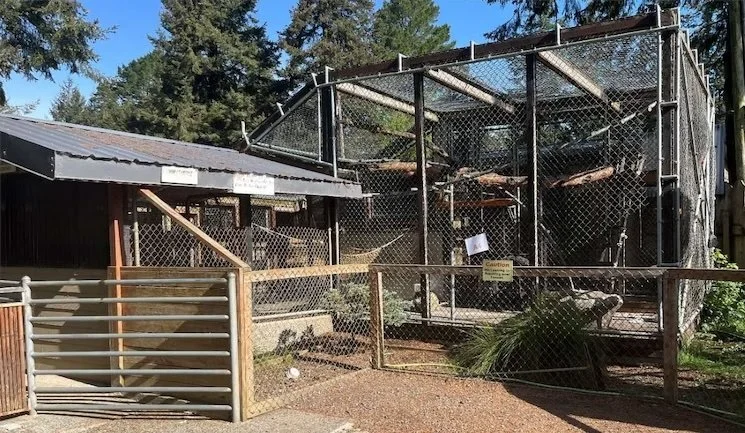
George's enclosure at West Coast Game Park Safari. Credit: Court Exhibit
In October 2024, the USDA contacted Oregon State Police, who launched an investigation. In May of last year, police served multiple search warrants to raid the roadside zoo, assisted by local, state, and federal agencies. Over four successive days, authorities confiscated more than 270 live animals, including a chimpanzee named George, who was found living alone, underweight, with calluses on both knees, and who later tested positive for herpes simplex and Epstein-Barr virus. George - whose enclosure, where he slept each night, was a small plywood box with no windows – had languished at the facility for 13 years.
Having spent his early life in the entertainment business, George is now experiencing a "normal" chimp life for the first time, after being rehomed at Chimpanzee Sanctuary Northwest (CSN) in Washington. "Watching George discover what it means to be a chimpanzee again has been extraordinary,” said CSN co-director Diana Goodrich. “He's gone from living alone in limited conditions to climbing structures, exploring a spacious outdoor habitat, and cautiously beginning to interact with other chimpanzees. His bravery and resilience inspire us every day.”
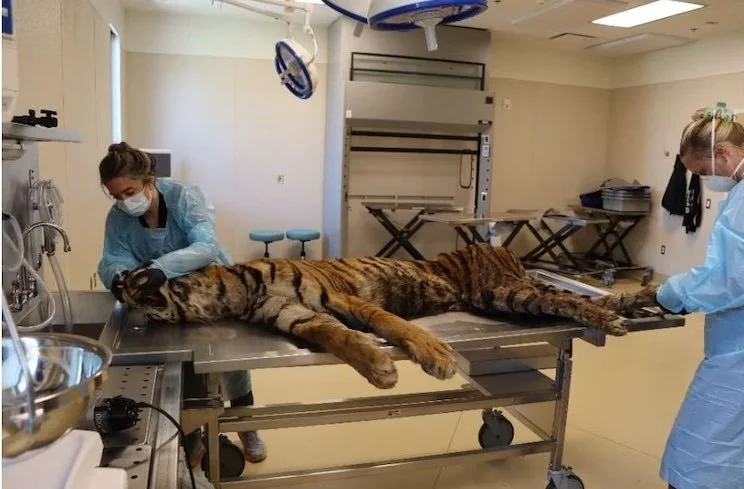
A necropsy on Rocko, a tiger found dead in a freezer at West Coast Game Park Safari. Credit: Court Exhibit
Fifteen wild cats were also rescued, including Nasha, a 16-year-old lioness who had been kept in an indoor enclosure with no light, ventilation, or heating. According to a USDA report from December 2024, Nasha’s enclosure “was wet and soiled with excessive feces, urine, soil, and food wastes with no clean bedding provided. A strong noxious odor of urine and feces was evident upon entering the confined space.” In September 2025, the Wildcat Sanctuary in Sandstone, Minnesota, was given full legal custody of Nasha, who is now recovering well.
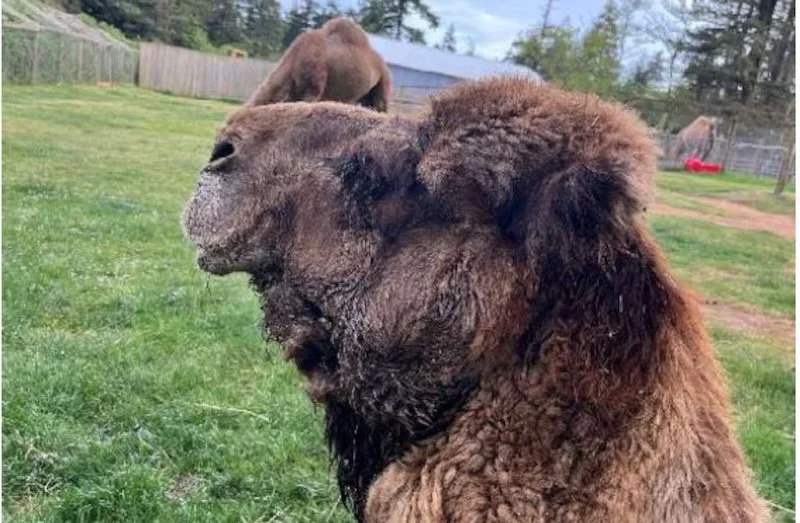
A camel euthanized at West Coast Game Park Safari was later found to have chronic dental disease, with maggots extending from jaw to neck. Credit: Court Exhibit
However, the police raid came too late for some. The body of a tiger – who tests later showed had died of starvation – was found in a freezer, while several animals were euthanized on site, including a camel who had a large open neck wound. A necropsy later revealed the camel had been suffering from chronic dental disease, with maggots extending from jaw to neck. A limping javelina, though removed from the roadside zoo, could not be saved due to severe arthritis and had to be euthanized.
In addition to his prison sentence, Tenney was ordered to pay over $340,000 in restitution. He was also banned from owning or living with any domestic animals, and from possessing several classes of animals, for 15 years.
“Brian Tenney deserves every day he spends locked in a cage, but his punishment is still nothing compared to the suffering he inflicted on the animals he starved, neglected and exploited for his deadly operation,” said Debbie Metzler, PETA's managing director of captive wildlife, who thanked Oregon State Police for securing a conviction against Tenney, and for helping rehome the animals at suitable sanctuaries, zoos, and rescue centers across the country.
Roadside zoos with poor conditions remain common across the U.S. One such facility, the Cherokee Bear Zoo in Cherokee, North Carolina, has drawn similar criticism from animal welfare groups. A petition calling on the USDA and the Cherokee Tribal Council to shut it down can be signed here.
With animal stories making up less than 2% of the news cycle, we're here to fill that gap. Sign up for Species Unite’s weekly news digest.
The animals need a newsroom in their corner
Every week we dig into the animal stories the mainstream news overlooks. Investigations, exposés, legal battles, and victories - none of it happens without your support. A monthly gift of as little as $5 keeps us covering the 98% of animal news the world isn't seeing.
More stories:
More than 270 animals were rescued from an Oregon roadside zoo after a years-long pattern of neglect, and its owner has now been sentenced to more than seven years in prison.