
Major new wildlife crossing in Wyoming set for completion a year earlier than expected
Kemmerer Wildlife Crossing could be ready by October next year, with its completion set to save thousands of mule deer and pronghorns from fatal traffic collisions.
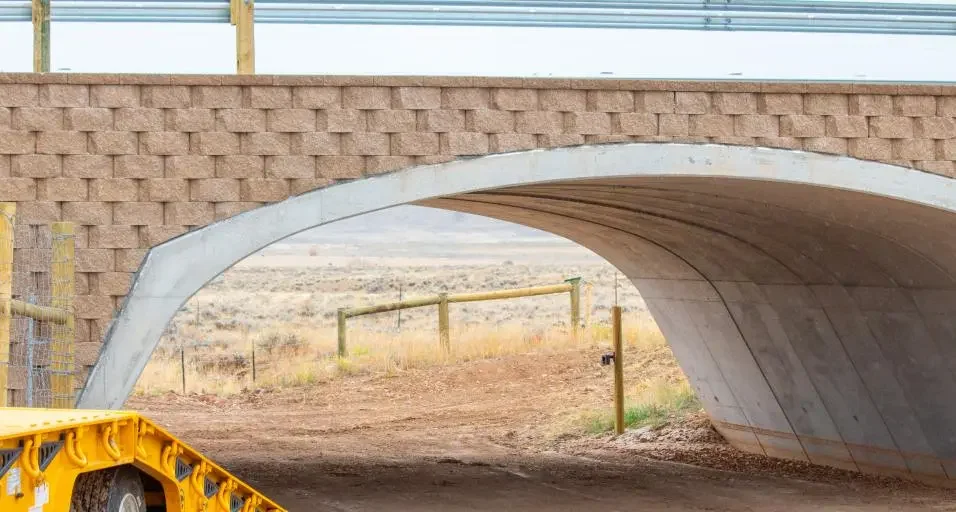
Photo: Wyoming Game and Fish Department
A $30 million wildlife crossing that could prevent up to 90 percent of wildlife-vehicle collisions (WVCs) in Wyoming is on track for completion by October 31, 2027 – a year ahead of schedule.
Construction began last month on Kemmerer Wildlife Crossing, along U.S. Highway 189. The project will see the erection of an eight-foot-tall fence spanning 63 miles, designed to encourage big-game animals like mule deer, moose, and pronghorns to use the new crossing points.
These include an overpass between Evanston and Kemmerer, to be finished by the end of the year, while work on seven underpasses will likely continue until the spring of 2027, said the Wyoming Game and Fish Department (WGFD).
This is welcome news for the thousands of animals who try to navigate the busy stretch of road. A report by the Nature Conservancy of Wyoming (NCW) in 2022 revealed that an average of 7,656 animals are killed each year on the highway. Approximately 5,500 of these are mule deer, accounting for at least 1.5 percent of Wyoming’s mule deer population.
Mule deer rely on U.S. 189 as an important migrational route, and the Wyoming Range herd is among the largest in the world. Pronghorns also use U.S. 189, as part of a 930-mile migration between the Upper Green River Basin and Grand Teton National Park – the longest mammal migration in the 48 contiguous United States.
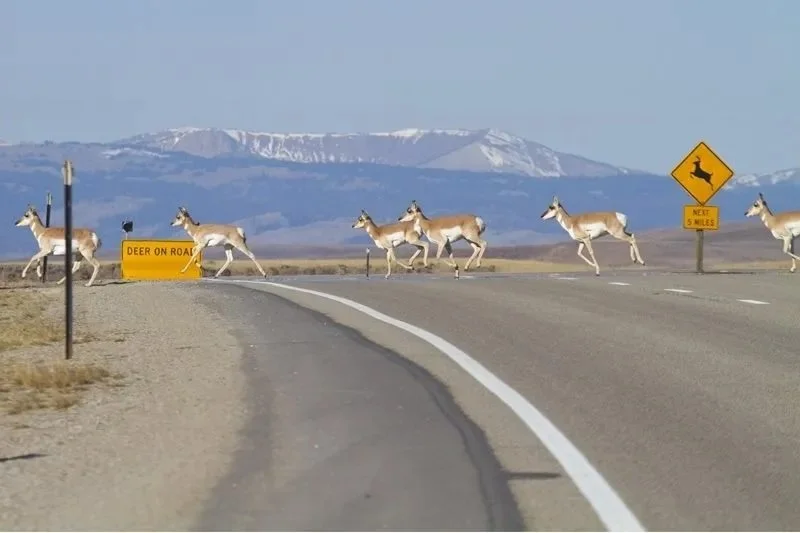
A group of pronghorn cross U.S. Highway 191 at Trappers Point crossing west of Pinedale prior to the overpass being constructed. Photo: Wyoming Game and Fish Department
According to the NCW report, the number of WVCs in Wyoming has doubled over the past 15 years, and is expected to tripple by 2035. On average, Wyoming has seen an increase of 191 traffic collisions involving big-game animals every year. The authors identified U.S. 189 as “a long-term WVC hotspot.”
The publication of the report coincided with the Kemmerer project receiving a $24.3 million grant from the federal Wildlife Crossings Pilot Program, set up by Congress in 2021 to reduce some of the million-plus WVCs that occur annually across the country.
The Kemmerer will expand on earlier wildlife efforts, such as incorporating and updating existing underpass structures, and replacing net-wire fencing. As a permeable material, net-wire has allowed the animals to cross through the fencing, increasing the risk of highway fatalities.
The WGFD said the project had become a “top priority due to projected future development and increased traffic along U.S. 189.” This includes the construction of a $4 billion power plant near Kemmerer.
Although the U.S. has over 1,000 dedicated wildlife crossings, more are needed. Fortunately, an increasing number of states are embracing the issue. Colorado has just opened the largest wildlife overpass in the world – the Greenland Wildlife Overpass along I-25 – while a wildlife crossing over Route 97 in California is almost complete, after a decade of planning.
Arizona is adding three new overpasses to its network of 26 dedicated wildlife crossings, which have so far helped cut WVCs in the state by 90 percent. And last year, lawmakers in Utah and Virginia established an annual fund specifically for the building of wildlife corridors.
Take the 30 Days of Action for Animals challenge: This August, we're challenging you to take one action for animals every single day. From signing petitions and contacting lawmakers to making different choices at the dinner table, every action adds up. Sign up now to get your first action from tomorrow.
Species Unite News is a weekly round-up of the most important animal stories happening around the world. Join over 250,000 others who start their week with the latest animal stories delivered straight to their inbox.
We Have A Favor To Ask…
Species Unite amplifies well-researched solutions to some of the most abusive animal industries operating today.
At this crucial moment, with worldwide momentum for change building, it’s vital we share these animal-free solutions with the world - and we need your help.
We’re a nonprofit, and so to keep sharing these solutions, we’re relying on you - with your support, we can continue our essential work in growing a powerful community of animal advocates this year.
More stories:
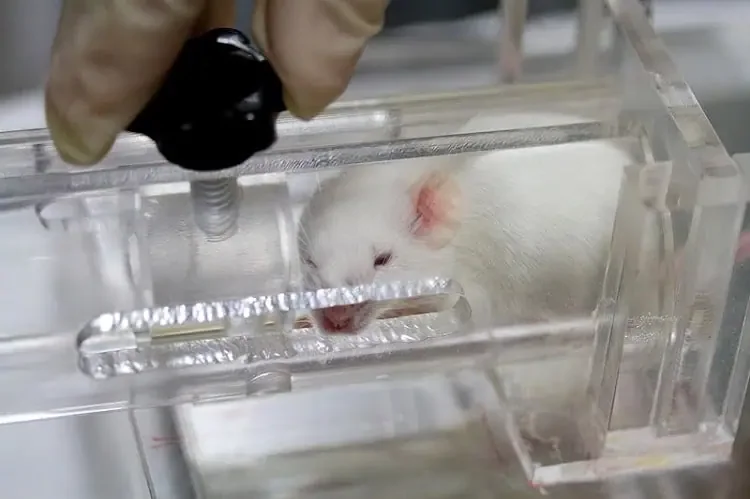
Significant investment and revised regulations across four government agencies are part of an ongoing effort to support innovative scientific research ahead of “outdated” testing on animals.