
Bill that could ban commercial whaling in Iceland to be introduced in February 2027
A new bill submitted in February 2027 could end commercial whaling in Iceland for good, leaving only Norway and Japan still hunting whales commercially.
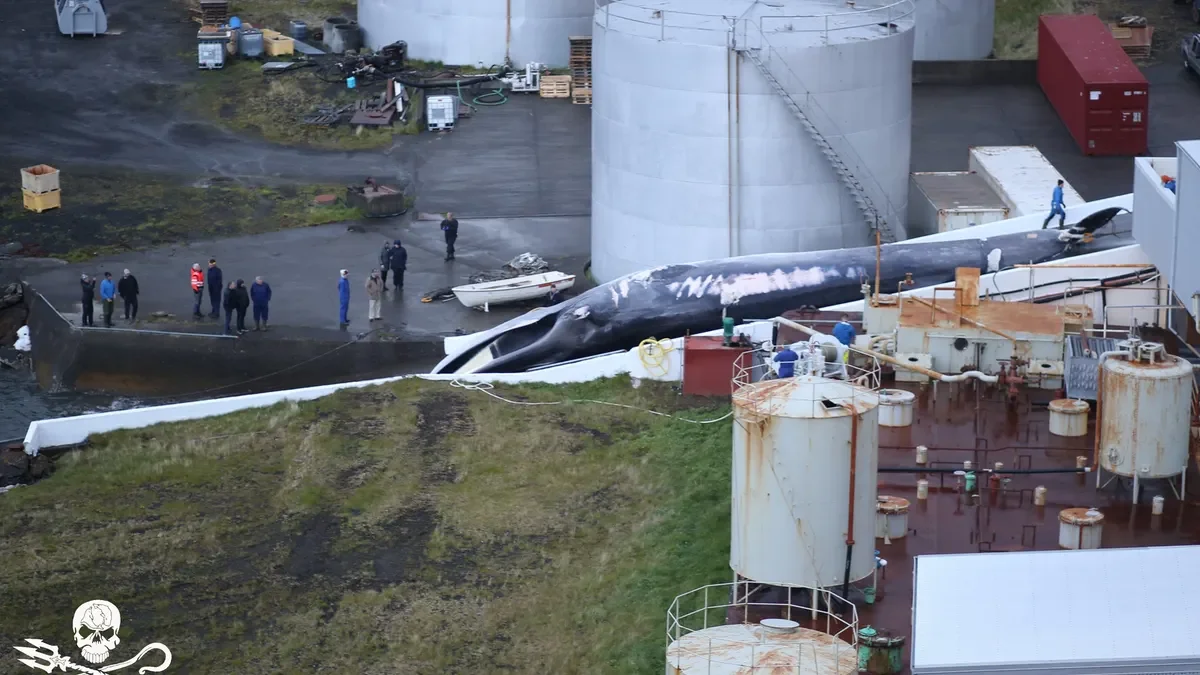
A fin whale (Balaenoptera physalus) carcass pulled up on the slipway at the Hvalur hf. whaling station in Hvalfjörður, Iceland. Credit: Sea Shepherd
Commercial whaling in Iceland could be banned for good under a bill set to go before parliament in February 2027, which could leave Norway and Japan as the last countries still permitting the practice.
Announced last week as part of the Parliamentary Agenda of the 2026–2027 legislative session, the bill will consider “comprehensive revision” of the Whaling Act – which the government says has changed little since its enactment in 1949 – with “particular attention” paid to the issues surrounding a permanent ban on whaling.
It comes just weeks before the commercial hunting season concludes, with 85 fin whales having been caught so far this year, as of September 14. The killings were carried out by Hvalur, Iceland’s last remaining commercial whaling company. Founded in 1947, Hvalur employs about 150 people during the annual whaling season of June to September. Hvalur’s CEO Kristján Loftsson told Reuters that he expects the bill will come to nothing.
Legislative bills banning whaling have been drafted by previous governments in Iceland, including as recently as October 2023, without progressing further. However, animal advocacy groups are more hopeful this year, given the significant drop in demand for whale meat both at home and abroad. Just 2% of Icelanders regularly eat whale meat, while exports have fallen to such an extent that meat from the 2023 season went unsold, and hunting operations ceased between 2024 and 2025.
Last month, Loftsson announced plans to grind whale meat into powder and market it as an iron supplement, in an effort to reverse the company’s fortunes. According to figures compiled by the Paul Watson Foundation from Hvalur's own annual accounts, Hvalur has been making an annual loss every year since 2016, with cumulative losses between 2014 and 2023 exceeding ISK 6.1 billion (around $40 million).
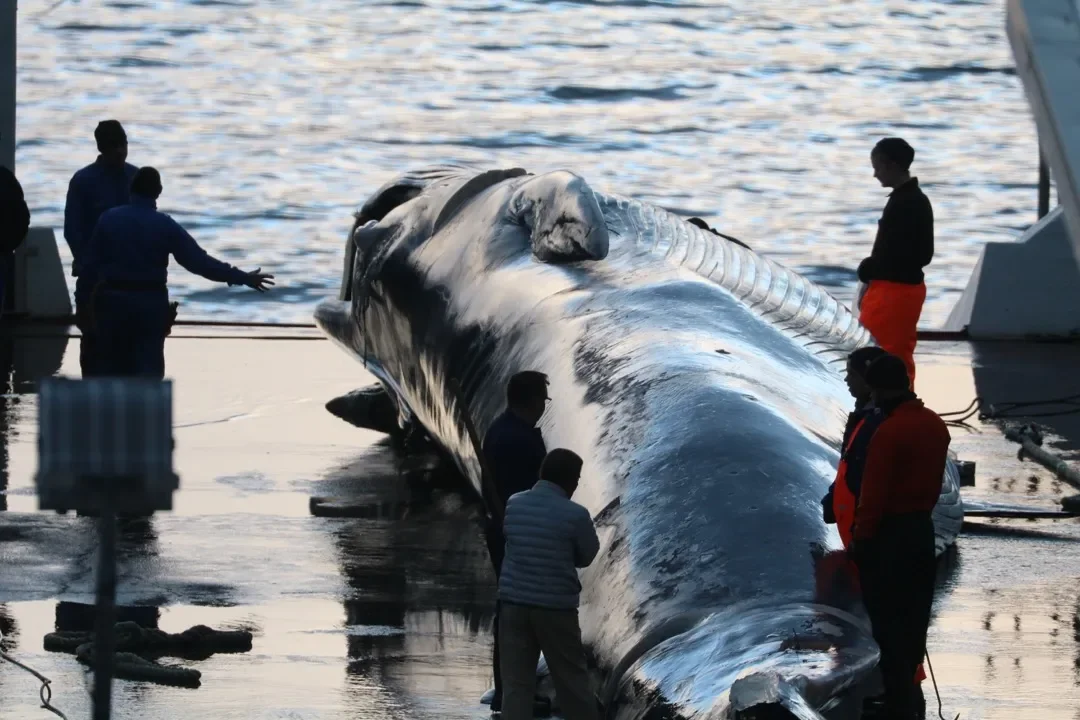
A dead fin whale at a commercial whaling station in Iceland. Credit: Sea Shepherd
In contrast, boat tours to watch whales at sea have been drawing over 350,000 visitors to the country every year, generating around $26 million. As a result, tourism now accounts for 8.8% of Iceland’s GDP.
The four most commonly sighted species are the humpback whale (Megaptera novaeangliae), the minke whale (Balaenoptera acutorostrata), the fin whale (Balaenoptera physalus), and the blue whale (Balaenoptera musculus). The fin whale – the second largest animal on earth, behind the blue whale – is the main target of Iceland’s hunters. More than 1,000 fin whales have been killed in Iceland since the country pulled out of a moratorium prohibiting commercial whaling, introduced in 1986 to protect declining populations. The species is currently classified as Vulnerable on the IUCN Red List.
Most opponents object to whaling on the grounds of animal cruelty, and according to a 2023 report by the Icelandic Food and Veterinary Authority, 24% of whales killed in the 2022 hunting season were shot more than once. Furthermore, the median time that those whales took to die, from first shot to death, was 11.5 minutes. Under Icelandic regulations, an animal should be killed instantly.
The new bill on whaling is to be submitted in February. A poll published earlier this year found that 41% of Icelanders are against whale hunting, with 33% in favor, while 26% are neutral. In addition, the survey showed that younger people are more likely to oppose whaling, with just 21% of those aged 18–29 supporting the practice.
Last month, Iceland voted on resuming talks to join the European Union (EU). A reported 52.8% opposed, while 47.2% voted in favour. Had Iceland joined the EU – which bans the capture and killing of all cetaceans – the country’s whaling industry would almost certainly be over.
Join Species Unite in urging Prime Minister Kristrún Frostadóttir and Iceland’s new government to take decisive action and ban whaling once and for all. Sign the petition.
With animal stories making up less than 2% of the news cycle, we're here to fill that gap. Sign up for Species Unite’s weekly news digest.
The animals need a newsroom in their corner
Every week we dig into the animal stories the mainstream news overlooks. Investigations, exposés, legal battles, and victories - none of it happens without your support. A monthly gift of as little as $5 keeps us covering the 98% of animal news the world isn't seeing.
More stories:


A new bill submitted in February 2027 could end commercial whaling in Iceland for good, leaving only Norway and Japan still hunting whales commercially.