
Faroese hunters kill over 700 dolphins in a single day
Campaigners tell of ‘chaotic scenes of extreme cruelty’ as three separate hunts are carried out, just hours after the Faroe Islands voted to remove protections for dolphins.
Credit: Sea Shepherd
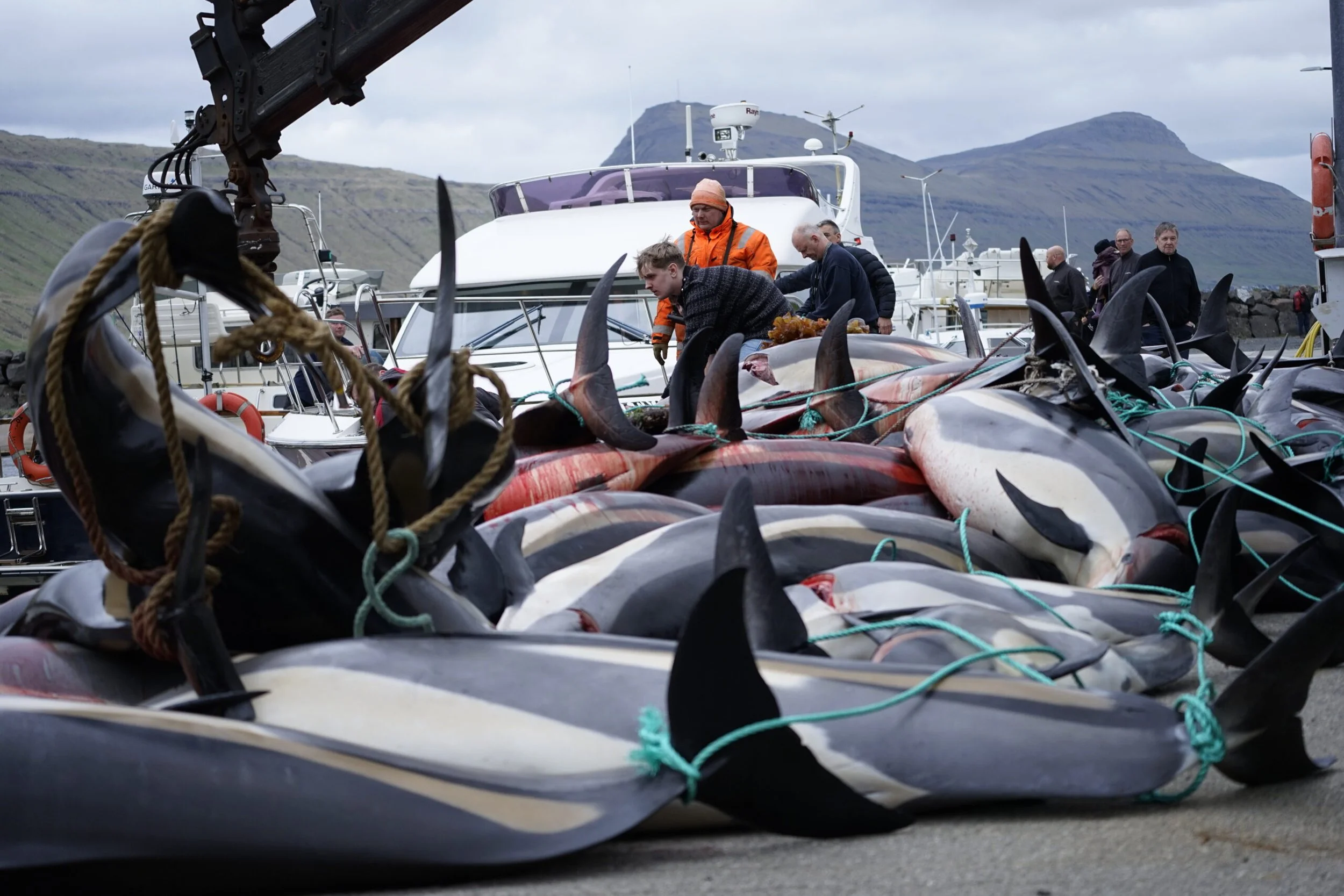
A total of 706 pilot whales and other dolphins were killed in the Faroe Islands on May 27.
This is one of the biggest single-day fatalities of dolphins in recent Faroese history. By comparison, 748 dolphins were killed during the whole of 2024.
According to the marine conservation organization, Sea Shepherd, 402 pilot whales and four bottlenose dolphins were killed at a hunt in the capital, Tórshavn, while separate hunts in Skalabotnur and Hvalvik accounted for the deaths of 168 and 132 white-sided dolphins respectively.
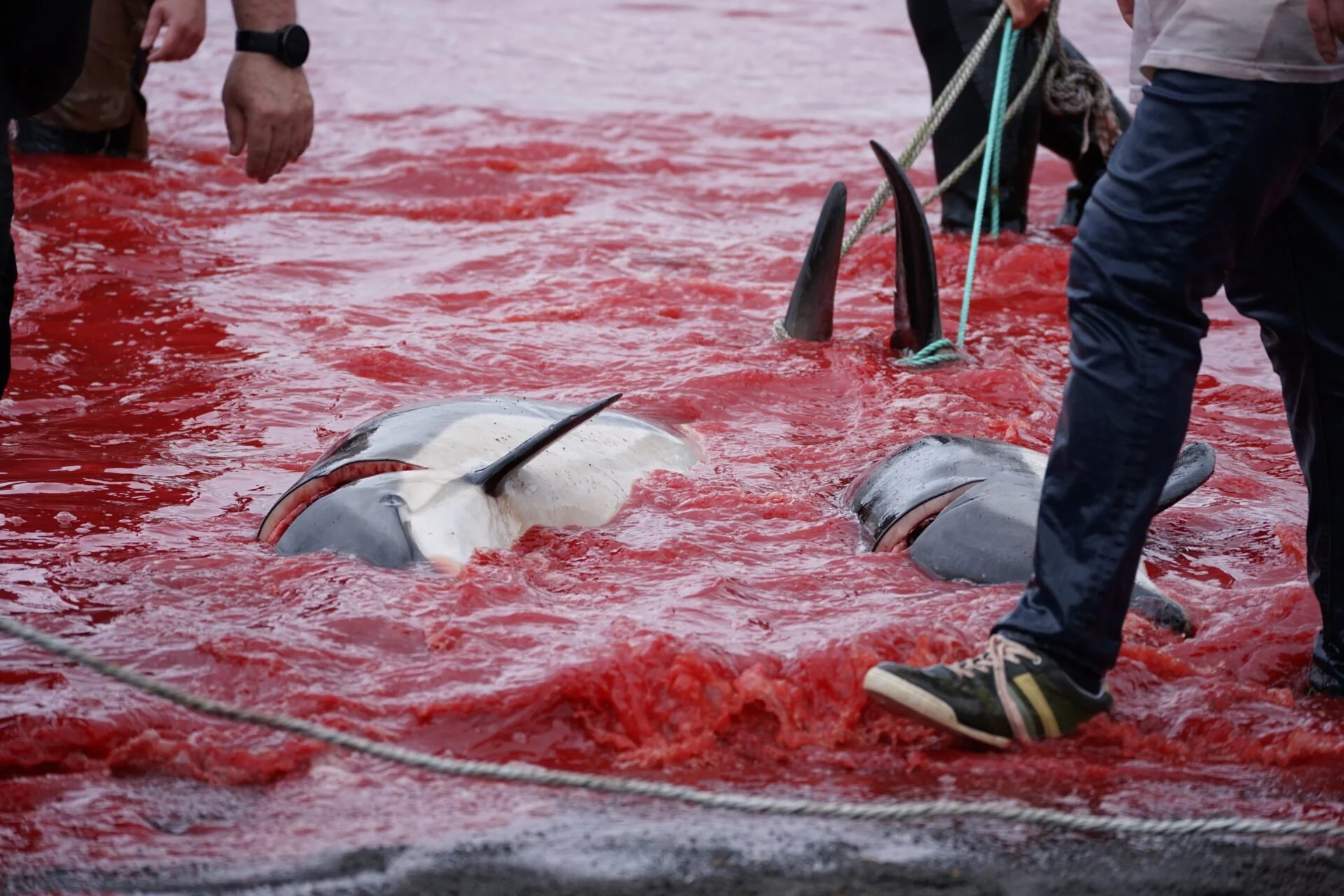
Eyewitnesses from Sea Shepherd described “chaotic scenes of extreme animal cruelty,” in which animals were crushed against rocks and struck by boat propellers. Worse still, many hunters killed the animals without first using a spinal lance, contrary to Faroese law.
“What makes this indefensible, even by the whalers’ standards, is that they failed to follow their own existing rules,” said Valentina Crast, campaign director at Sea Shepherd. “Spinal lances are mandatory under Faroese law, yet hunters openly admitted that there were not enough to go around, and animals were killed with ordinary knives alone.”
Indeed, the hunts came just hours after the Faroese government voted to remove whales and dolphins from the Animal Welfare Act. The unanimous 28-0 vote means hunters no longer face prosecution for welfare violations, as local hunting laws take precedence over broader animal rights laws.
ORCA, a leading whale and dolphin charity, described the move as “contemptuous – not only towards the animals themselves, but towards the growing international concern about the cruelty of these hunts… Faced with mounting evidence of suffering, the response has not been to strengthen protection, but to strip pilot whales and dolphins from the reach of animal welfare law. Frankly, it is beyond belief.”
The hunts, known as the Grindadráp or 'grind', remain a popular cultural tradition in the Faroe Islands, dating back around 1,000 years. According to the Faroese government, the grind is a regulated event that provides a sustainable food source while strengthening local identity.
Anyone in the Faroe Islands wishing to obtain a hunting licence can attend a government-run, three-day training course, in which they learn how to drive the animals to shallow water, and how to secure a hook and rope in their blowhole. Once restrained, the animals are stabbed with a steel lance behind the blowhole, which severs the blood supply to both the brain and the spinal cord. Finally, the training course demonstrates how to make deep cuts to the animal’s neck, so that they bleed out.
Credit: Sea Shepherd
Opponents have cited cruelty in every stage of a grind. The herding of the animals into shallow water is often prolonged – spanning hours or even days – while the capture subjects these sentient, highly intelligent animals to considerable stress, disorientation, and the breaking-up of pods or social groupings. This is also one of the few events in which animals are driven, in large numbers, from their natural environment.
After applying the spinal lance, hunters are required to check that the animal is unconscious before cutting its neck. However, there is evidence that hunters do not routinely carry out such checks, and furthermore, researchers have found that applying the spinal lance may not render the animal instantly unconscious. As such, there are “substantial concerns” that some dolphins remain aware while they are paralysed and bleeding out.
Certainly, given the lack of spinal lances available to hunters on May 27, many of the animals would have been conscious before the deep cuts were made to their necks.
As a self-governing country in the Kingdom of Denmark, the Faroe Islands is beyond the jurisdiction of the European Union, which bans the killing of whales and dolphins. The Faroe Islands is also not a member of the International Whaling Commission, and whale and dolphin hunts can be legally licensed by the Faroese government.
The unanimous vote comes despite longstanding condemnation from many governments around the world, as well as recent efforts by several marine conservation organizations to engage with the Faroese government on ending whale hunting.
Help protect whales by joining Species Unite in urging Iceland’s Prime Minister to take decisive action and ban whaling once and for all. Sign the petition here.
More stories:
We Have A Favor To Ask…
Species Unite amplifies well-researched solutions to some of the most abusive animal industries operating today.
At this crucial moment, with worldwide momentum for change building, it’s vital we share these animal-free solutions with the world - and we need your help.
We’re a nonprofit, and so to keep sharing these solutions, we’re relying on you - with your support, we can continue our essential work in growing a powerful community of animal advocates this year.
Pronghorn have used the overpass to cross Interstate 25 safely for the first time in 30 years, while bears, coyotes, deer, elk, moose, frogs, and a threatened species of mouse have also been taking advantage of the $15 million crossing.