
The killings were described as “an abomination,” while experts doubt the ‘official’ killing methods, arguing that the 12 pups were likely to have been killed in their dens.
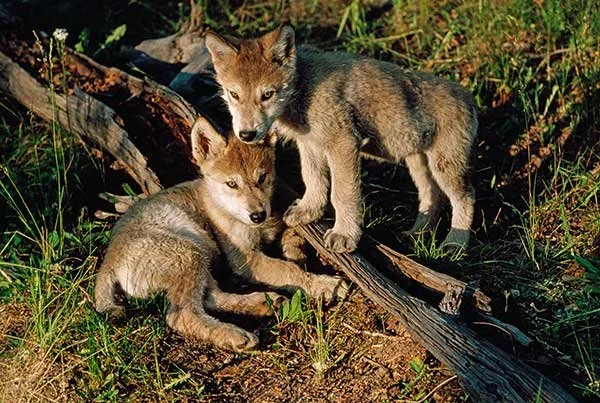
Credit: Living with Wolves. Read more: DID YOU KNOW? Idaho's war on wolves targets wolf pups
The state of Idaho is facing criticism after paying out thousands of taxpayer dollars to hunters for killing weeks-old wolf pups.
A coalition led by the International Wildlife Coexistence Network (IWCN) last week submitted a petition calling for the introduction of rules that would protect wolf pups and their mothers until at least September, and forbid the taking of wolves wolves (Canis lupus) at denning sites.
The state already has laws protecting juveniles of other predator species, including black bears (Ursus americanus) and mountain lions (Puma concolor).
“Idaho promised during federal delisting to manage wolves the same way it managed these other native carnivores,” said Suzanne Asha Stone, IWCN’s executive director. “Instead, it pays people now to kill wolf pups before their eyes open.”
According to a report published earlier this month by Public Domain and The Guardian, at least three hunters killed 12 wolf pups and received $24,000 through a state-administered fund set up to encourage wolf management. At least one full litter was apparently wiped out.
“It’s an abomination,” said Brooks Fahy, director of the advocacy group Predator Defense, as per The Guardian. “I think most people, even in Idaho … the fact that taxpayer dollars are paying for this – they would be appalled.”
Furthermore, there is uncertainty as to how the pups were killed. Records show that in all 12 cases, the method of killing is listed as “still stalk,” in which hunters creep up on an animal before shooting. However, this is disputed by wolf experts, especially as the killings were recorded on a single day. “Killing 12 wolves total on the same day by stalking – that doesn’t happen,” Carter Niemeyer – part of the federal team that reintroduced wolves to Yellowstone National Park in the mid-1990s.
Instead, it is more likely that hunters monitored the dens and simply pulled the pups out once the mother was away. Doug Smith told The Guardian that he often did this for research purposes while working as a biologist at Yellowstone National Park. “It’s easy to do,” he said. “If you can’t reach them, you dig them out with a shovel.”
At a meeting in Lewiston, chaired by the Idaho Department of Fish and Game (IDFG) on November 18, director Jim Fredericks said that targeting pups is “distasteful,” while commissioner Tim Murphy added that it violates “fair chase” ethics, as the animals have no chance of getting away.
Since January this year, hunters were prohibited from claiming money for killing wolves in May or June, as pups are still young. However, this doesn’t take into account the fact that the denning season begins before this time, as demonstrated by the April killings.
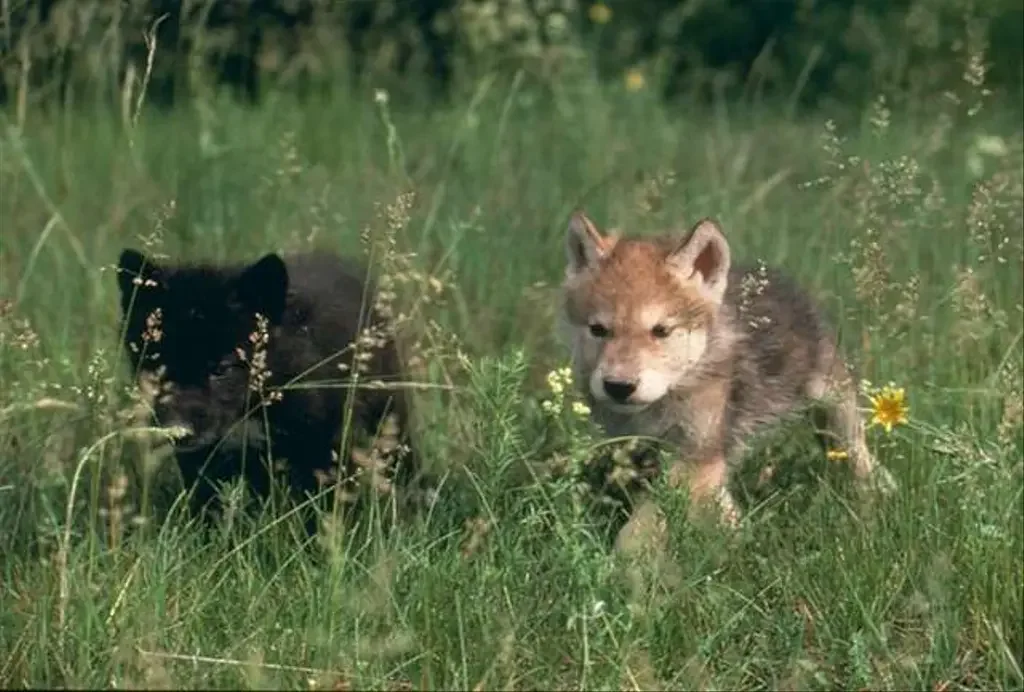
Credit: Public domain
The IDFG grants around $200,000 each year to the Foundation For Wildlife Management (F4WM), a nonprofit dedicated to promoting the recovery of elk (Cervus canadensis), deer, and moose (Alces alces) in wolf-impacted areas. F4WM allows hunters to claim reimbursement of expenses for up to $2,000 per wolf. The costs of fuel, firearms, cameras, traps, and outdoor clothing are all covered. The invoices are then sent to IDFG. Those who killed the 12 pups invoiced for the full $2,000.
Hunters are required to present the skull and hide to a wildlife officer, who will typically take a tooth sample, which is sent away for tests that determine the wolf’s age and genetics. In the case of the 12 pups, no teeth samples were taken. IDFG biologist Cory Mosby said this was likely due to the fact that the pups’ teeth were too small to extract.
The wolf populations in the northern Rocky states of Idaho, Montana, and Wyoming have all been under state management since 2011, when the species lost its federal protections afforded by the Endangered Species Act (ESA).
After numbers peaked at around 1,600 in the spring of 2019, Idaho passed legislation in 2021 promoting more aggressive wolf management, which saw residents allowed to buy an unlimited number of permits to hunt wolves, costing just $14 per animal. This is also when the partnership began between IDFG and F4WM.
The petition to protect wolf pups will be considered at IDFG’s next meeting in January.
Listen to podcast episode: Jim and Jamie Dutcher spent six years in the nineties living with and filming a pack of wolves called the Sawtooth. Since then, they've focused their lives on the study and documentation of wolf social behavior, and their photographs, books, and Emmy Award-winning films documenting the lives of these remarkable animals have changed the way that many people see these deeply social and family-oriented animals. Listen here or anywhere you get your podcasts.
Take action: Join Species Unite in calling on the Idaho Fish and Game Commission to do the right thing and protect wolf pups and their mothers from slaughter. Sign the petition here.
With animal stories making up less than 2% of the news cycle, we're here to fill that gap. Sign up for Species Unite’s weekly news digest.
The animals need a newsroom in their corner
Every week we dig into the animal stories the mainstream news overlooks. Investigations, exposés, legal battles, and victories - none of it happens without your support. A monthly gift of as little as $5 keeps us covering the 98% of animal news the world isn't seeing.
More stories:

The killings were described as “an abomination,” while experts doubt the ‘official’ killing methods, arguing that the 12 pups were likely to have been killed in their dens.