
Animals are still dying for your makeup. Here's how we can stop it
Animal testing for cosmetics seems like a thing of the past – but it's still an ongoing battle.
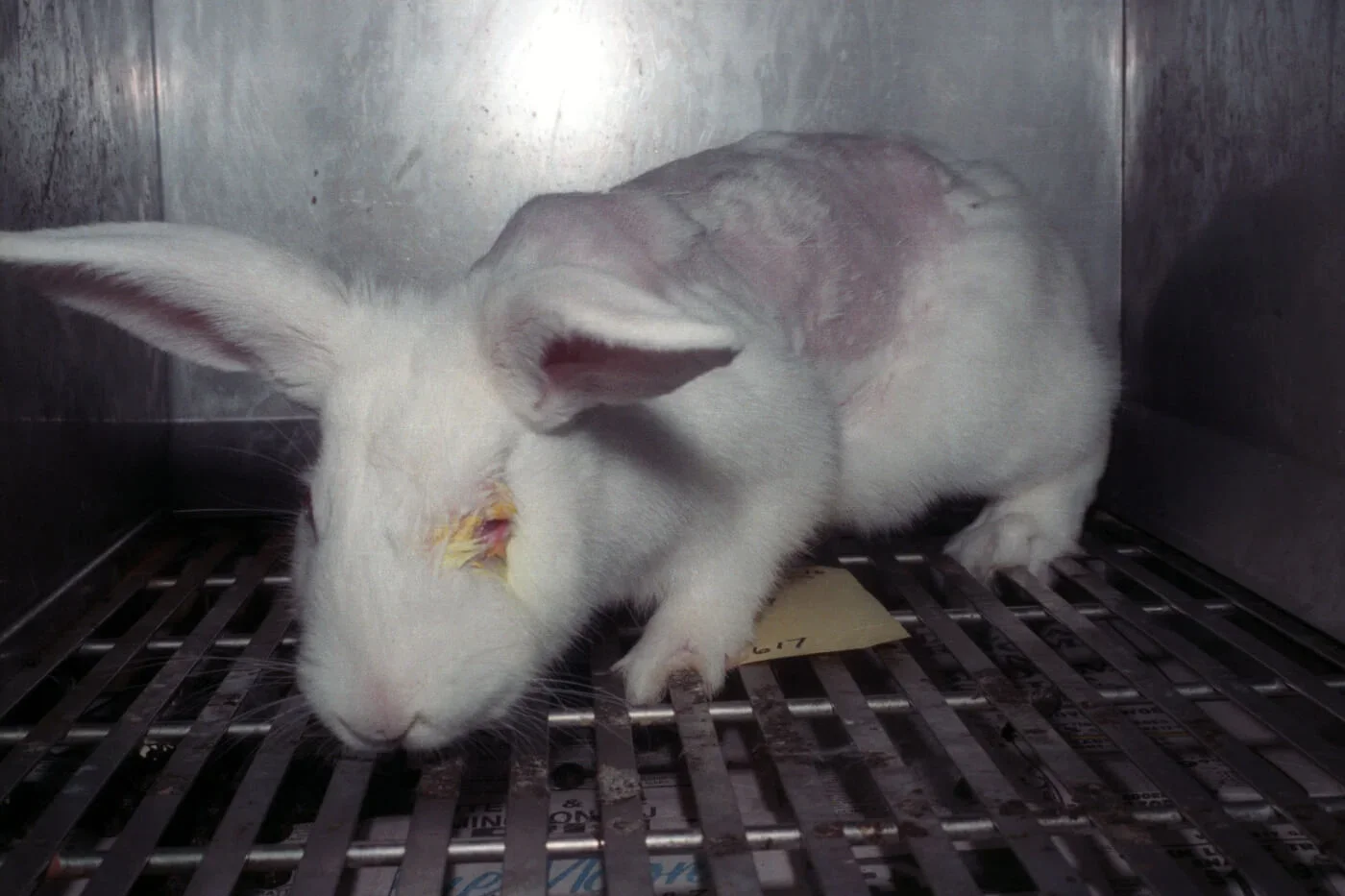
Credit: PETA
A rabbit sits in a barren cage underneath fluorescent lights. While his gentle paws are made for grass and soft soil, the cold, hard floor of the cage is all he'll ever feel. On occasion, a pair of gloved hands pull him out. But leaving the cage doesn't mean he'll get to breathe fresh air or play with other rabbits. Instead, he'll be restrained and harsh chemicals will be smeared onto his sensitive skin. Sometimes, the gloved hand will soar over his face with a dripper, dropping substances into his eye. No pain relief will ever be administered, meaning that the rabbit will experience every burning, stinging, and other excruciating sensations that flood his body. Each day, he'll be returned to his cage. One day, the gloved hand will pull him out for the last time. Throughout his short life, he will never run on grass or feel the sun on his skin.
In the years he passes in that laboratory, this rabbit may be subjected to painful experiments such as the Draize test, where he will be restrained his their eyelids forcibly kept open and substances are dropped onto his eyeballs to test impact over time. He may also undergo a skin corrosion test, where corrosive chemicals will be dropped onto shaved patch of his skin and left for weeks, to measure the tissue damage deriving from the burns. When he is no longer useful for the tests, he may be killed by asphyxiation or potentially having his neck broken – but not much information is available on the methods used to end these animals' short and miserable lives. One thing is for certain: they will be killed.
This rabbit is only one among hundreds of thousands of animals being subjected to laboratory tests – right here in the US, possibly for your lipstick or mascara. Worldwide, it is estimated that 500,000 animals die each year just for testing cosmetics. And if you thought that when it came to the US this kind of practice was history, we've got bad news. There is currently no ban on testing cosmetics or household products in the US – so companies that test their products on animals can sell their products here. However, unlike some other territories, there is no law that mandates animal testing either, meaning it is not compulsory. The FDA says that animal testing in cosmetics “may sometimes be used to establish product safety”, but also that sometimes “it is necessary to assure the safety of a product or ingredient.”
There are several states which have banned the use of animal testing for cosmetics: California, Hawaii, Illinois, Louisiana, Maine, Maryland, Nevada, New Jersey, New York, Oregon, Virginia and Washington. And if some politicians can have it their way, it may soon be history in all 50 states. The Humane Cosmetics Act, a bill introduced by bipartisan legislators in the House of Representatives, seeks to outlaw animal testing for cosmetics. The legislators behind it are US. Representatives Don Beyer (D-VA), Vern Buchanan (R-FL), Ken Calvert (R-CA), Paul Tonko (D-NY), and Nanette Barragán (D-CA). “Subjecting animals to painful experiments to test cosmetics is inhumane and entirely unnecessary,” Rep. Buchanan has said. “Scientific advancements have created viable alternatives to these cruel experiments, while still ensuring that cosmetic products are safe for human use. As countries around the world work to prohibit animal testing in cosmetics, it’s time for the United States to get on board.”
The viable alternatives Rep. Buchanan mentions have gained more ground than ever, and many scientists agree that they are more efficient and accurate than using animals' bodies. In fact, scientific articles have found that one of the drawbacks of the Draize test lies in the differences between the human eye and the rabbit eye. Scientifically accurate methods include the EpiSkin and EpiDerm reconstructed human epidermis models, which work with a 3D model of human skin and can be used in irritation tests. The cell-based Fluorescein Leakage Test is an in-vitro model that can be used for eye irritancy potential. New methods are also being developed – scientists in Japan are working on the VitriGel-Eye Irritancy test, another in vitro method that doesn't use animals.
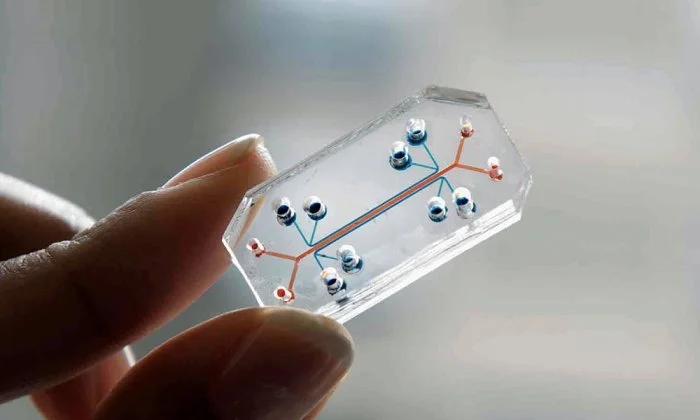
A lung-on-a-chip device. Image: Wyss Institute, Harvard University.
Progressive science is available at our fingertips, but we need to get animals out of laboratories if we are to start using them – and it's in our best interests to do so. In vitro tests (human cells and models) and in silico tests (computer models) are more reliable and at times more cost-effective than testing on animals.
Many nations around the world are realising this and moving towards legislation that outlaws animal tests for cosmetic purposes. Australia, Brazil, Canada, Chile, India, and South Korea are among those countries, alongside the entire European Union. Loopholes in the laws do exist, but the legislation is still a very significant step towards ending these practices.
But there is no need to wait until legislators in the US do the right thing. Consumers who don't wish to partake in animal testing can use verified cruelty-free schemes such as Cruelty Free International's Leaping Bunny logo or PETA's Ultimate Cruelty Free list.
Consumers can also contact their elected officials to urge them to take action to implement legislation that protects animals and stands up for accurate science. The more people take action, the fewer rabbits will have to spend their lives in those cages.
Stop the torture of animals for cosmetics
Join Species Unite in urging the U.S. Congress to pass the Humane Cosmetics Act, which would ban the sale and production of animal tested cosmetics in the United States.
We Have A Favor To Ask…
Species Unite amplifies well-researched solutions to some of the most abusive animal industries operating today.
At this crucial moment, with worldwide momentum for change building, it’s vital we share these animal-free solutions with the world - and we need your help.
We’re a nonprofit, and so to keep sharing these solutions, we’re relying on you - with your support, we can continue our essential work in growing a powerful community of animal advocates this year.
More stories:


A cleaner New York Harbor has drawn hundreds of humpback whales back to its waters for the first time in generations, but the same busy port that welcomes them is also killing them.