
Deadly bird flu outbreak hits U.S. mink fur farm for the first time
For the first time in the United States, an outbreak of highly pathogenic avian influenza (H5N1) has been documented on a mink fur farm. The virus, commonly known as bird flu, is a highly infectious respiratory illness that has primarily affected birds but has increasingly spread to mammals, including wild animals, companion animals, and humans, sometimes with fatal consequences. Fur farms in Europe became a hotbed for the disease beginning in 2022, and within two years H5N1 had been confirmed at more than 70 fur farms across the region, leading authorities to cull over half a million animals to protect the public from a virus that can be deadly to humans.
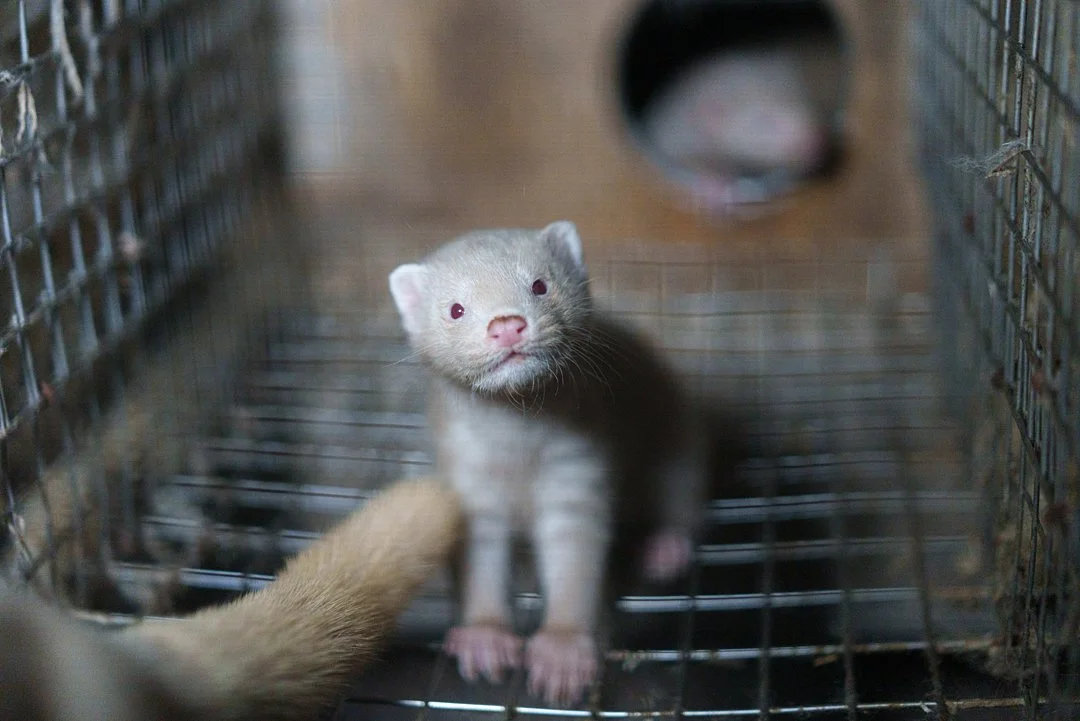
Photo: Oikeutta eläimille / We Animals
Now the virus has reached a mink farm in Salt Lake County, Utah, the second-largest mink-producing state in the country. State records obtained by the Animal Welfare Institute show that the outbreak has been moving through the farm since early August and that the owner expects to lose 80% of the minks, with officials appearing to have no clear plan for containing it. In one internal message, an official described the remaining options as vaccination, culling, or to “watch them die.” Animal protection groups have raised alarms that neither state nor federal officials were prepared for an outbreak like this, giving the virus more time to spread and evolve on the farm.
This is not the first time Utah’s mink farms have become a source of disease. In 2020, Covid-19 swept through 12 farms in the state, killing about 12,000 minks, and outbreaks around the world showed how quickly the virus could mutate in mink populations and spread back to people. Although the CDC still considers the risk of bird flu to the general public low, mink farms are ideal breeding grounds for disease, with thousands of animals crowded into small wire cages, often in unsanitary conditions surrounded by their own waste, and sometimes fed rendered meat from the poultry industry, which has been hit hard by bird flu. Because minks have respiratory tracts similar to those of humans, virologists warn that continued spread among them could allow the virus to become airborne and far more dangerous to people, and every new infection gives it another chance to adapt.
While state and federal officials have failed to put a clear plan in place, Congress still has the opportunity to take meaningful action by passing H.R.2185, the Mink: Vectors for Infection Risk in the United States Act (Mink VIRUS Act). This important bill would end the practice of mink fur farming in the United States after a one-year phase-out and would provide support for mink fur farmers to transition out of the industry to ensure they do not turn to illegal mink fur farming for money.
The Mink VIRUS Act is an important opportunity to end mink fur farming in the United States, protecting public health and sparing nearly one million minks from being killed for their fur each year. The bill needs as much public support as possible for lawmakers to make it a priority. Please sign our petition urging Congress to pass the Mink VIRUS Act and share it with your friends and family to help bring an end to mink fur farming for good.