
‘Mortality crisis’: one in four elephant calves born in US zoos die
The 25% death rate is prompting renewed criticism of zoo breeding programs and fresh calls to prioritize sanctuary-based alternatives.
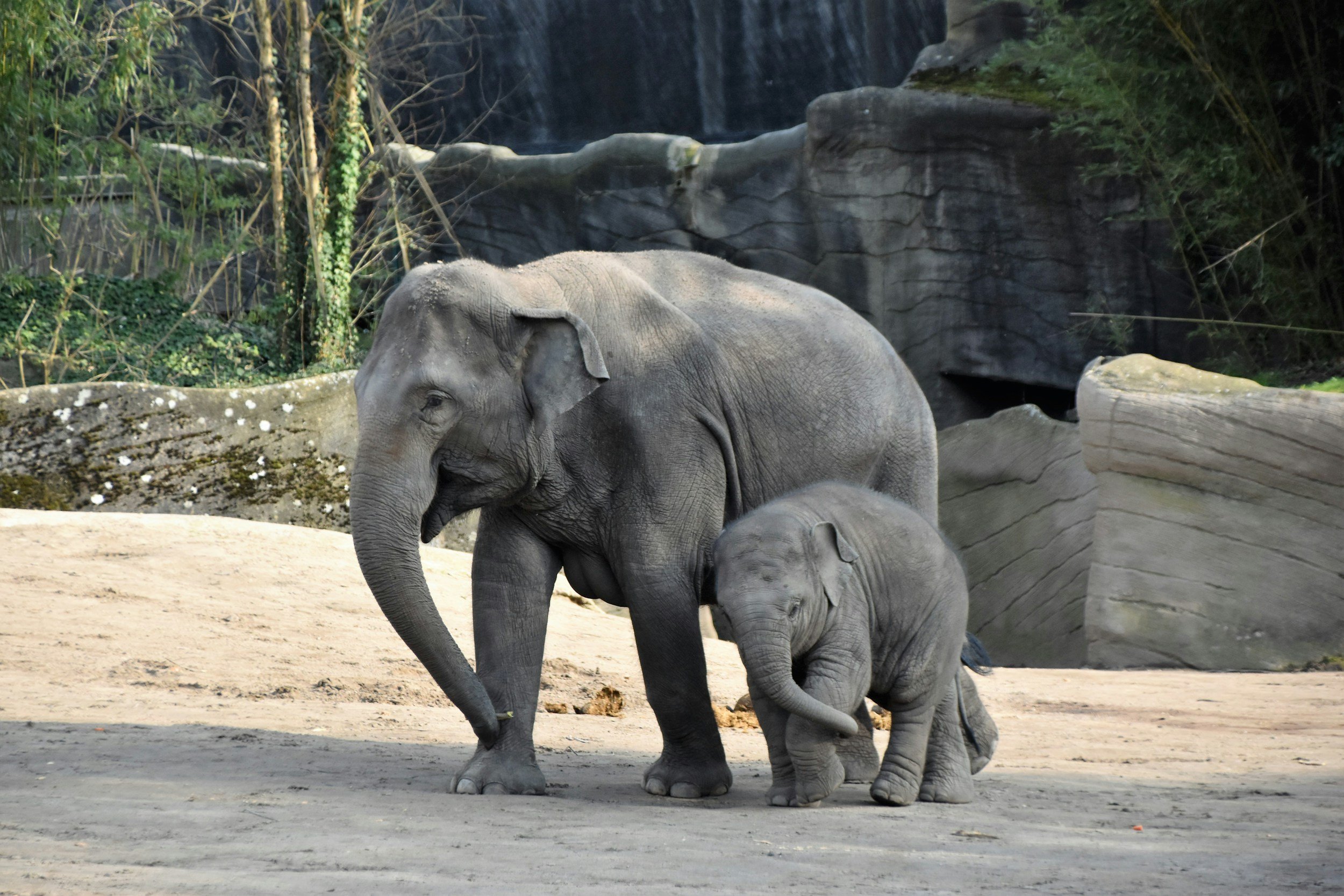
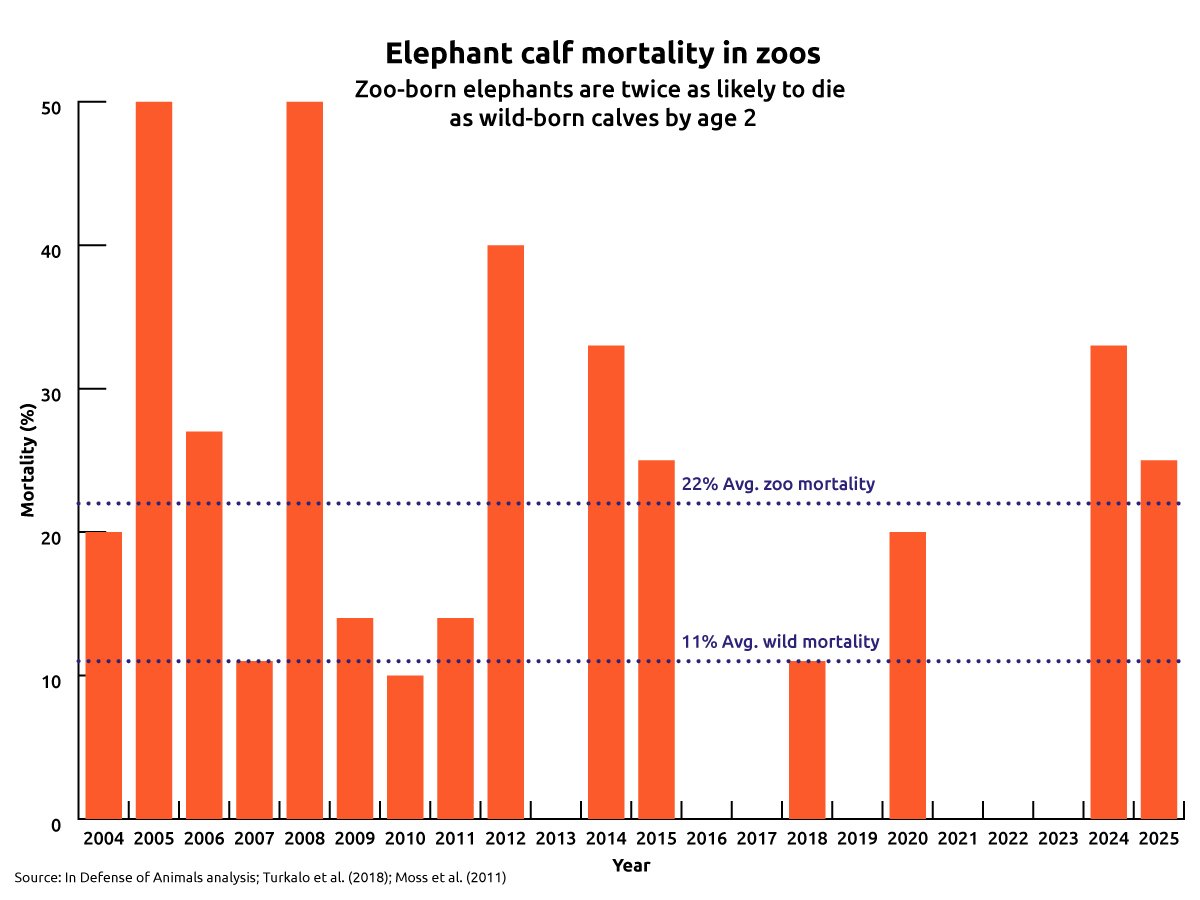
One in four elephants born in North American zoos die before the age of five, a new investigation has found, leading advocates to warn of a “mortality crisis.”
The data, analyzed by the animal protection nonprofit In Defense of Animals (IDA), shows that by age two, the death rate for elephant calves in zoos is double that of their wild counterparts, despite being protected from drought, predators, and poaching.
“Zoos are manufacturing life they cannot sustain,” said Courtney Scott, Elephant Consultant for IDA. “Our data shows that over one-third of all elephants born in zoos since 2004 are already dead.”
Previous research shows that since 2000, more captive elephant deaths have occurred than births, and in 20 of the recorded 21 years, deaths have equaled or exceeded births. Campaigners say these stats call into question the conservation benefits of keeping elephants in zoos. No elephant born in a North American zoo has ever been released back into the wild.
The release of the list comes amid a surge in zoo births, with 12 calves born in 2025 alone.
Independent studies show that elephants in zoos who survive past the age of five can typically suffer from persistent, chronic health and psychological problems, such as arthritis and joint disease, even at facilities accredited by the Association of Zoos & Aquariums (AZA).
At captive elephant breeding centers, females undergo invasive artificial insemination from as young as eight years old, despite elephants in the wild generally giving birth to their first calf in their early teens.
A separate report by elephant doctors Rob Atkinson, Andrew Kelly, and Keith Lindsay also explores the consequences of captive breeding, stating: “The disruption caused by zoos to the sexual development of both male and female elephants results in a population whose breeding, sexuality, and sociality bear no relation to that of wild elephants.”
Marilyn Kroplick, M.D., President of In Defense of Animals, said: “Zoo-bred elephants are fated to suffer from the moment they are conceived, and die at double the rate of wild babies. This industry is manufacturing babies in a bid to keep exhibits full — not to save elephants.”
“True conservation happens in the wild, not behind bars,” she added.
The investigation was released alongside the organization’s annual ‘10 Worst Zoos for Elephants in North America’ list. The Houston Zoo topped the 2025 list due to its “relentless” breeding program. 25 Asian elephant calves have been born at Houston Zoo in total. 17 of them are dead.
The animals at Houston Zoo are “forced into unnaturally early, rapid breeding and invasive reproductive procedures, leading to shortened lifespans and devastating calf losses,” according to IDA.
“This isn’t conservation; it is a cycle of tragedy,” said Courtney Scott. “We demand that the Houston Zoo and all facilities on this list stop breeding elephants for captivity and start retiring them to sanctuaries where they can live with dignity.”
Time for change?
More than 40 zoos have already shut down their elephant exhibits, according to IDA.
“The only solution to help elephants is to stop breeding them,” said Kroplick. “It is time for all zoos with elephants to end captive breeding and move elephants to a spacious, true sanctuary, rather than birthing another generation of elephants into despair and early death.”
Miss World Chile and animal advocate, Ignacia Fernández, has joined Ricky Gervais and other celebrities calling for an end to elephant captivity. She said: “Zoos breed elephants into lives of impoverishment. Born as prisoners, treated as playthings and profit-drivers, they fade away without ever truly living. Baby elephants deserve lush wilderness, not confinement in tiny, barren enclosures for life.
British television and radio broadcaster, Kirsty Gallacher has also joined IDA in calling on zoos to end breeding programs and retire elephants to sanctuaries: “Breeding elephants in captivity is cruel and dangerous. Ticket sales are not worth the suffering that babies and adults are forced to endure.”
Brett Mitchell of South Africa’s Elephant Reintegration Project agrees that “the only way to stop the captive industry is to stop the breeding.”
We Have A Favor To Ask…
Species Unite amplifies well-researched solutions to some of the most abusive animal industries operating today.
At this crucial moment, with worldwide momentum for change building, it’s vital we share these animal-free solutions with the world - and we need your help.
We’re a nonprofit, and so to keep sharing these solutions, we’re relying on you - with your support, we can continue our essential work in growing a powerful community of animal advocates this year.
More stories:
A new NY Times investigation has found that wild horses removed from public lands under a government adoption program are being funneled to slaughter through a legal loophole.