
Extreme rainfall in Indonesia in 2025 killed 7% of the world's rarest great ape
New research suggests 58 critically endangered Tapanuli orangutans lost their lives in Cyclone Senyar.
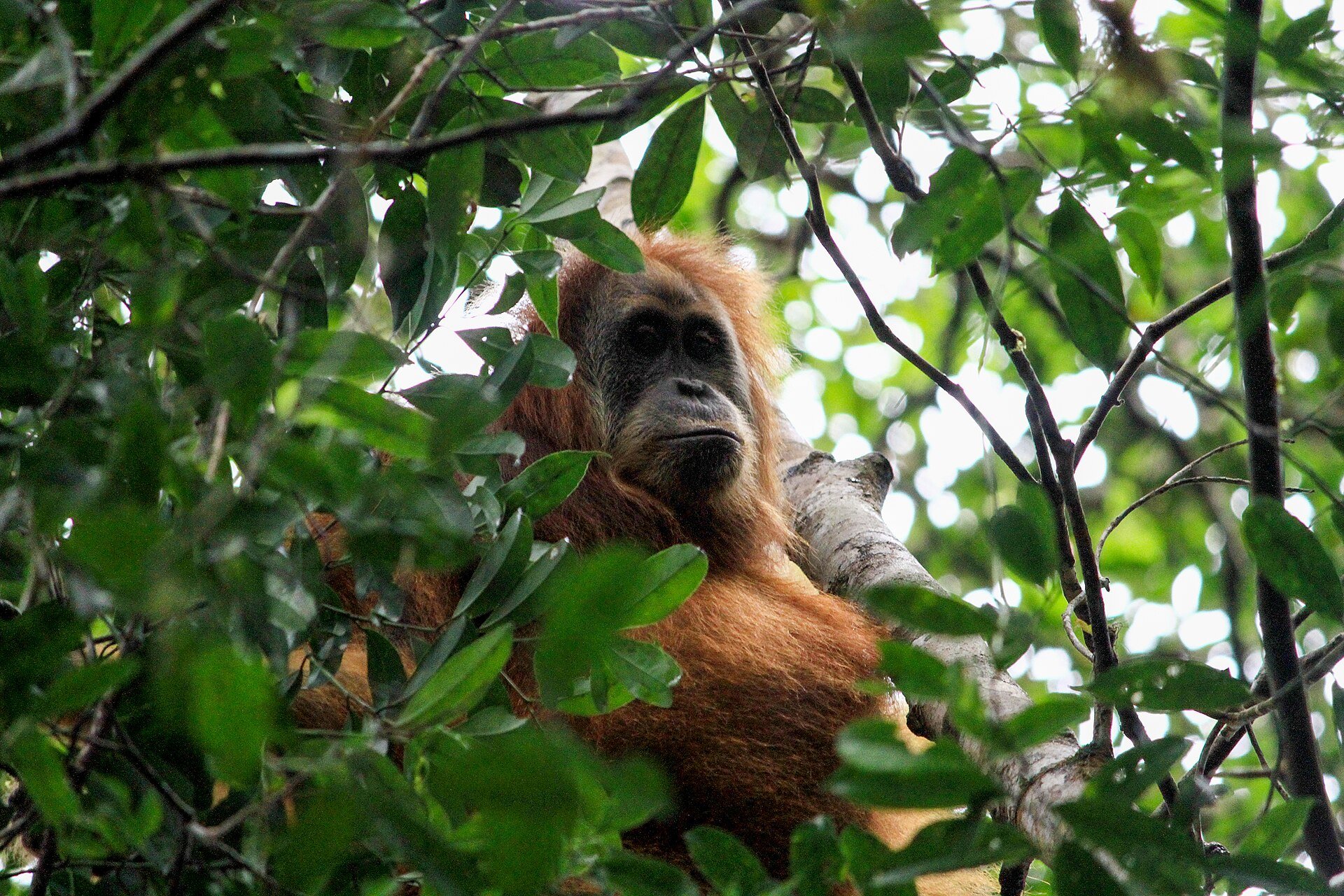
An individual Tapanuli Orangutan (Pongo Tapanuliensis) perches on a tree in Harangan Batangtoru, South Tapanuli Regency, North Sumatra. Credit: Prayugo Utomo/CC BY-SA 4.0
Discovered as a species in 2017, fewer than 800 Tapanuli orangutans reside in three isolated populations in Batang Toru (West, East, and South Block), in Sumatra, Indonesia. They are listed as critically endangered, and are the rarest of the three species, which include Bornean and Sumatran orangutans.
New research now suggests seven percent of the entire population of Tapanuli orangutans died during last year’s Cyclone Senyar.
According to a study published in the journal Current Biology, the extreme rainfall that hit Indonesia across five successive days during November 2025 resulted in the destruction of over 8,000 hectares of Tapanuli orangutan habitat.
Furthermore, the authors say the 564 mm of rainfall in the West Block, and the resulting floods and landslides, likely killed all of the 58 orangutans that had been living there. This equates to 11 percent of the West Block population.
The intensity and speed of the landslides meant the orangutans had little time to react, and that mortality would have resulted from drowning, landslide burial, and falling from trees.
Locals at the time told BBC News the animals may have escaped, as orangutans often sense danger beforehand. Only one orangutan death was reported in the media.
The latest report does consider this possibility, but the scenarios provide little reason for optimism. For example, displaced orangutans may have fled to higher-level habitats, where food is much scarcer. Or, they may try to share remaining lower-level habitats with other orangutans, meaning increased competition for food.
Either way – since orangutans operate on minimal daily energy budgets – the dramatic and sudden increase in movement from fleeing the landslides would have resulted in “substantial energetic stress on the surviving orangutans, compounding direct mortality with longer-term demographic impacts.”
Great apes have slow life histories, and orangutans the slowest, with interbirth intervals of 6 to 9 years. Given the small size and isolation of the three populations, previous studies have warned that annual population losses exceeding 1 percent would lead to the species’ extinction.
Orangutans have already lost over 80 percent of their habitat in the past two decades, due to deforestation, palm oil plantations, and illegal poaching. In the West Block – the largest remaining habitat area for Tapanuli orangutans – a large hydropower project represents yet another threat.
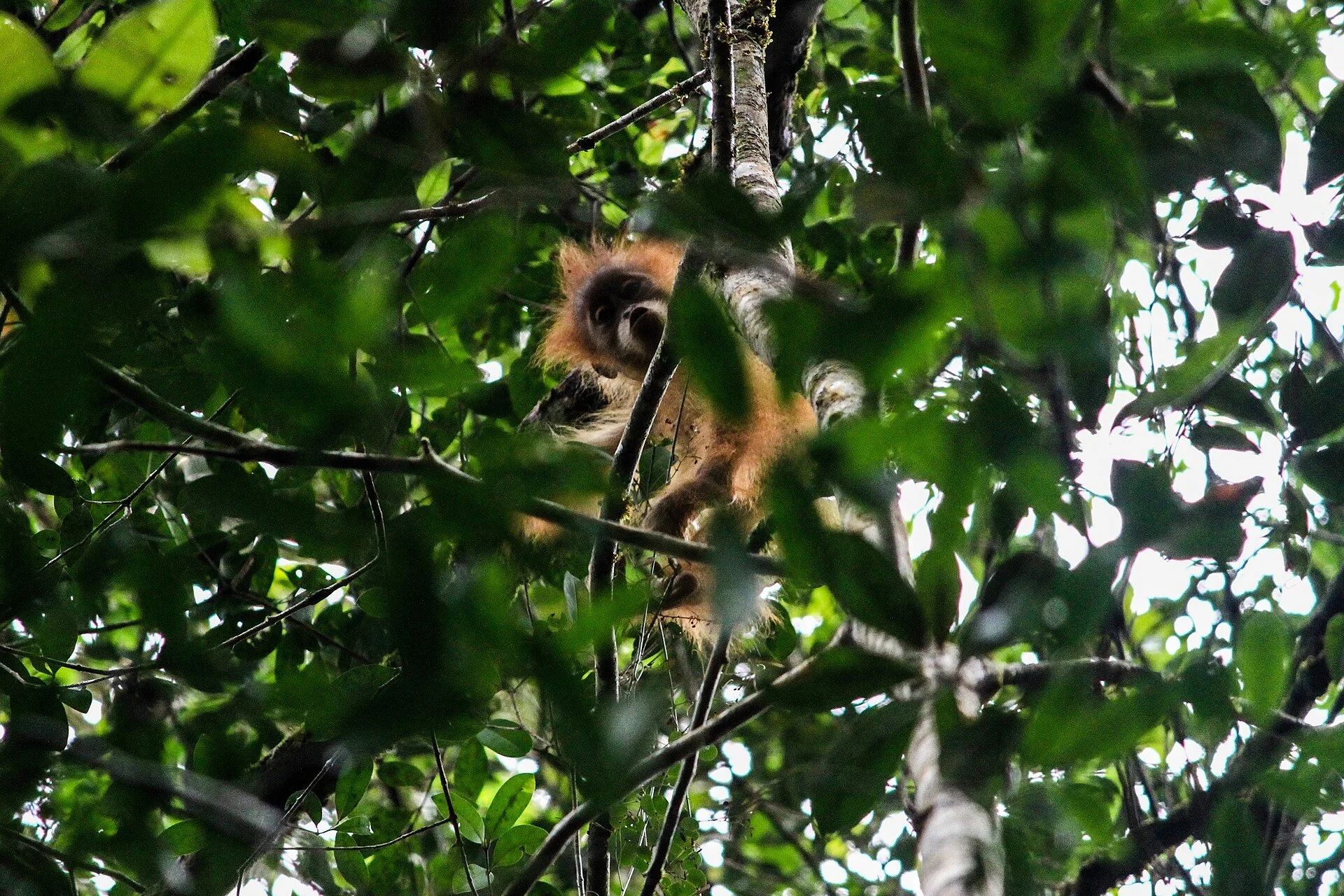
A Tapanuli Orangutan looks for food in a tree in the Batangtoru Forest area, South Tapanuli, North Sumatra. Credit: Prayugo Utomo/CC BY-SA 4.0
According to several studies, human-induced climate change likely contributed to the unprecedented rainfall of November 2025. Extreme precipitation is projected to become more widespread globally, with Indonesia set to experience wetter weather during the wet season. This means national as well as international action is needed, the report said.
“Given that extreme rainfall events are becoming more frequent and that this is – at least in part – a consequence of climate change, the international community shares responsibility to support Indonesia’s mitigation efforts,” says the report. “This includes mobilizing rapid biodiversity-recovery financing, providing technical expertise to improve hazard forecasting and ecological restoration planning, and ensuring that global climate-finance mechanisms recognize the losses experienced by the Tapanuli orangutan.”
In particular, the authors have recommended updated climate-risk assessments, landslide-susceptibility mapping, as well as strengthening and possibly expanding protection of lowland and riparian forests that will not only benefit orangutans but provide flood mitigation for downstream communities.
In the immediate future, the study is calling for a moratorium on land-use activities that degrade remaining habitat, and for the designation of the Batang Toru ecosystem as a National Strategic Area, which would provide a stronger legal basis for long-term protection of the Tapanuli orangutan.
Species Unite News is a weekly round-up of the most important animal stories happening around the world. Join over 200,000 others who start their week with the latest animal stories delivered straight to their inbox.
We Have A Favor To Ask…
Species Unite amplifies well-researched solutions to some of the most abusive animal industries operating today.
At this crucial moment, with worldwide momentum for change building, it’s vital we share these animal-free solutions with the world - and we need your help.
We’re a nonprofit, and so to keep sharing these solutions, we’re relying on you - with your support, we can continue our essential work in growing a powerful community of animal advocates this year.
More stories:
Significant investment and revised regulations across four government agencies are part of an ongoing effort to support innovative scientific research ahead of “outdated” testing on animals.