
Bearskin cap orders rose 336% last year, as UK lawmakers call for faux fur switch
A group of British lawmakers is calling on the Ministry of Defence to end the use of real bearskin caps, as new data shows orders for real bear pelts have surged.

Members of the King's Guard wear their traditional bearskin caps.
Orders for the King's Guards' real bearskin caps rose by more than 300% last year, according to Freedom of Information data, prompting a group of British lawmakers to urge the Ministry of Defence to replace the caps with faux fur.
The data, obtained by People for the Ethical Treatment of Animals (PETA) UK, shows that orders for bear caps rose from 22 in 2024 to 96 in 2025, an increase of approximately 336%.
In a letter to the UK's Defence Minister Luke Pollard, 18 Members of Parliament and one peer joined PETA's years-long campaign against the caps, calling for a switch to a faux fur alternative.
The lawmakers - representing Labour, Liberal Democrats, and the Green Party - branded bear fur “impossible to justify” in the letter.
“Both Parliament and the British public have consistently rejected the cruelty associated with the fur trade,” reads the letter. “This moment calls for leadership and modernising the caps to meet today’s ethical standards.”
As well as calling for a switch to faux fur, the lawmakers are demanding that the Ministry of Defence immediately pause any further orders of real bearskin while the transition takes place: “Most urgently, while this process continues, bears are still being shot with crossbows and killed, their cubs orphaned, and their pelts used to produce new caps. The Ministry of Defence must suspend any further orders of real bearskins pending a faux-fur replacement.”
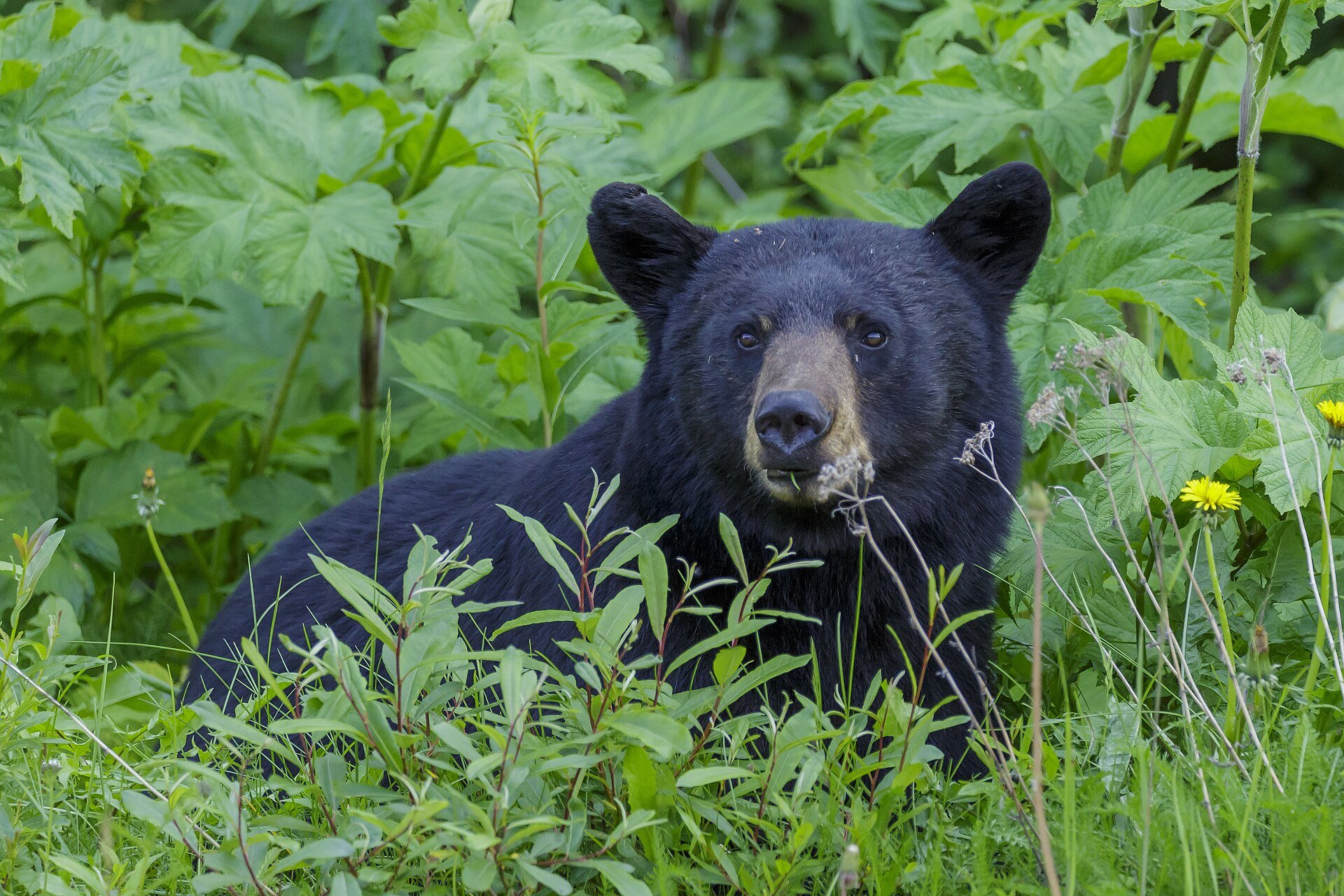
An American black bear (Ursus americanus) inside Jasper National Park, Canada. Credit: Thomas Fuhrmann/CC BY-SA 4.0
Bearskin caps were introduced to the British military in 1815, following the Battle of Waterloo. Each cap requires the skin of at least one American black bear (Ursus americanus), whose skins come from hunts in Canada.
The supplier the Ministry of Defence uses remains secret, but a PETA exposé into the hunts has revealed hunters luring bears with buckets of food, before shooting them with a crossbow and disembowelling them. The fur may then be sold to a variety of suppliers.
Each cap also costs over £2,000 ($2,668 approximately), according to figures from the MoD itself.
There is ample evidence of public opposition to the bearskin caps: a 2022 Populus poll showed that 75% of British citizens consider the caps a “bad use of government funds” and 73% would like to see action taken to replace the bearskins with faux fur.
“As many Brits struggle to pay for essentials like gas and electricity, they’re rightly outraged at the thought of funding ornamental caps for which bears are killed,” said PETA Senior Campaigns Manager Kate Werner at the time of the poll’s release. “We remind the Government that switching to faux fur is a wildly popular move that would save money and bears’ lives.”
To encourage the switch, faux-fur manufacturer ECOPEL has offered the Ministry of Defence an unlimited amount of its faux bearskin - an offer which the MoD declined.
The Ministry of Defence has said that “we are open to exploring faux fur alternatives if they pass the necessary requirements.”
PETA is calling on the UK MoD to stop using real bear fur for the ornamental headpieces worn by the King’s Guard and make the ceremonial caps out of modern, high-quality faux fur instead. You can help put pressure on the MoD by urging the Secretary of State for Defence to switch to faux fur here.
With animal stories making up less than 2% of the news cycle, we're here to fill that gap. Sign up for Species Unite’s weekly news digest.
The animals need a newsroom in their corner
Every week we dig into the animal stories the mainstream news overlooks. Investigations, exposés, legal battles, and victories - none of it happens without your support. A monthly gift of as little as $5 keeps us covering the 98% of animal news the world isn't seeing.
More stories:


As opposition to octopus farming grows worldwide, Colombia is moving to ban the practice before a single farm is built.