
The fight to prevent octopuses from becoming the next victims of factory farming has recently gained renewed momentum, from the news that plans for the world’s first commercial octopus farm in the Canary Islands have been scrapped to new bills seeking to ban the industry before it starts in countries around the world, as well as in a number of U.S. states.
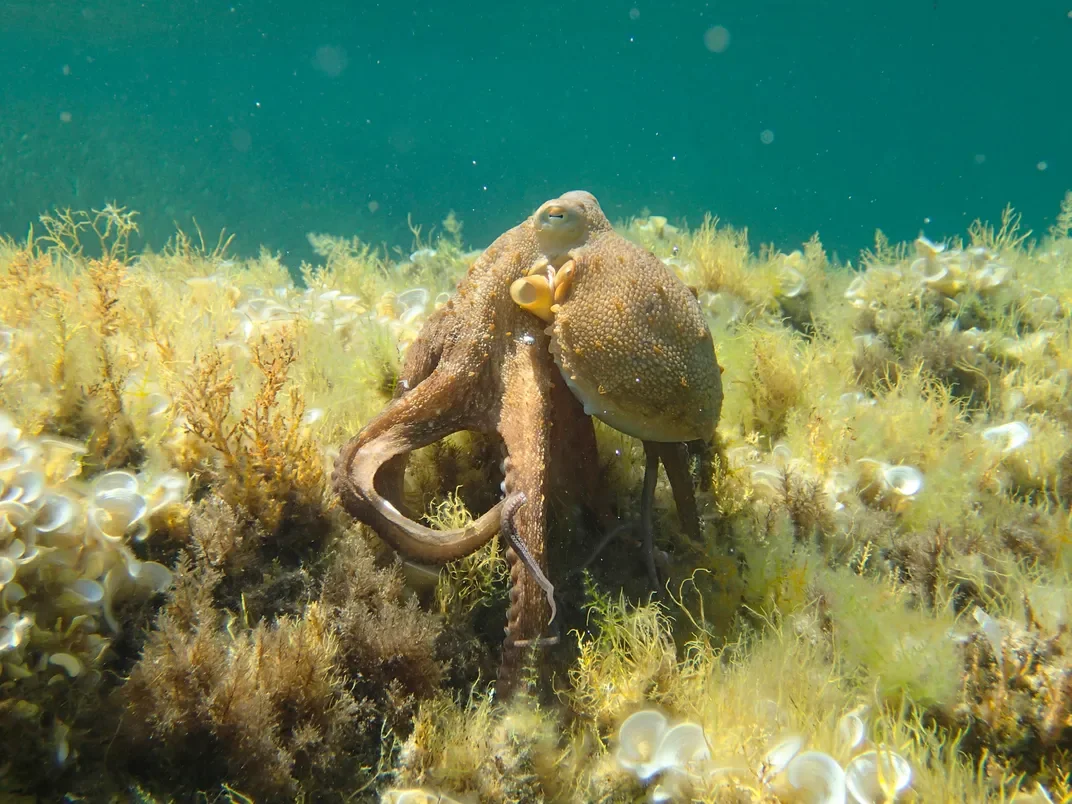
Octopuses are among the most intelligent, curious, and emotionally complex animals on Earth, and scientists have warned that their physical and emotional needs simply cannot be met in crowded industrial farming facilities. Forcing these naturally solitary creatures into confinement would cause immense suffering, while the enormous quantities of wild-caught fish needed to feed them would place even greater pressure on marine ecosystems already threatened by overfishing. Thankfully, more countries are recognizing that this cruel and environmentally destructive industry must be stopped before it can take hold.
In Italy, the Green and Left Alliance (Alleanza Verdi-Sinistra, AVS) presented a legislative proposal in October to prohibit octopus farming before it begins, as well as ban bluefin tuna farming and restrict the expansion of carnivorous aquaculture. The proposal was presented by MP Devis Dori alongside Compassion in World Farming (CIWF) Italy Director Annamaria Pisapia, marine biologist Andrea Spinelli, and documentary filmmaker Marco Spinelli. The initiative has also drawn support from other political parties, with CIWF Italy launching a public awareness campaign to build momentum for the proposed ban.
Now, this month, Peru has become the fourth country in Latin America, following Chile, Mexico, and Colombia, to introduce legislation aimed at banning octopus farming nationwide. Introduced by Congressman Ernesto Zunini of the Juntos por el Perú party, the bill was developed with support from animal advocacy organization ARBA, the Aquatic Animal Alliance, the Aquatic Life Institute, and Te Protejo. The proposal recognizes Peru's opportunity to protect its extraordinary marine biodiversity before intensive octopus farming can take root.
While countries around the world are considering nationwide bans to prevent this potentially devastating new form of animal abuse from spreading, progress in the United States has been more incremental. In our home state of New York, Species Unite has been eagerly awaiting Governor Kathy Hochul's signature on legislation to ban octopus farming, which passed both the state Senate and Assembly in June.
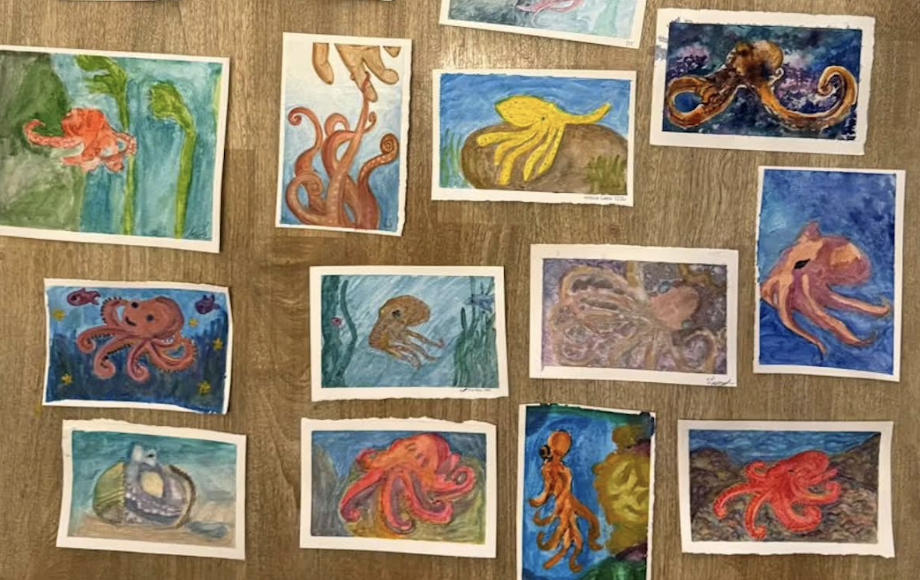
Watercolor octopuses painted by New Yorkers at our event with VFAR.
This past week, Species Unite partnered with Voters for Animal Rights to host a special event bringing New Yorkers together to paint beautiful images of octopuses and write cards to Governor Hochul, urging her to sign this important bill into law. It was a wonderful opportunity to bring our community together, celebrate these extraordinary animals, and make sure the voices of New Yorkers are heard.
As we work to hold our leaders accountable and celebrate each state-level victory, we continue to fight for federal legislation to ensure that octopus farming can never become the norm anywhere in the United States. If you are based in the United States you can help make a difference by reaching out to your representatives and asking them to support the Octopus Act, a crucial bill that would prohibit the intensive breeding of octopuses in the United States and ban imports of octopus products from international farms.
As nations from Latin America to Europe take steps to stop octopus farming before it begins, we hope the United States will pass this critical legislation and become a leader in a new frontier of marine biodiversity preservation, ocean conservation, and compassion for animals.