
A new Interior Department proposal threatens grizzly bear protections. Public comments are now open
Earlier this month, United States Secretary of the Interior Doug Burgum held a press conference in Big Sky, Montana, where he announced a proposal that would dramatically change how grizzly bears are managed across the West. The Interior Secretary was flanked by Montana Governor Greg Gianforte, Wyoming Governor Mark Gordon, and Idaho Governor Brad Little, three politicians who have spent years trying to strip grizzly bears of their Endangered Species Act protections. Now, Secretary Burgum has delivered them a major victory by proposing to transfer much of the responsibility for managing grizzly bears from the federal government back to the states while the bears remain listed as threatened under the Endangered Species Act.
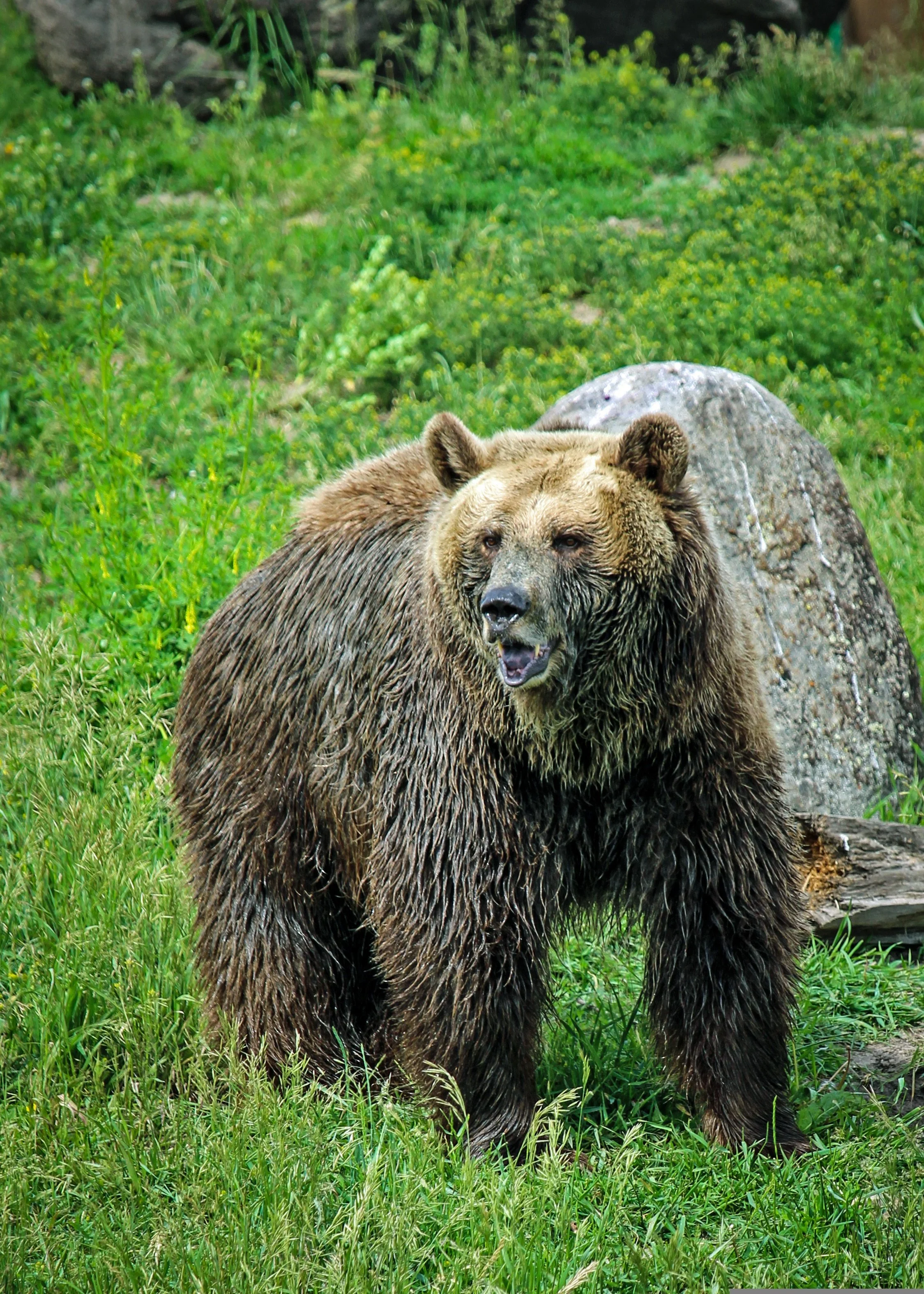
The administration argues the proposal simply gives states greater flexibility to manage grizzly bears. But conservationists say it would do far more than that. They warn it would weaken federal oversight by giving states greater authority to kill bears involved in conflicts with people and negotiate management agreements outside of the public process that has long governed grizzly conservation. Many fear the proposal is another step toward stripping grizzlies of the federal protections that have safeguarded their recovery for the last 50 years.
Those protections have already withstood repeated attempts at delisting. The U.S. Fish and Wildlife Service sought to remove Endangered Species Act protections for grizzly bears in both 2007 and 2017, but federal courts overturned both decisions, finding that the bears had not yet met the legal and scientific standards required for delisting. Then, as recently as 2025, after another comprehensive review, the Fish and Wildlife Service again concluded that grizzly bears still require Endangered Species Act protections.
As Greg LeDonne, Idaho Director of the Western Watersheds Project, explained, "This is a decision being made for political reasons, it is not based on science, in the best interest of the survival of the species, or in compliance with the requirements of the Endangered Species Act."
Grizzly bears have made remarkable progress since receiving Endangered Species Act protections in 1975, but recovery is not the same as recovered. Once numbering an estimated 50,000 across what is now the western United States, grizzlies were driven to the brink of extinction by habitat loss and overhunting, shrinking to just 2% of their historic range. Thanks to decades of conservation efforts, their numbers have begun to rebound, but they still occupy only a fraction of the landscape they once called home. Several populations also remain isolated from one another, making it difficult for bears to move between ecosystems, find unrelated mates, and maintain the genetic diversity needed for healthy, resilient populations over the long term.
As one of North America's most important keystone species, grizzly bears play a vital role in maintaining healthy ecosystems. They disperse seeds, aerate soil, regulate prey populations, and help shape the landscapes that countless other species depend on. They also support local economies through wildlife tourism and hold deep cultural significance for many Indigenous communities. Their recovery represents one of America's greatest conservation success stories, but it is a story that is still being written.
The Fish and Wildlife Service has opened a public comment period on the proposed management changes which runs through August 17. To submit a comment, click the link below, then select the green "Submit a Public Comment" button. Your comment does not need to be long or technical. Even a few thoughtful sentences can make a meaningful difference.
You can write something as simple as:
I oppose the proposed changes to grizzly bear management under the Endangered Species Act. Decisions about the future of grizzly bears should be guided by the best available science, not political pressure. Grizzly bear recovery is not complete, and management authority should not be handed back to states that have repeatedly sought to weaken protections for the species. Please maintain strong federal oversight and continue protecting grizzly bears under the Endangered Species Act.
Grizzly bears still need our voices. As political leaders continue looking for new ways to weaken the protections that helped save this iconic species from the brink of extinction, public participation has never been more important.
If you haven’t already, you can also make a difference by signing our petition urging the U.S. Fish and Wildlife Service to keep grizzly bears protected under the Endangered Species Act.