
Philip Wollen Joins A Case for Freedom as Executive Producer
Species Unite is proud to announce that philanthropist, environmentalist, animal rights activist, Philip Wollen has signed on as an Executive Producer of A Case for Freedom, our second documentary and first feature-length film.
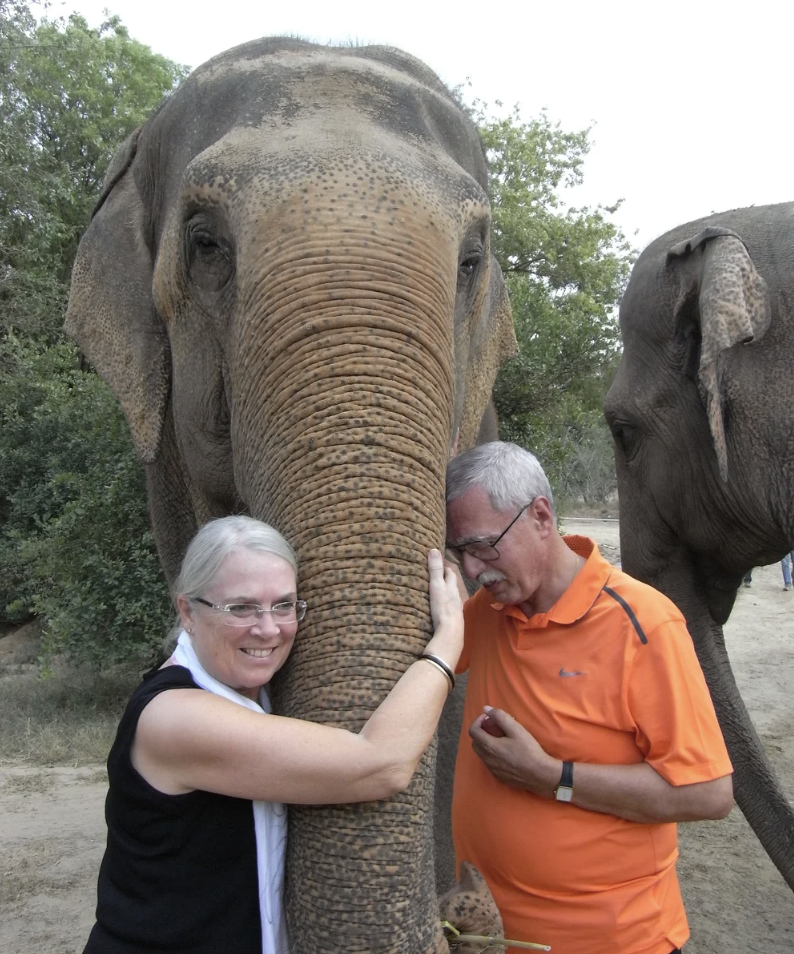
Photo: Winsome Constance Kindness
A former banker who left the world of global finance to dedicate his life to philanthropy and animal advocacy, Philip has supported animal protection and humanitarian efforts around the world for decades. He is also an Ambassador for Sea Shepherd Australia and has received numerous honors for his contributions to animal advocacy and philanthropy.
Philip has expressed that he was drawn to A Case for Freedom both because of his compassion and respect for elephants and because of his longstanding friendship with the late Steven M. Wise, the pioneering attorney who founded the Nonhuman Rights Project (NhRP) and dedicated his career to challenging the legal status of animals as property. Philip was a longtime supporter of Wise and his work, and continues to support the legal movement that Wise helped build.
A Case for Freedom follows the NhRP's landmark efforts to establish a legal right to liberty for captive elephants, documenting the five African elephants at the center of the organization's case in Pittsburgh, as well as Mari and Vaigai, two Asian elephants at the Honolulu Zoo whose case is now before the Hawaiʻi Supreme Court. Species Unite will be traveling to Hawaiʻi to film the proceedings as the Court considers whether Mari and Vaigai may invoke habeas corpus to challenge the legality of their confinement. In the wild, elephants live in matriarchal herds, roaming for miles and passing down knowledge across generations. In captivity, that life of movement and connection is replaced by confinement and isolation.
The film asks whether freedom is reserved only for humans.
A Case for Freedom will also look beyond the United States to places where a different future for elephants is already taking shape, including Argentina's move away from traditional zoos and the Global Sanctuary for Elephants in Brazil, where formerly captive elephants can live out their lives without exhibition, breeding, or forced separation.
This is the second time Philip has supported a Species Unite documentary. He also served as Executive Producer of our first film, 30,000 Monkeys in Our Backyard, which tells the story of a small Georgia community that came together to fight a plan to build what would have been one of the largest monkey-breeding facilities in the United States. Since its release, the film has been viewed more than 600,000 times on YouTube, selected for multiple film festivals, and continued to help amplify the community's fight against the proposed facility. Despite the enormous resources and influence of the multi-billion-dollar animal testing industry behind the project, the facility has still not been built, a testament to what a determined community can accomplish when it refuses to back down.
We are incredibly grateful to Philip for once again standing behind a Species Unite film, and to the many supporters who have already helped make A Case for Freedom possible.
As these legal battles move forward, the stakes for the elephants at their center could not be higher. With continued support, we can document this historic moment and bring their stories to audiences far beyond the courtroom.