
As Tragedies Mount in New York, Philadelphia Leaves Horse-Drawn Carriages Behind
The dangers of New York's carriage horse industry for both humans and animals have been in sharp focus over the past few weeks, following two tragedies that have shaken the city and renewed calls for action.
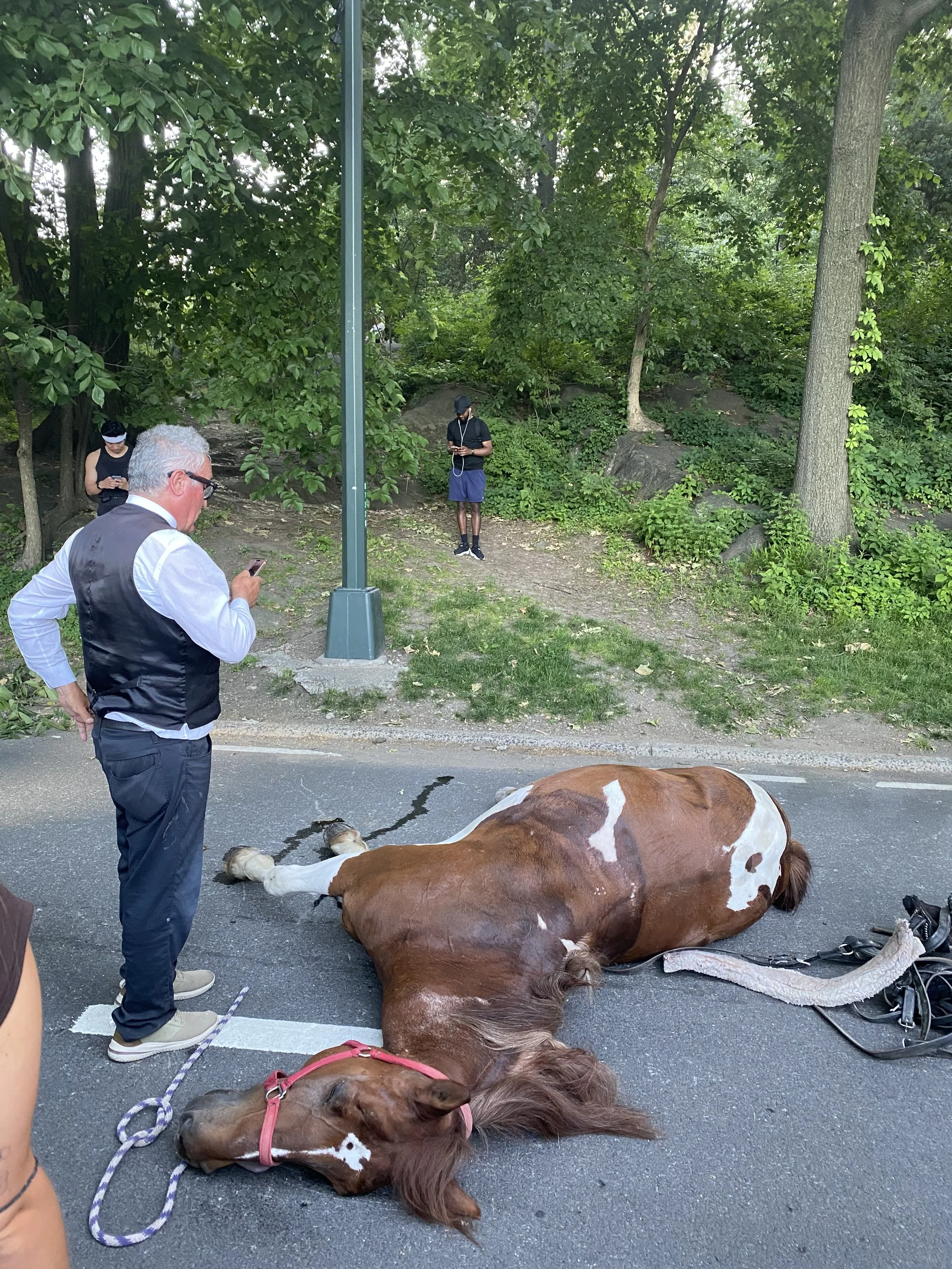
Credit: PETA's Ashley Bryne
On June 9, a carriage horse named Deniz collapsed and died while pulling tourists through Central Park. Then, just over a week later, 18-year-old Romanch Mahajan lost his life while taking a carriage ride in New York with his family. According to reports, after their driver stepped away to take a photograph of the family, his horse suddenly bolted and Romanch's mother was thrown from the runaway carriage. Romanch attempted to jump off the racing vehicle to help her, but struck his head and later died from his injuries.
These types of accidents are sadly far too common when horses, who are prey animals, are forced to work in stressful urban environments surrounded by traffic, crowds, noise, and countless unpredictable stimuli. Even before the heartbreaking death of Mahajan, New Yorkers had been renewing their calls for a ban on this outdated, dangerous, and abusive industry. In the wake of these recent tragedies, those calls have only grown louder, with Mayor Zohran Mamdani, the Central Park Conservancy, animal advocates, and elected officials all expressing support for ending horse-drawn carriages in New York City.
Following Deniz's collapse in Central Park on June 9, more than 90 advocates gathered on the steps of City Hall to demand that the City Council finally take action. Species Unite President and Founder Elizabeth Novogratz was among them, joining fellow advocates at the rally alongside other members of the Species Unite team to call for the reintroduction of Ryder's Law, legislation that would phase out horse-drawn carriages and ensure the humane retirement of the horses currently trapped in the industry.
Just one day after the rally, Ryder's Law was officially reintroduced to the City Council as Intro 943, a significant step forward for the campaign to end horse-drawn carriages in New York. While the bill's return marks important progress, it comes in the shadow of two preventable tragedies: the death of Deniz, who collapsed and died on the hot New York pavement in full view of shocked onlookers, and the death of Romanch Mahajan, a beloved son and brother whose life was cut tragically short during what should have been a joyful family vacation. Their deaths are heartbreaking reminders that neither horses nor people will truly be safe until meaningful action is taken to end this industry once and for all.
Yet even as New York continues to debate the future of horse-drawn carriages, another major city has already shown what that future can look like.
On the same day Ryder's Law was reintroduced, the Philadelphia City Council voted to formally ban horse-drawn carriages throughout the city. The measure applies to both commercial and noncommercial carriage operations and passed with near-unanimous support. Although Philadelphia's last commercial carriage business closed in 2023, lawmakers and advocates pushed for the ban after noncommercial carriages began appearing in the city, and to ensure the industry could not quietly return in the future.
The decision marks the end of a practice that was reintroduced to Philadelphia for the nation's bicentennial celebrations in 1976 and reflects a growing recognition that modern cities are simply not appropriate places for horses to be used for entertainment and tourism.
Philadelphia's action offers a powerful reminder that change is possible. As more cities move away from horse-drawn carriages and public support for these bans continues to grow, we remain hopeful that New York will finally follow suit and pass Ryder's Law before more horses suffer and more lives are put at risk.