
A Setback for Animals in the House. The Fight Now Moves to the Senate.
In an unfortunate setback for animals, the House of Representatives voted on April 30th, 224 to 200, with 6 abstentions, to pass the Farm Bill with the dangerous, pro-factory-farm "Save Our Bacon" Act intact. If allowed to remain in the final version of the bill, this legislation would undermine hard-won state protections for animals that go beyond weak federal standards, essentially erasing progress made by voters across the country who have demanded stronger safeguards for animals.
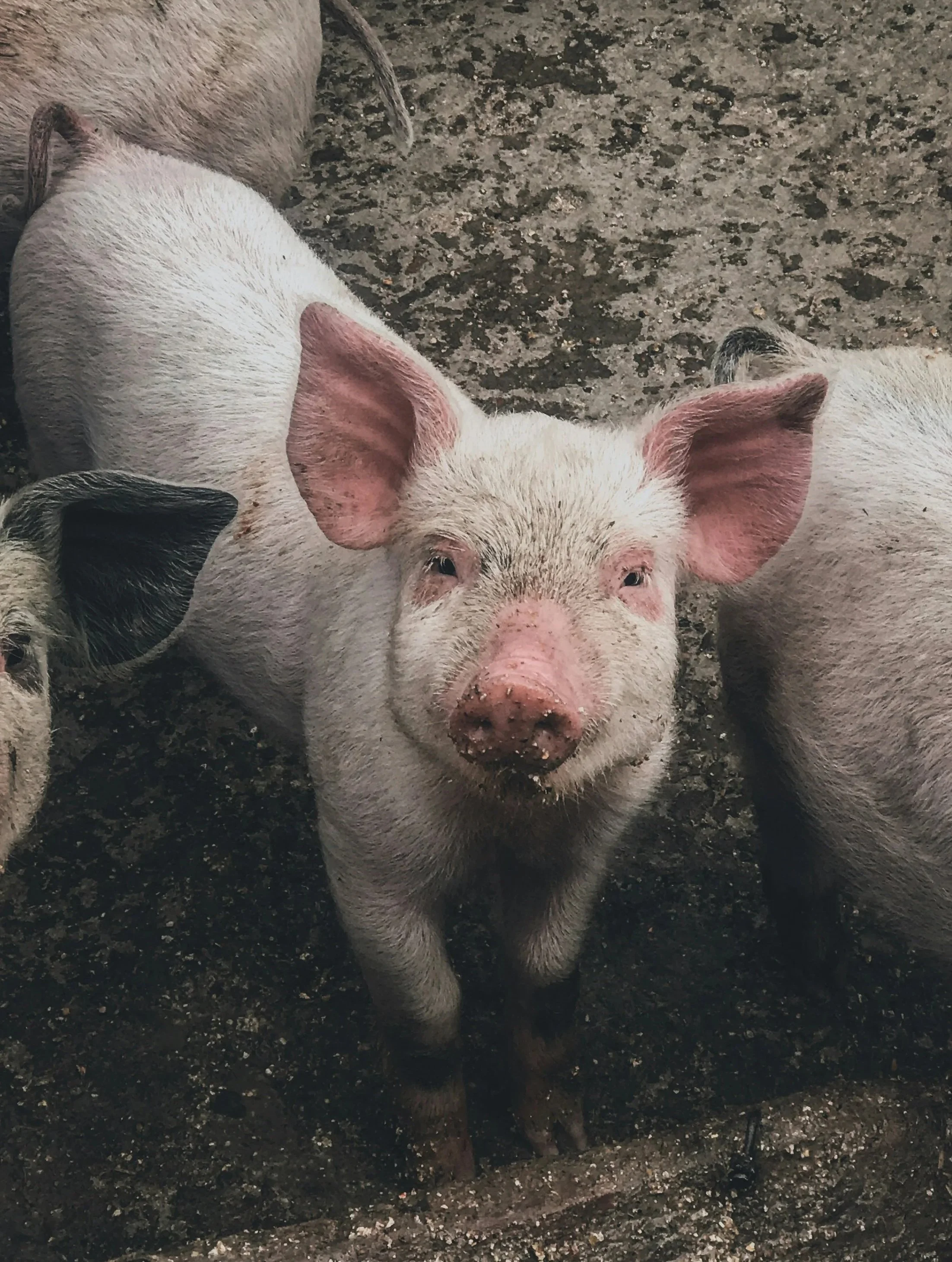
This retaliatory legislation is backed by pork industry lobbyists in response to state bans on gestation crates, which confine mother pigs to metal cages so small they cannot turn around or move freely for most of their pregnancies. These bans have already been passed in Maine, Massachusetts, Rhode Island, New Jersey, Florida, Ohio, Michigan, Colorado, Arizona, California, and Oregon. It is also a direct attempt to work around the Supreme Court's decision upholding California's proposition 12 which bans extreme confinement for farmed animals. Including this legislation within the larger Farm Bill is a way to quietly push through harmful policies that would devastate voter-approved animal welfare standards nationwide while trampling states' rights to set stronger protections for animals, food safety, and agriculture.
The legislation is particularly damaging because it is not limited to farmed animals. Measures like the Save Our Bacon Act and the Senate's Food Security and Farm Protection Act (S.1326), formerly known as the EATS Act, could also threaten laws addressing puppy mills, animal testing, and other state-level protections that go beyond weak federal standards. It is a race to the bottom designed to benefit massive industrial agriculture operations at the expense of animals, consumers, small farmers, and states' rights.
The bill also missed an important opportunity for horses. The widely supported bipartisan Save Our Forgotten Equines Act, which would have finally shut down the horse slaughter pipeline from the United States to Canada and Mexico and made horse meat illegal for human consumption in the United States, was not included.
Although the bill did include a few positive measures for animals, including the Greyhound Protection Act, which would make greyhound racing illegal nationwide, and Violet's Law, which promotes adoption rather than killing primates, dogs, cats, hamsters, rabbits, and guinea pigs after experimentation in government laboratories, the overall bill still represents far more harm than hope for animals.
The Farm Bill now heads to the Senate, where the Food Security and Farm Protection Act (S.1326) was introduced with the same goal as the House's Save Our Bacon Act: overturning stronger state-level animal welfare laws and forcing states across the country down to the weakest possible federal standards so abusive factory farms can maximize profits.
Because the Senate Farm Bill will require 60 votes to pass, there is still hope that animal-allied senators will be able to negotiate to ensure that legislation like the Save Our Bacon Act and the Food Security and Farm Protection Act are not included in the final bill. Although this legislation has advanced in the House, the fight is far from over, and it is critical that we continue speaking out against this legislative overreach that seeks to keep animals confined, abused, and exploited despite the will of voters across the country.